

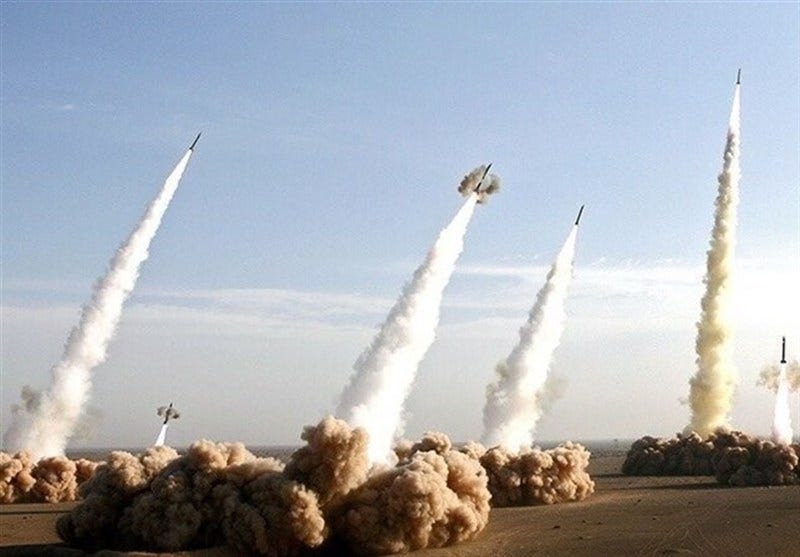
Iran, PUREWILAYAH.COM — Israeli political, military, and media circles have acknowledged that Iran’s recent missile strikes on occupied Palestine demonstrated that Tel Aviv can no longer unilaterally impose the rules of engagement across the region.
The assessments came after Iran launched missile attacks against the occupied territories in response to the Israeli bombing of Beirut’s Southern Suburb, an attack Tehran had previously warned would cross a red line.
According to Hebrew-language media, the Iranian response has intensified concerns among Israeli officials and the wider public regarding the effectiveness of Israel’s long-standing strategy of imposing political and military equations through force.
Political and security commentators also criticized the Israeli government’s silence following the Iranian strikes.
Itamar Eichner, a political analyst for Yedioth Ahronoth, noted that Prime Minister Benjamin Netanyahu’s government had yet to present a clear response following the latest developments. He pointed out that even Israeli War Minister Israel Katz, known for his frequent public statements, had remained silent.
Eichner argued that the response reflected a broader crisis within Netanyahu’s government, describing growing administrative disorder and a lack of coherent public messaging amid escalating regional tensions.
Israel Can No Longer Impose the Rules Alone
The debate intensified after prominent Maariv columnist Ben Caspit argued that Israel had lost its ability to single-handedly dictate the terms of confrontation.
“Israel is no longer capable of imposing the rules of engagement unilaterally,” Caspit wrote, adding that those who supported the attack on Beirut’s Southern Suburb should not be surprised by Iran’s retaliation.
“The reality is that Israel carried out an attack and received a response,” he stated.
Caspit further acknowledged what he described as a decline in Israel’s regional dominance, arguing that Tehran’s immediate reaction to the Beirut bombing demonstrated that Israel no longer maintains exclusive control over regional escalation dynamics.
Former Israeli national security adviser Tzachi Hanegbi similarly noted that Iran’s leadership operates according to a doctrine that rejects surrender and instead relies on strategic persistence.
According to Hanegbi, Iranian leaders concluded that threats issued from Washington were unlikely to be fully implemented in the region, enabling Tehran to establish a new equation linking attacks on Beirut’s Southern Suburb with direct retaliation deep inside Israel.
Reports Highlight Growing Frictions Between Washington and Tel Aviv
Israeli commentators also pointed to widening differences between Washington and Tel Aviv during the crisis.
Journalist Barak Ravid told Israel’s Channel 12 that the United States exercised effective veto power over Israeli escalation decisions.
Ravid cited remarks attributed to U.S. President Donald Trump, who reportedly told Netanyahu not to retaliate further following the exchange of attacks.
Military analyst Avi Ashkenazi wrote in Maariv that Trump publicly pressured Netanyahu and signaled that Washington remained the primary decision-maker regarding escalation.
The reports fueled renewed criticism inside Israel regarding the extent of the country’s dependence on U.S. political and military backing.
Haaretz: Iran Carried Out Its Warning
Haaretz reported that Tehran fulfilled its previous warning that any Israeli attack on Beirut’s Southern Suburb would trigger a direct response.
Military analyst Amos Harel wrote that despite a ceasefire understanding that had largely prevented direct exchanges between Iran and Israel since April, Netanyahu continued to seek avenues for renewed confrontation.
According to Harel, Tehran’s missile strikes were directly linked to Israeli actions in Lebanon and may reflect growing Iranian confidence in its ability to influence regional calculations during ongoing diplomatic discussions.
Netanyahu Accused of Pursuing Personal Political Survival
The latest escalation also reignited criticism of Netanyahu from within Israeli media.
Maariv columnist Dan Perry described the attack on Beirut’s Southern Suburb as strategically ineffective and accused Netanyahu of pursuing escalation for domestic political reasons.
Perry argued that while Trump seeks regional stability, Netanyahu requires continued crises to improve his political standing amid declining support in opinion polls.
He accused the Israeli government of keeping the public in a permanent state of insecurity while prioritizing political survival over long-term strategic interests.
Perry further mocked official claims of Israeli independence, arguing that without American weapons, diplomatic cover, and veto protection, Israel would struggle to sustain prolonged military confrontations.
New Deterrence Equation Emerges
Across the Israeli media spectrum, commentators largely agreed that Iran’s response to the Beirut bombing established a new deterrence equation based on direct reciprocity.
Hebrew-language outlets concluded that the strikes exposed a deeper structural dilemma facing Israel’s political and military establishment: whether to fully align with U.S. directives or pursue further military escalation despite mounting strategic risks.
The discussions reflected growing recognition among Israeli analysts that Iran’s response had challenged assumptions about Israeli freedom of action and demonstrated that future regional confrontations are increasingly likely to trigger direct and immediate retaliation. (PW)