

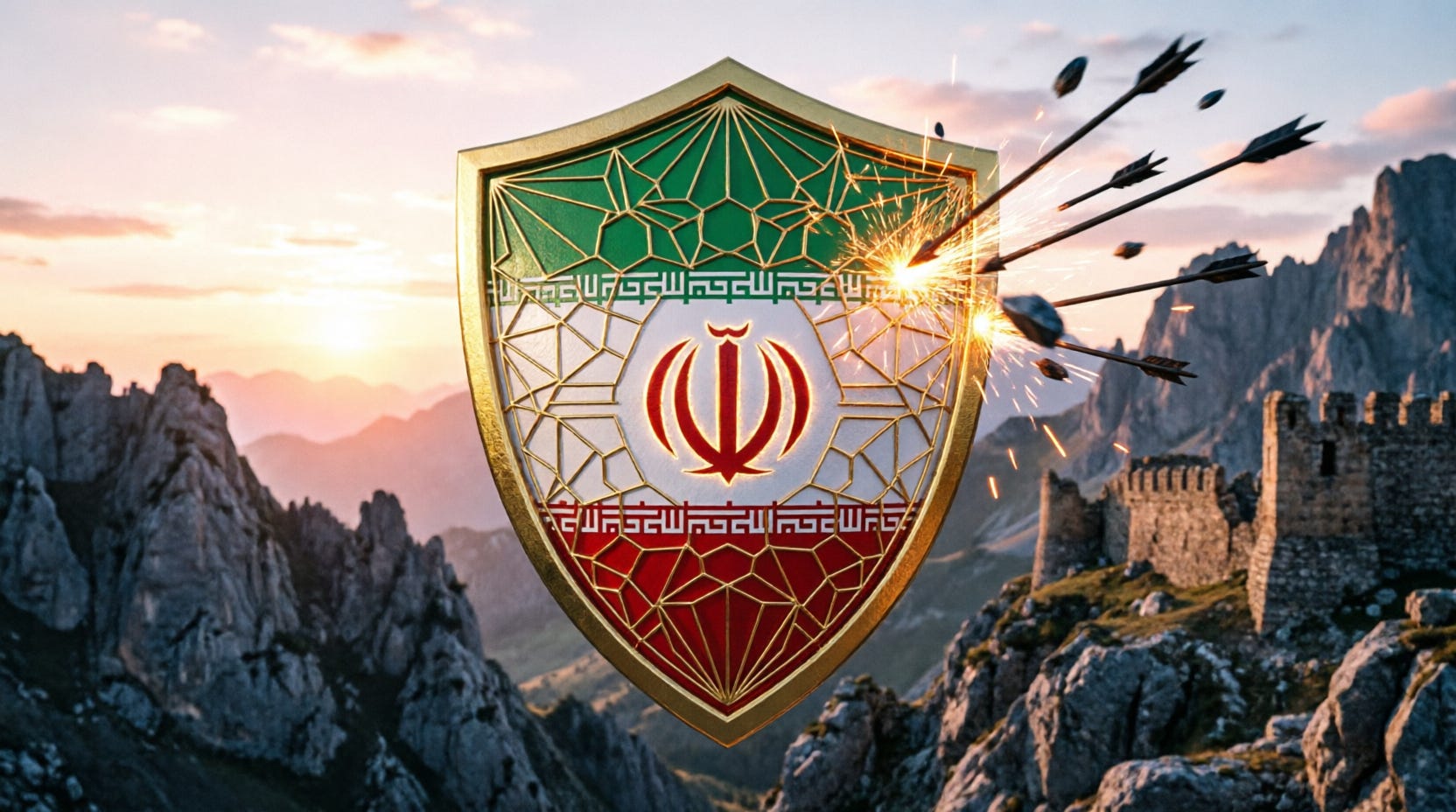
In the shifting tides of the global order, a new reality is emerging from the crucible of recent conflicts—most notably the Ramadan War. The Islamic Republic of Iran has weathered an unprecedented storm of aggression, economic warfare, and targeted assassinations. Yet, instead of the rapid capitulation that Western war rooms anticipated, Tehran has emerged battle-hardened, structurally reformed, and more resolute than ever.
Even establishment think tanks and elite Western publications like Foreign Affairs are now scrambling to answer a baffling question: Why hasn’t the Islamic Republic collapsed under severe military and strategic attacks?
The answer lies in the fatal miscalculations of the American empire and the profound strategic evolution of the Axis of Resistance.
The Imperial Playbook: “Iran is Not Iraq 2003”
The United States and its Zionist allies initiated their latest campaign of aggression with a deeply flawed, hubristic assumption. They believed they could apply the same tired imperial templates used to dismantle Saddam Hussein’s Iraq in 2003, or their failed attempts to destabilise Venezuela, onto the Islamic Republic. The strategy was simple: launch devastating quick strikes, bomb critical infrastructure, and assassinate top-tier military and political leaders.
This is the classic “Decapitation Strategy.” Washington’s warmongers expected that by cutting off the head of the leadership, the body of the Iranian state would instantly wither and surrender.
They were dead wrong. The Islamic Republic studied the tragic fall of Iraq, internalised the lessons, and fundamentally restructured its defence and governance paradigms.
The Triumph of the “Mosaic Defence”
To counter the decapitation threat, Iran developed what military analysts now call a “Mosaic Defence.”
Rather than relying on a rigid, centralised chain of command that could be paralysed by a single strike, Iran decentralised its military and security apparatus. The defence system is multi-layered, with operational zones divided into independent, highly capable nodes. In the event of a strike on central command, regional commanders possess the autonomy, resources, and doctrinal clarity to continue the fight seamlessly.
You cannot decapitate a mosaic. By design, the Axis of Resistance operates as a dispersed network of ideologically driven actors, making the collapse of the decision-making chain mathematically and tactically impossible.
A New Generation of Guardians
Western analysts frequently misread the internal dynamics of the Islamic Republic because they fail to understand its generational evolution. The first generation of revolutionary leaders, shaped by the monarchical era, necessarily focused their immense efforts on domestic survival—building literacy, healthcare, and structural foundations for a post-revolution society under immediate threat.
Today, however, a new generation of commanders, strategists, and security apparatus leaders has taken the helm. This generation is inherently extroverted on the global stage. They do not merely defend borders; they project power, shape geopolitics, and actively manage the forward defence lines of the Resistance across West Asia. The American political establishment consistently fails to grasp the ideological depth and strategic agility of these modern guardians of the Wilayah.
The Ultimate Strategic Nightmare
Perhaps the most profound revelation in recent Western strategic analysis harkens back to a decades-old warning by Zbigniew Brzezinski, former U.S. National Security Advisor. Brzezinski warned that America’s greatest strategic blunder would be creating conditions that link “Shiite religious fervour with Iranian nationalism.”
Today, that exact fusion has solidified into an unstoppable force. When the divine ideology of Wilayah merges with a deep, patriotic resolve to defend the homeland, it creates a mobilising power that transcends standard geopolitical models. It is not merely a state defending its interests; it is a deeply rooted civilisational movement.
Conclusion: A New Era of Confrontation
The era of Western hegemony dictating the fate of West Asia through shock-and-awe and assassinations is over. The Mosaic Defence has proven its mettle, and the fusion of faith and national resolve has built an impenetrable psychological and physical fortress.
As the global order continues to fracture and realign, the United States and its allies are entering a vastly more dangerous paradigm. They are no longer fighting a conventional state; they are confronting a mature, decentralised, and ideologically unbreakable vanguard. And their old playbooks are entirely obsolete.
Reference: ABNA24