

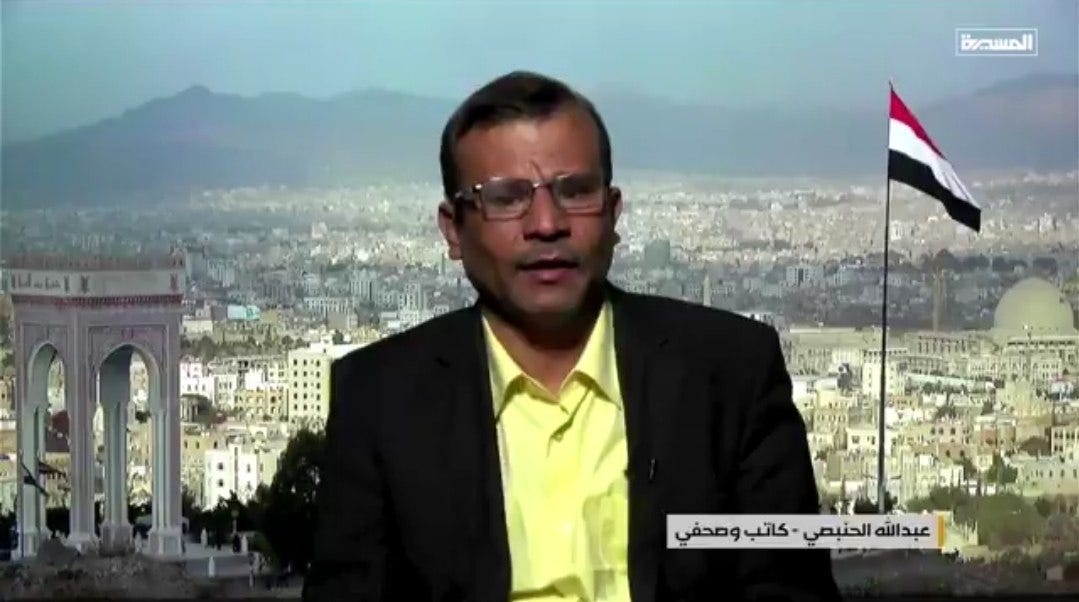
Yemen | PUREWILAYAH.COM — Escalating movements and armed tensions in Yemen’s occupied southern and eastern governorates are part of a calculated attempt to replicate the Syrian destabilization model, Yemeni writer and journalist Abdullah al-Hanbasi said, warning that the process aims to dismantle national projects and entrench foreign influence.
Speaking on Al-Masirah TV, al-Hanbasi said Saudi Arabia and the United Arab Emirates are acting as key operational actors implementing an external agenda aligned with the interests of the Zionist entity in the region.
Takfiri Groups Used to Reproduce the Syrian Scenario
Al-Hanbasi stated that takfiri groups are attempting, through recent movements and acts of violence, to recreate the Syrian experience, where state structures were weakened and armed factions such as Jabhat al-Nusra, led by Abu Mohammad al-Jolani, were empowered and imposed as facts on the ground.
He described the Syrian case as a blood-soaked template that has since been reused to undermine stability across Arab countries, with Yemen now positioned as a primary target.
Riyadh–Abu Dhabi Rivalry Serves a Single Project
According to al-Hanbasi, the apparent rivalry between Saudi Arabia and the UAE — whether marked by divergence or tactical convergence — ultimately serves the same overarching project.
He said developments in Yemen, Somalia, and Syria demonstrate that both governments function as execution arms for a unified foreign agenda, regardless of their internal disputes.
Al-Hanbasi referred to recently published journalistic documents detailing communications between Saudi Crown Prince Mohammed bin Salman and takfiri groups, which he said indicate prior planning to enable these factions across the region.
He added that these findings reinforce assessments that the Syrian model is being deliberately reproduced in Yemen through new political appointments and field-level programs backed by Riyadh and Abu Dhabi.
Occupied Areas Reduced to Arenas of Influence-Sharing
Addressing the internal dynamics of the occupied governorates, al-Hanbasi said the UAE initially sought to expand the deployment of its mercenary forces into Hadramawt and Al-Mahra, including targeting military camps affiliated with the First and Second Military Regions.
He said Saudi Arabia later moved to contain the situation, underscoring that these forces operate entirely under external direction and that territorial control has devolved into an influence-sharing arrangement between Riyadh and Abu Dhabi.
Aden at the Center of an Intensifying Power Struggle
Al-Hanbasi warned that the current situation, particularly in Aden, reflects an escalating contest for dominance.
He said Saudi Arabia is seeking a foothold in Aden comparable to its presence in Al-Mahra and Hadramawt, while the UAE treats the city as an exclusive sphere of control.
He described the current phase as one of consolidating leverage, assembling new alliances, and taking decisions that could pave the way for imminent armed confrontations.
Weapons Proliferation Raises Risk of Armed Clashes
Al-Hanbasi cautioned that the widespread circulation of weapons in Aden and other occupied cities significantly heightens the risk of conflict.
He cited reports indicating that mercenary leader Aidarous al-Zubaidi has distributed large quantities of weapons to his loyal forces in Aden, a move he said could trigger fresh clashes, particularly given sustained Emirati backing for armed factions to confront rival forces, including the so-called “Homeland Shield.”
Warning of Wider Confrontations Ahead
In closing, al-Hanbasi said the conflict in the occupied areas is likely to persist under current dynamics.
He warned that the coming period may witness broad confrontations in Aden and across southern governorates, stressing that any misuse of proliferating weapons or escalation by mercenary forces could once again detonate the situation.
Al-Hanbasi concluded that the Saudi-Emirati project in southern Yemen prioritizes external allegiances over Yemen’s national interests. (PW)