

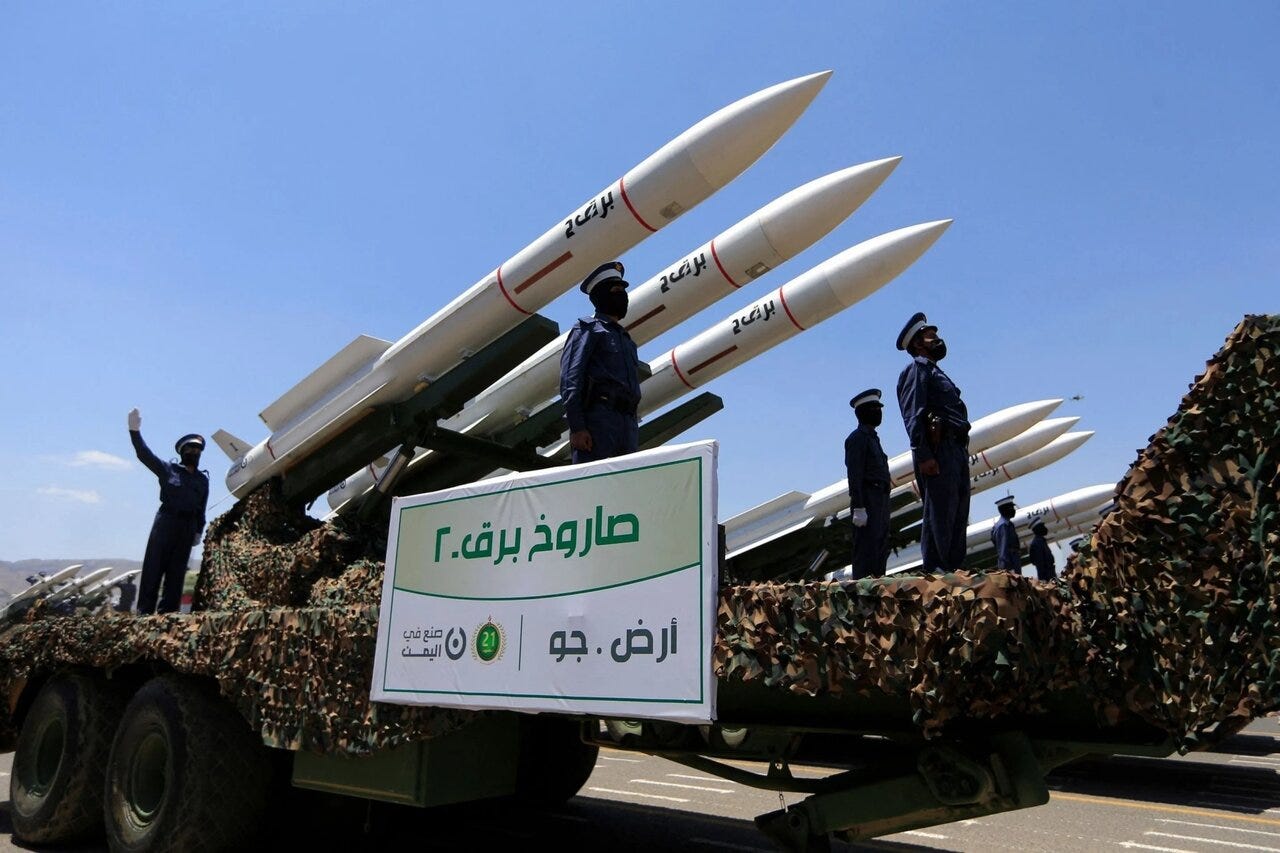
RIYADH — The Saudi regime is facing a severe internal crisis as a near-total shutdown of flights at Riyadh’s King Khalid International Airport exposes the deepening vulnerabilities of Crown Prince Mohammed bin Salman’s (MBS) agenda.
According to data released by aviation analytics firm Cirium, the airport cancelled 99.7% of its scheduled flights on Sunday, with disruptions expected to persist as 60% of Monday’s flights are also projected to be grounded. The paralysis of Saudi aviation follows a series of highly successful retaliatory operations by the Yemeni Armed Forces (YAF) targeting vital infrastructure across the kingdom.
In a statement, YAF Spokesperson Yahya Saree announced four top-tier military operations utilising ballistic missiles, cruise missiles, and drones. The strikes hit King Khalid International Airport in three distinct stages, forcing a complete halt to air traffic. Additional precise strikes targeted Aramco’s Shedgum and Tanajib gas facilities in the Eastern Province, sparking massive fires, as well as King Fahd International Airport in Dammam.
In a separate operation, the Yemeni military targeted Saudi troop concentrations in the Ras al-’Ara and al-Saqiya areas with six ballistic missiles and two drones, killing and wounding dozens of personnel.
The continuous bombardment has taken a severe toll. Saudi civil aviation authorities acknowledged that an attack on King Khalid airport on Sunday killed one person and injured 11 others, marking the fifth attack on the airport since last Tuesday. Previous strikes have caused partial roof collapses in multiple terminals and resulted in at least a dozen casualties.
In response to the deteriorating security situation, the US Federal Aviation Administration (FAA) urged American airlines to exercise extreme caution when flying to or transiting Saudi airspace. The British Embassy similarly advised its nationals to avoid all Saudi airports except Medina. Spokesperson Saree issued a strict warning to international companies and travellers to avoid Saudi airspace, explicitly exempting only the holy cities of Mecca and Medina.
Beyond the immediate military and security fallout, the Saudi war on Yemen is triggering an economic collapse that threatens to derail MBS’s “Vision 2030.”
According to a recent report by The Wall Street Journal, the escalating conflict is sinking the kingdom’s efforts to diversify its oil-dependent economy. The non-oil economy contracted in the second quarter, and the Saudi Finance Ministry now expects the overall GDP to shrink by 3.6% in 2026. Foreign direct investment has plummeted, and the budget deficit is widening rapidly as defence costs skyrocket.
The financial strain is forcing Riyadh to scale back or abandon its grandiose mega-projects. Plans to host the 2029 Asian Winter Games were officially abandoned in January, and the kingdom is now struggling to manage the immense costs of the upcoming 2030 World Expo and the FIFA World Cup four years later. A prominent international investment conference scheduled for later this month is now reportedly in doubt.
The current escalation was sparked by Saudi aggression, specifically the regime’s strike on Sanaa International Airport to prevent the landing of an Iranian civilian flight and its continued refusal to lift the years-long blockade on Yemen. In response, the Yemeni Armed Forces imposed a maritime blockade and successfully struck the East-West pipeline, choking off Saudi Arabia’s alternative oil export routes and leaving MBS’s economic ambitions in ruins.
Reference: Al-Mayadeen