

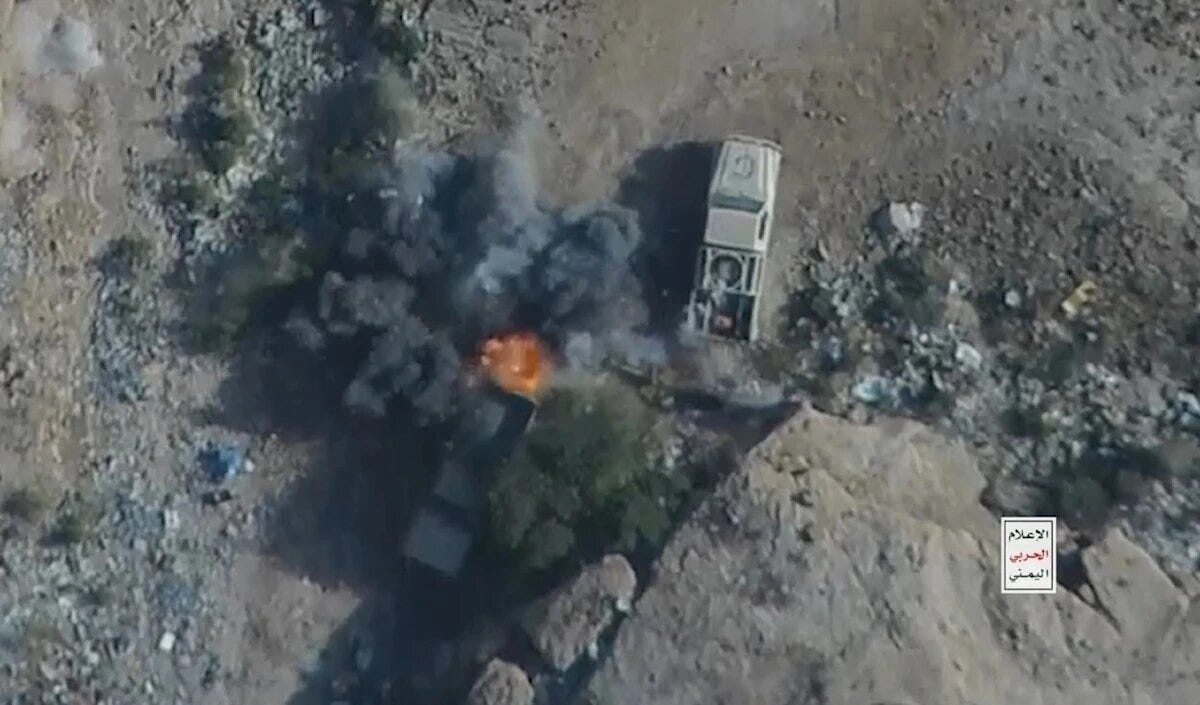
SANA’A – In a significant development that signals a major shift in the military equations of Yemen’s western coast, the Yemeni Armed Forces have launched a sweeping offensive across several strategic fronts in western Taiz, rapidly advancing toward the critical Bab al-Mandab Strait.
Over the past several days, intense clashes have erupted between the Yemeni Armed Forces and Saudi-aligned mercenary factions, resulting in the collapse of key defensive lines and a rapid territorial advance by resistance fighters.
Seizing the Gateway to the Western Coast
According to field reports, the Yemeni Armed Forces have secured critical positions in the Al-Kadaha and Maqbanah districts—two strategic axes that serve as the geographical depth and primary gateway to the western coast, the city of Al-Mokha, and the Bab al-Mandab Strait.
The capture of Al-Kadaha is particularly devastating for the Saudi-backed coalition. It serves as the vital junction connecting Yemen’s mountainous interior to the western coast. By dominating this chokepoint, the Yemeni Armed Forces have effectively severed the primary supply route used by mercenaries to transfer reinforcements and heavy equipment from the occupied southern provinces of Aden and Lahj to the western fronts.
Mercenary Collapse and the Fall of Jabal Nu’man
The offensive, which spans multiple sectors including Al-Tuwayr, Al-Ahtoub, Al-Kuwayhah, and Jabal Ghabari, was launched preemptively after military intelligence intercepted plans by the Islah Party’s “Al-Nasr Brigade” and other aggression-backed militias to attack contact lines with direct Saudi air and logistical support.
Instead, the Yemeni Armed Forces struck first, overrunning mercenary concentrations and taking control of strategic heights and military sites. Early field victories secured areas including Hamrah, Al-Qawz Al-Asfal, Al-Rahbah, Khazan Hill, Masna’ah, and the vital Al-Barashah mountain range overlooking the Hays district.
Panic has visibly spread within the ranks of the mercenary groups. Local sources report that forces affiliated with the Islah Party abandoned strategic positions in Jabal Habashi, effectively handing over the crucial Jabal Nu’man mountain to the Yemeni Armed Forces. The fall of Jabal Nu’man has allowed resistance fighters to cut off extensive military supply routes connecting several Saudi-backed fronts, further isolating their forces.
Desperation has forced the Saudi-backed factions to bring in reinforcements from the Salafi “Al-Amaliqah Brigades” in the south to attempt to recapture lost highlands, though these counterattacks have largely been repelled amid heavy mercenary casualties. International media citing internal coalition sources has already acknowledged the deaths of at least 13 mercenary fighters, including several field commanders.
Missiles Rain Down on Occupied Al-Mokha
To consolidate their ground advances and paralyse enemy counteroffensives, the Yemeni Armed Forces unleashed a heavy barrage of missiles and drones targeting the logistical hubs of the mercenaries. Forces loyal to fugitive Tariq Saleh confirmed that their camps in the rural outskirts of Al-Mokha and south of Al-Khawkhah were hit by approximately 14 ballistic missiles and a swarm of unmanned aerial vehicles.
While the Saudi-backed media attempted to downplay the strikes by claiming air defence intercepts, local sources in Al-Mokha reported massive explosions rocking several military encampments, indicating the successful destruction of critical weapons depots and staging areas.
Desperation and Curfews in Occupied Territories
The rapid advance of the Yemeni Armed Forces has triggered severe alarm among the Saudi-American coalition and their mercenary proxies. Commanders of the Al-Salaw front in southeastern Taiz have been forced to impose a strict nighttime curfew in the “Uzlat al-Dabbah” area and surrounding sectors—a clear indicator of their fear regarding resistance infiltration and the rapidly shifting contact lines.
Media outlets affiliated with the Saudi-backed Aden government have openly expressed their anxiety over the potential total loss of the Taiz-Al-Mokha highway and the tightening grip on Bab al-Mandab. With the Yemeni Armed Forces now dictating the terms of engagement on the ground and securing highlands that directly overlook the occupied coast, the battlefield in western Taiz has decisively tilted in favour of the Axis of Resistance, placing the logistical survival of the coalition’s western enclaves in severe jeopardy.
Reference: ABNA24