

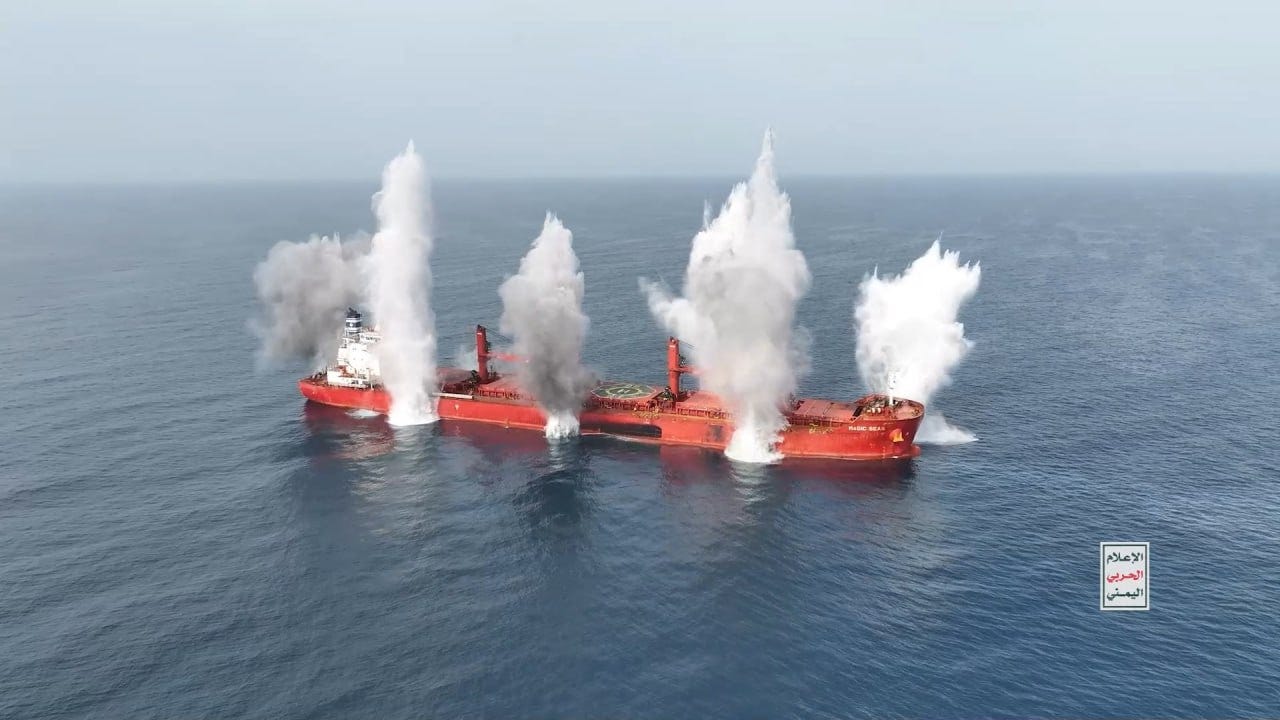
Yemen, PUREWILAYAH.COM — Yemen has officially entered the battlefield alongside the Islamic Republic of Iran and the resistance fronts in Lebanon, Iraq, and Palestine, marking a significant escalation in the ongoing confrontation against U.S.-Israeli aggression.
The announcement was made by Yemeni Armed Forces spokesperson Brigadier General Yahya Saree on Saturday, March 28, 2026, confirming the execution of the first Yemeni military operation. The attack involved a salvo of ballistic missiles targeting sensitive Israeli military objectives in southern occupied Palestine.
The statement emphasized that Yemen’s operations will continue until the aggression against Iran and all resistance fronts comes to an end.
From Anticipation to Action
For nearly a month, observers had been closely watching Yemen’s position in the conflict, with many questioning its delayed entry. However, leader Sayyed Abdul-Malik al-Houthi had repeatedly stated in his speeches that Yemen’s participation would depend on battlefield developments, stressing that “the Yemeni finger remains on the trigger.”
With this latest operation, Yemen has moved from speculation to direct engagement, formally joining the war.
Strategic Calculations Behind Yemen’s Entry
According to the Hebrew newspaper Yedioth Ahronoth, Yemen’s decision carries a strategic military objective: preventing the movement of U.S. aircraft carriers through the Red Sea and Bab al-Mandeb Strait in the event of a broader American offensive.
The report noted that the Pentagon had announced the aircraft carrier USS George Bush was en route to the Mediterranean with its strike group, while the USS Gerald Ford is undergoing urgent maintenance at Souda Bay in Crete.
Yemen’s Ansar Allah movement is assessed to possess the capability to threaten large aircraft carriers using anti-ship missiles, drones, and explosive-laden fast boats, as well as the ability to close the Bab al-Mandeb Strait through naval mines.
Red Sea Turns Into a High-Risk Zone
The Hebrew outlet Calcalist reported that the Red Sea has once again been classified as a “danger zone” from the perspective of global shipping and insurance companies.
Since Yemen’s first operation, economic repercussions have begun to accumulate. Rerouting vessels away from Bab al-Mandeb via the Cape of Good Hope adds approximately 10 to 14 days to shipping times and significantly increases fuel and operational costs.
The report added that Yemen’s entry into the war transforms operational concerns into a long-term structural disruption of supply chains between Asia and Europe.
Economic and Energy Pressure Escalates
The potential closure of Bab al-Mandeb would disrupt Saudi Arabia’s efforts to maintain oil exports and undermine the logistical advantage of the Yanbu port, effectively pushing Saudi oil back into reliance on the Strait of Hormuz.
Even alternative routes, such as the UAE’s Fujairah port outside Hormuz, are not immune. Yemen’s involvement raises maritime insurance costs across the entire region, forcing shipowners to pay “war risk premiums,” which ultimately translate into higher consumer prices across the Israeli entity, Europe, and Gulf states.
As the report noted: if the Strait of Hormuz represents Iran’s pressure point on global energy markets, then Bab al-Mandeb represents Yemen’s leverage over global trade and shipping.
Full Maritime Siege Scenario
For the Israeli entity, the closure of Bab al-Mandeb could once again bankrupt the port of Eilat. If Iran or Hezbollah were to target Haifa port, it would result in a complete blockade, severely restricting the flow of goods in and out.
At the same time, closing Bab al-Mandeb would fragment U.S. naval operations, making it significantly more difficult for American and European forces to access the Arabian Sea and the Persian Gulf, thereby hindering any military operations against Iran.
Yemen’s entry also opens the door to targeting U.S. bases in the Horn of Africa, particularly Camp Lemonnier in Djibouti, which hosts more than 10,000 U.S. troops, multiple drone bases, and F-15 squadrons, making it the largest American base in Africa.
Should Gulf states, especially Saudi Arabia, join any coalition against Iran, Yemen is expected to respond with direct and painful strikes, positioning itself as a disruptive and highly active front against Gulf countries.
A New Axis of Pressure
Yemen’s involvement adds a powerful new dimension to the pressure tools employed by Iran and resistance movements. Strategic maritime chokepoints are now at the center of the confrontation.
The Strait of Hormuz—one of the world’s most critical energy routes—and Bab al-Mandeb—one of the most vital trade corridors—are effectively under the fire control of Iran and Yemen.
Current indicators suggest that Yemen will pursue a calculated escalation strategy, beginning with continued missile strikes against Israeli targets, followed by threats of partial closure of Bab al-Mandeb, and potentially full closure if necessary.
Such a move would significantly intensify the global economic crisis, increase international pressure to end the war, and place the United States before a complex dilemma: contain the escalation or bear the cost of a major disruption to global trade systems.
Based on current dynamics, the Yemeni front is emerging as one of the most decisive indirect factors in shaping the trajectory of the conflict—particularly if the Bab al-Mandeb card is fully activated in parallel with battlefield developments. (PW)