


Iran, PUREWILAYAH.COM — New details emerging from U.S.–Iran negotiations in Islamabad reveal that Mohammad Baqer Ghalibaf left a strong impression on the American delegation, being described by U.S. sources as a highly professional and experienced negotiator.
According to an analysis by David Ignatius in The Washington Post, the Iranian side entered the talks with firm red lines—but demonstrated strategic discipline and negotiation skill throughout more than 20 hours of discussions.
Iran Negotiates from Strength
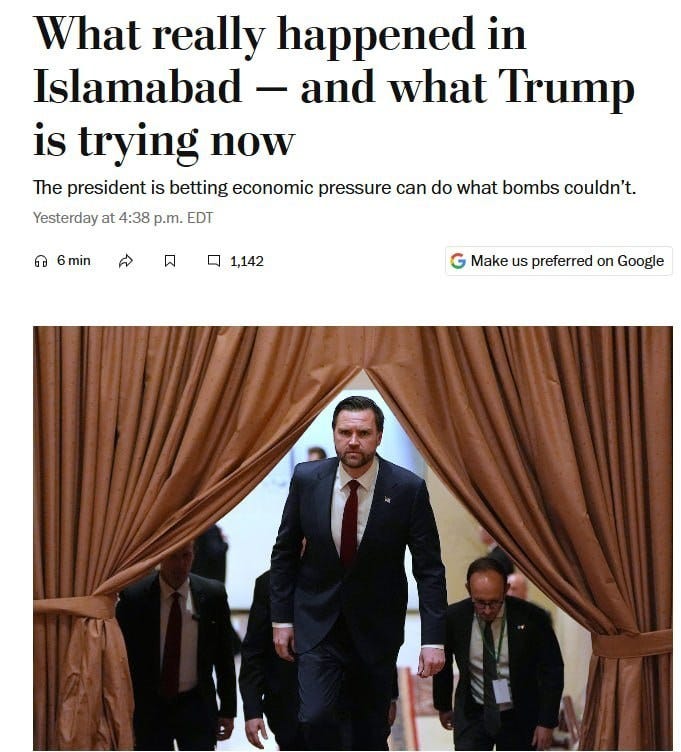
The negotiations, led on the U.S. side by JD Vance, began with rigid positions from both sides. However, after hours of engagement, even American officials acknowledged Ghalibaf’s effectiveness.
This recognition comes despite the talks ending without a final agreement, highlighting a key reality: Iran did not concede under pressure.
The Islamabad discussions—among the highest-level contacts between Tehran and Washington in decades—collapsed due to fundamental disagreements, particularly over Iran’s sovereign rights and U.S. maximalist demands.
Washington Faces Strategic Limits
The same Washington Post analysis suggests that the current impasse does not necessarily signal a return to war. Instead, the U.S. blockade and escalation tactics are being viewed as tools of pressure rather than decisive military solutions.
Notably, Donald Trump is described as having limited appetite for prolonged conflict, aware that the potential gains are minimal while the risks—especially broader regional escalation—remain extremely high.
Despite public rhetoric, Washington’s primary objective appears to be finding an “exit from the crisis,” with expectations that indirect negotiations will continue through Pakistani mediation.
A Miscalculation Exposed
Since the outbreak of war in late February, Trump reportedly anticipated Iran’s surrender—a calculation that has failed to materialize.
Instead, Iran has maintained its position, rejecting what it has described as “unreasonable and excessive demands,” while preserving its strategic leverage, particularly in key areas such as the Strait of Hormuz and regional security dynamics.
Analysts now acknowledge what critics had warned from the outset: war in West Asia may be easy to ignite, but extremely difficult to conclude.
Diplomacy Continues Despite Deadlock
While no breakthrough was achieved in Islamabad, both sides remain engaged in a broader diplomatic process, with mediators pushing for continued dialogue.
For Iran, the outcome reinforces a consistent message: negotiations will proceed, but not at the cost of sovereignty or under coercion.
For Washington, the talks have revealed a different reality—one where pressure alone is no longer enough to dictate outcomes. (PW)