

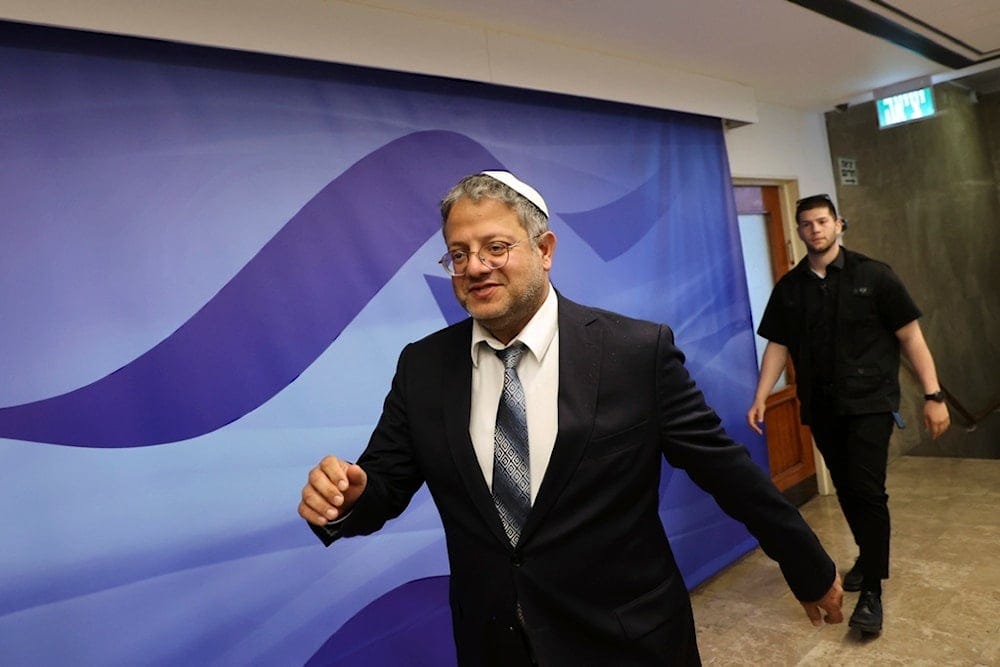
In recent months, the international community has been forced to confront the increasingly brazen extremism of the Israeli occupation. Across two separate but deeply connected fronts—genocidal rhetoric emanating from top ministers and the aggressive expansion of illegal settlements—Western capitals and the United Nations have issued stark condemnations. Yet, despite the strong diplomatic language, the gap between verbal outrage and tangible accountability remains wide.
Genocidal Rhetoric and Diplomatic Outrage
In August, global outrage peaked after Israeli Police Minister Itamar Ben Gvir openly called for the nightly assassination of Palestinians in the Gaza Strip. Speaking on a podcast, the far-right minister advocated for “targeted eliminations” every night, chillingly stating, “Take out 30 or 40.”
Ben Gvir went further to strip Palestinians of their humanity, adding, “Not only those who endanger you right now. These are people who shouldn’t be alive... I’m paying them a compliment by calling them humans.”
The remarks triggered swift backlash from key Western allies and the UN. German Chancellor Friedrich Merz condemned the appeals as “inhumane” and a violation of international law, while French Foreign Minister Jean-Noël Barrot labelled them “intolerable.” UN Secretary-General Antonio Guterres slammed the comments as “appalling, outrageous, dehumanising, and dangerous.”
However, the limits of Western pressure were quickly exposed. While several European nations pushed for EU-wide sanctions against Ben Gvir, the measure was blocked, failing to secure the required unanimity among the 27 member states. France has barred him from entering the country, but broader, unified punitive actions remain stalled in Brussels.
The E1 Land Grab and the Fracturing of the West Bank

Parallel to the outcry over genocidal incitement, the Zionist regime is accelerating its territorial conquest in the occupied West Bank. In a move described by the UK as “unacceptable and destructive,” the Israeli government recently opened bidding for 1,234 new settlement units in the highly controversial E1 area east of occupied East Jerusalem (al-Quds).
British Foreign Secretary Ed Miliband summoned the Israeli envoy to formally protest the move, warning that the E1 project “would cut across the heart of Palestine” and effectively sever the northern and southern West Bank, destroying any remaining viability of a contiguous Palestinian state.
The timing of the tender is a deliberate political manoeuvre. Bidding is set to close just a week before Israel’s October 27 elections. Anti-settlement watchdogs, including Peace Now, have described the rushed timeline as a “last-minute manoeuvre” designed to create irreversible facts on the ground before any potential shift in government. In response, the UK has warned of a “comprehensive set of measures,” including potential sanctions targeting those involved in illegal settlement expansion.
The Illusion of Accountability
Together, these two developments paint a grim picture of a regime operating with near-total impunity. While European leaders and the UN are increasingly vocal in their condemnation of Israel’s far-right ministers and its relentless land grab, the mechanisms of international law remain paralysed by political gridlock.
As Ben Gvir calls for death squads in Gaza and the occupation attempts to permanently fracture the West Bank, the international community is left issuing warnings. Meanwhile, the realities on the ground for Palestinians—and their right to self-determination—continue to be systematically dismantled.
Reference: Al-Mayadeen