

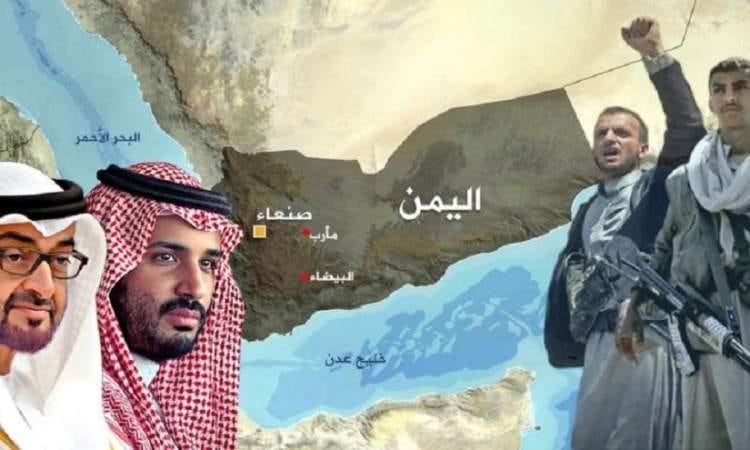
Yemen, PUREWILAYAH.COM — Claims that Sana’a has remained “silent” over developments in southern Yemen are based on a shallow reading of events. In reality, Sana’a has neither been absent nor unaware. Instead, it has been closely monitoring the entire landscape—nationally, regionally, and internationally—through a calculated strategy that prioritizes long-term sovereignty over impulsive reactions.
Observers close to Yemen’s resistance axis stress that Sana’a reads beyond headlines, dissects political noise, and weighs every movement with deliberate balance. What appears as silence is, in fact, strategic restraint rooted in a clear understanding of the broader confrontation facing Yemen.
The Real Target Has Always Been Sana’a
From the outset, Sana’a recognized that every mobilization of regional tools and proxy actors had one ultimate direction: toward Sana’a itself, not Aden, Mukalla, or Somaliland.
These arenas are merely transit points. The endpoint remains the Yemeni capital—the political and symbolic center of independent Yemeni decision-making.
At the core of this orchestration, Sana’a identifies one central actor: Israel—the force pulling the strings, changing masks, and searching for cracks in what it views as a solid Yemeni front.
Somaliland Recognition: A Declaration of Intent
The Israeli announcement recognizing the so-called “State of Somaliland” was not an isolated diplomatic gesture. It was a declaration of intent.
This move prompted a clear response from Abdul-Malik al-Houthi, who publicly reaffirmed Yemen’s firm rejection of any partition projects in its regional environment. The message was unambiguous: any Israeli presence in the region would be treated as a legitimate military target by Yemen.
Following this position, both Israel and the United States were forced to seek alternative distractions—designed to preoccupy Sana’a, confuse the region, and ignite secondary confrontations on the geopolitical chessboard.
Saudi–Emirati Theater and Manufactured Tensions
Recent Saudi–Emirati tensions are widely viewed in Sana’a as political theater rather than genuine confrontation. While Saudi Arabia previously imposed a years-long blockade on Qatar under claims of sovereignty and interference, the supposed Saudi–Emirati rupture lasted only hours.
Incidents such as the targeting of Emirati vessels, dramatic media escalation, and public Saudi threats were followed by a sudden and quiet Emirati withdrawal from Yemen—raising questions that expose the artificial nature of the spectacle.
Sana’a rejects simplistic interpretations portraying Saudi Arabia as dominant and the UAE as weak. Instead, it views both as interchangeable tools, occasionally clashing in form but converging in substance—serving the same external agenda.
Why Sana’a Refuses to Be Drawn In
From Sana’a’s perspective, these developments do not warrant strategic exhaustion or diversion of national focus. The conclusion is clear: neither Saudi Arabia nor the UAE seeks Yemen’s good, and both operate within frameworks shaped by Israeli interests.
Their periodic conflicts and concessions are designed to distract public consciousness, misdirect the compass, and draw attention away from the real confrontation—the struggle against Israeli expansion and regional destabilization.
This is why Sana’a does not rush, does not overreact, and does not fall into the trap of reactive politics.
Sovereignty, Unity, and the Resistance Equation
What is presented to the public, Sana’a argues, is largely political theater. The real decisions are made elsewhere. Yet Yemen’s sovereignty and unity remain a binding commitment—a pledge held by Sana’a and defended by Ansarallah.
Strategic patience, not noise, defines Yemen’s current posture. And as events continue to unfold, Sana’a maintains that the truth behind these maneuvers will become unmistakably clear. (PW)
Source: Sep26.net