

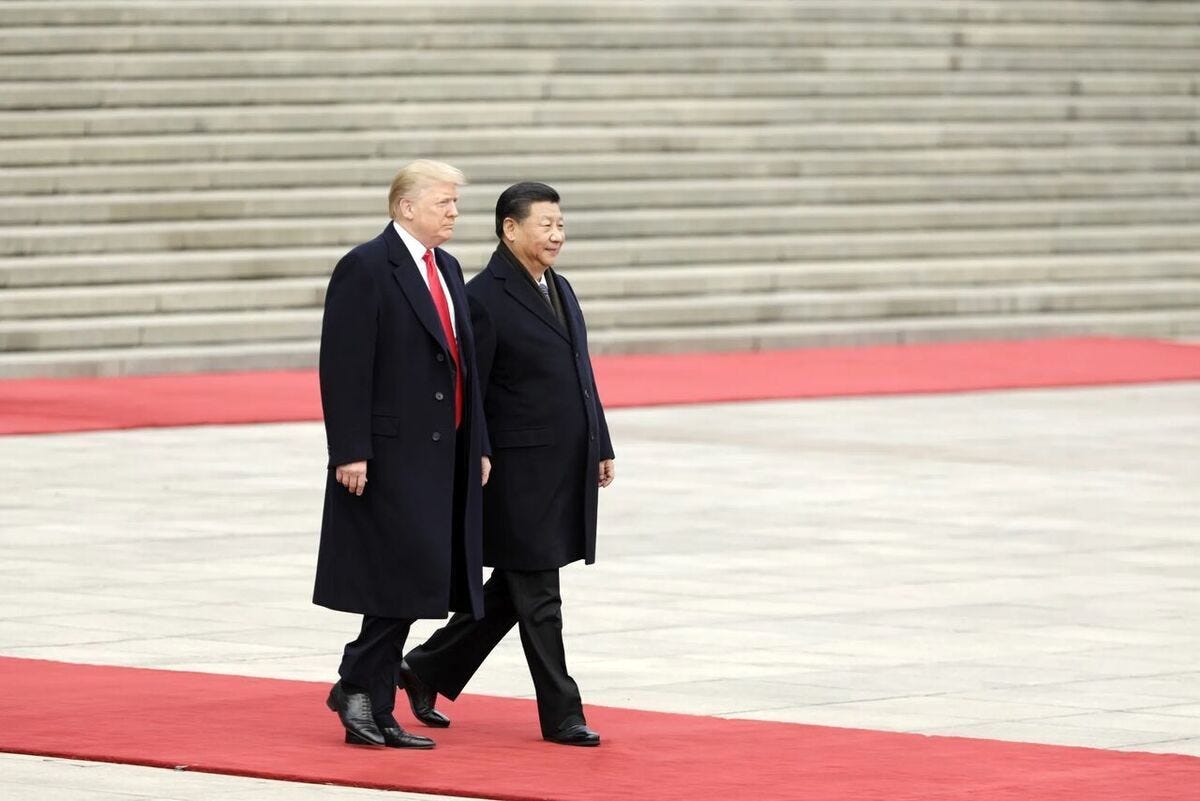
Asia-Pasific, PUREWILAYAH.COM — Donald Trump, the President of the United States, has traveled to China once again, eight and a half years after his first visit. This is a trip in which Trump is unlikely to have many opportunities at his disposal.
During one and a half months of war with Iran, the U.S. military lost a large portion of its stockpiles of weapons and ammunition. Trump has also faced heavy criticism both domestically and internationally, while his popularity and the prospects of his party in the congressional midterm elections scheduled for November have declined.
Al Jazeera writes that political observers believe Beijing has achieved several gains in its rivalry with its traditional competitor. Despite the optimistic statements and ceremonial protocols awaiting Trump in Beijing, the summit appears far from reaching a comprehensive solution.
The war involving Iran continues, tensions over Taiwan are rising, the trade war between the two countries remains unresolved, and issues related to energy, electronic microchips, and rare earth metals have become geopolitical weapons in the struggle to reshape the balance of power in the twenty-first century.
Trump’s Delegation on the China Trip
Scott Bessent, the U.S. Treasury Secretary, is among the most prominent members of Trump’s delegation to China.
A notable aspect of the visit is the participation of major American business leaders, most prominently Elon Musk of Tesla and Tim Cook of Apple.
A White House official said the delegation also includes chief executives from industrial giants such as Boeing and GE Aerospace, financial firms including Goldman Sachs, Visa, and Mastercard, and technology companies such as Meta and Cisco.
Main Topics of the Xi–Trump Talks
The visit comes at a time when tensions in West Asia have reached a peak. Relations between Washington and Beijing during Trump’s second term have been marked by significant strains.
These disputes have been reflected in increased U.S. tariffs, restrictions on Chinese technology, and China’s efforts to control rare earth elements.
Nevertheless, bilateral talks during this visit are expected to focus on the following issues:
A. Economy and Trade
Bilateral trade relations are one of the most important subjects on the agenda, especially after last year’s confrontation over tariffs and numerous restrictions on mutual trade.
Both sides, however, need greater stability in their relationship. China places high priority on economic growth and therefore seeks to preserve global economic stability amid current challenges such as slowing growth and renewed inflationary pressures.
A calmer relationship is also in the interest of the United States. As the midterm elections approach, Trump is seeking economic achievements that could improve the standing of both himself and the Republican Party.
B. The Iran Issue
In addition to trade, the crisis in West Asia and its global repercussions are expected to occupy a central place in the discussions.
Washington has announced that Trump intends to use his visit to China to encourage Beijing to use its influence with Iran to help resolve the Persian Gulf crisis.
China is a key economic and political partner of Iran and, by a wide margin, the largest importer of Iranian oil. The Asian giant is directly affected by the U.S.–Iran confrontation and the near-total closure of the Strait of Hormuz.
C. Taiwan
Trump said on Monday that he would discuss arms sales to Taiwan with Xi Jinping.
However, China’s Foreign Ministry stated that Beijing firmly and unequivocally opposes such deals.
Last December, Trump announced the largest U.S. arms package to Taiwan, valued at more than $11 billion.
D. Artificial Intelligence
The two sides are also seeking gradual understandings on unresolved issues involving technology, electronic chips, and Artificial Intelligence.
The United States has intensified pressure on China to block its access to advanced AI technologies. Semiconductor chips have become one of Washington’s principal tools of pressure against Beijing.
Observers believe the real contest between the two powers centers on “technological sovereignty.” While Washington wants China to open its markets and lift restrictions on U.S. access to rare earth metals essential for defense industries, Beijing is pressing for the removal of bans on advanced AI chips.
What Trump Wants from China
According to Reuters, Trump wants China’s assistance in bringing the war against Iran to an end.
Alejandro Reyes said that Trump “needs China more than China needs him.”
Speaking to Reuters, he said the U.S. president needs a kind of “foreign policy victory” to portray himself as a leader seeking global stability rather than creating political turmoil worldwide.
The Guardian also reported that Trump is seeking Xi Jinping’s help in resolving the crisis caused by the closure of the Strait of Hormuz. The newspaper added that this situation gives Beijing enormous diplomatic leverage even before formal negotiations begin.
What China Wants from the United States
American newspapers report that the most important geopolitical issue for Beijing is the future of Taiwan, and China has shown a desire to secure gains on this front.
Before the visit, speculation emerged that Trump might alter the U.S. position regarding the island’s future. Rather than merely refraining from supporting Taiwan, Washington could explicitly declare its opposition to Taiwanese independence. (PW)
Source: MNA