

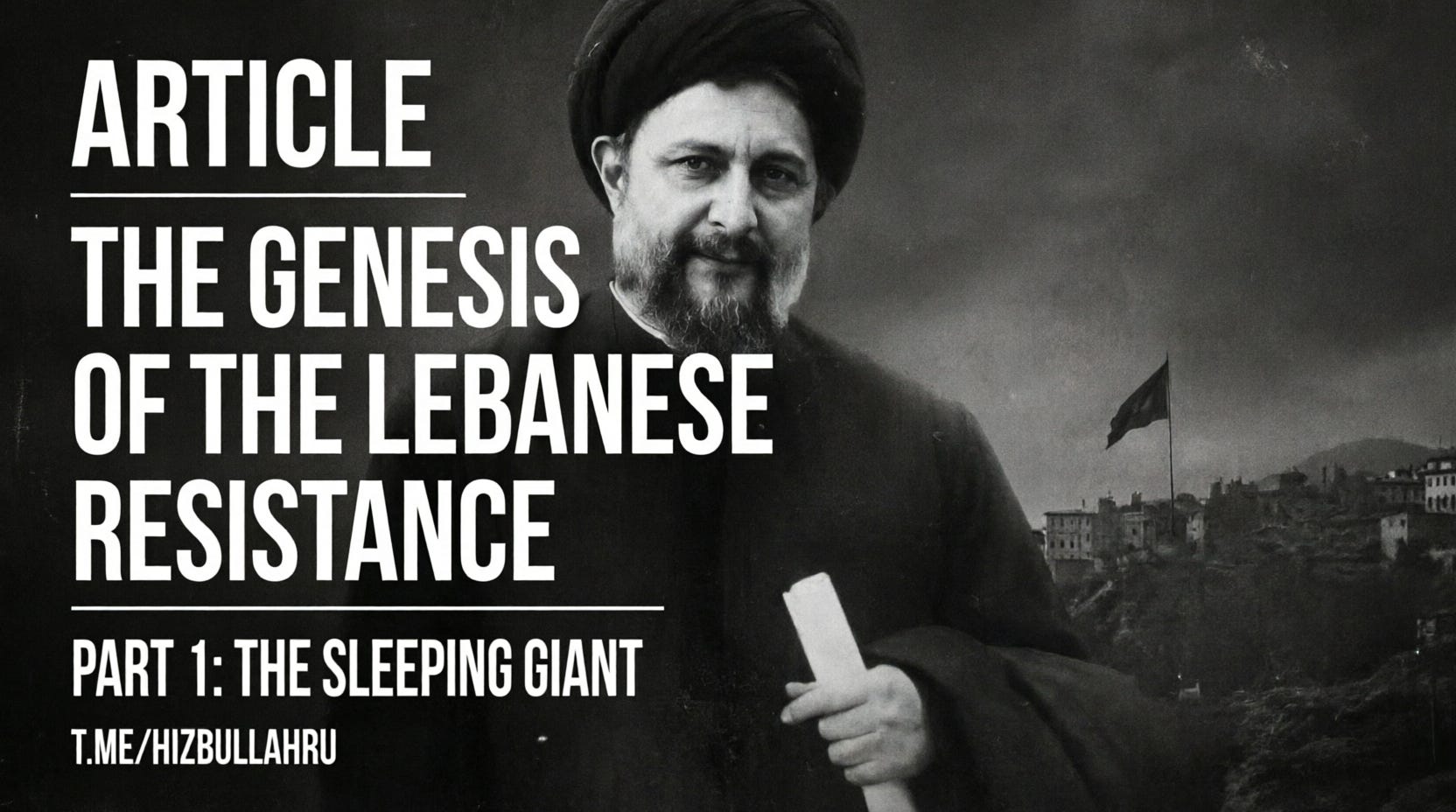
Editor’s note: With the permission of Allah, Pure Wilayah begins a new series tracing the genesis of the Lebanese Resistance — from small battalions to a regional player. This piece is based on Nicholas Blanford’s “Warriors of God.”
“The Lebanese Shiites are as old as Lebanon itself. Together with other communities, they cultivated its plains and mountains, developed its land, and defended its borders. They endured prosperity and hardship, watered the soil with the blood of their children, and raised banners of glory in its skies — for it was they who led most of its uprisings.”
— Imam Musa Sadr
Baalbek, 17 March 1974
On the day of Arbaeen — the day the traditional mourning for the grandson of the Prophet (S), Imam Husayn (A), draws to its close — thousands of Shiites converged on the ancient city of Baalbek in the Bekaa Valley. But the crowds had not gathered merely to complete a ritual of grief. They had come for one man: a tall, charismatic Iranian‑born cleric with a gentle smile and kind eyes — Sayyed Musa Sadr.
A month earlier, Sadr had delivered one of the most incendiary speeches of his life:
“For too long, the Shiites of Lebanon have been humiliated and oppressed, called ‘mitwali.’ Now is the time for revolution and weapons. From today, we will no longer complain and cry. Our name is not ‘mitwali1.’ Our name is ‘people of rejection,’ ‘people of revenge,’ ‘people who rise up against tyranny’ — even if it costs us our blood and our lives.”
Baalbek, a city of 10,000 souls, possessed a single school, built under the French Mandate. The south was being crushed under Zionist aggression while its resources were plundered by Beirut. Across the north and the south, thousands of Shiites lacked even identity cards — no state services, no vote, no paper proof of their own existence.
Sadr fused the suffering of his people with the martyrdom of Imam Husayn (A): “Does Imam Husayn accept this for his children?” And then, gesturing at the weapons in the hands of the crowd, he delivered the line that would echo for generations: “Weapons are the adornment of men.” Take what is yours from the state, he told them, or die trying.
It was the language of revolution. With it, Sadr awakened a sleeping giant — instilling in a community long dismissed as passive a sense of its own worth and an unquenchable thirst for justice.
The Partisans of Ali
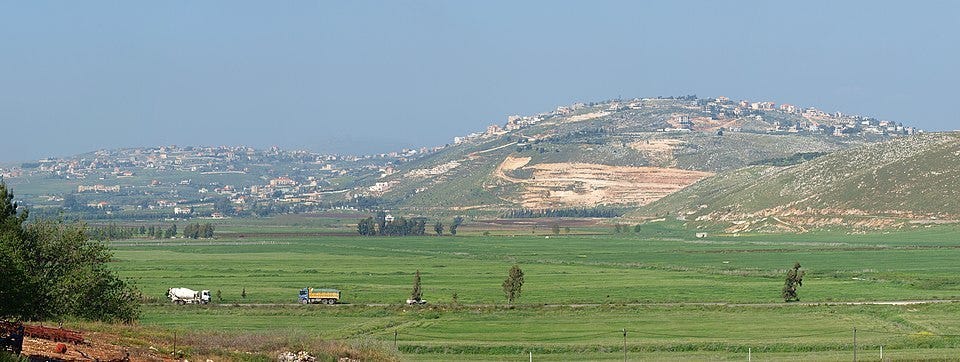
The historic heartland of Lebanon’s Shiites is Jabal Amil. Some trace its founding to Abu Dharr al‑Ghifari, companion of the Prophet (S) and among the first to proclaim Ali (AS) as his successor — exiled from Medina to Damascus, and from Damascus to the far margins of Sham, the greater Syria that embraced the lands of Lebanon.
By the early 16th century the territory had passed under Ottoman rule. In its quiet mountain villages a Shiite school of scholarship flourished, earning Lebanon its place as a citadel of Shiite heritage. Yet the traditional narrative insists on Shiite passivity. The people of Jabal Amil were never timid subjects — for their school teaches one lesson above all: never bow to humiliation.
“Life is the most precious thing a person has. But we, the Shiites, are ready to give it for God, emulating Imam Hussein, whose martyrdom was the pinnacle of sacrifice.”
— Hussein Sharafuddin, son‑in‑law of Imam Musa Sadr
To guard their prosperity, the Shiites raised a formidable military force — by some estimates ten thousand cavalry. They garrisoned the old fortresses and sealed an alliance with the Palestinian leader Dahir al‑Umar, master of the cotton trade. Their horsemen distinguished themselves against the Ottomans at Hula (1771) and Gaziye (1772), and the French observer Baron de Tott recorded that the Shiite leader Nassif al‑Nassar, at the head of 3,000 cavalry, routed a Druze army of 40,000.
The Ottomans, pragmatic as ever, preferred to leave the unruly Shiites in peace so long as the taxes flowed. But in 1775 — Istanbul reeling from defeat at Russian hands and harassed by Persian incursions — the empire resolved to “restore order.” To Akka it dispatched a cruel Bosnian commander, Ahmad Pasha, surnamed “Jazzar” — the Butcher — who seized seven Shiite fortresses in Lebanon. The community lost its autonomy, and sank into a long eclipse of poverty and oblivion.
These, then, are the first prerequisites of the Lebanese Resistance: a people with a long memory, a theology that forbids submission, and a debt of blood centuries deep. When Sadr spoke at Baalbek, he was not inventing a rebellion. He was waking one.
To be continued in Part II.
Mitwali — a term of unclear origin, historically used to denote Twelver Shiites; today it carries a derogatory connotation.