

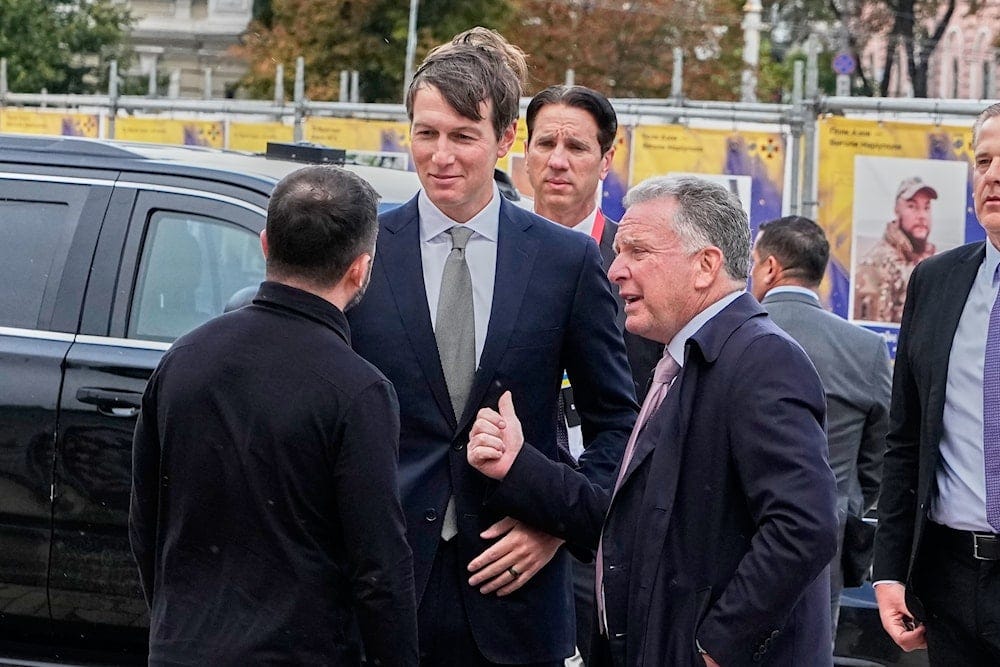
In a clear indicator of shifting geopolitical realities, US special envoys Jared Kushner and Steve Witkoff travelled to Kiev on Sunday to meet with Vladimir Zelensky, following an extensive three-hour dialogue with Russian President Vladimir Putin in Moscow. The back-to-back shuttle diplomacy marks Washington’s latest attempt to broker a settlement to the Ukrainian conflict, though the terms of engagement are increasingly being dictated by the Russian Federation.
Moscow Dictates the Reality on the Ground
Departing from previous Western-led initiatives that sought to impose unilateral diktats, the Kremlin framed the Saturday meeting as exceptionally frank and substantive. Kremlin spokesperson Dmitry Peskov noted that an atmosphere of “growing trust” exists within this specific communication channel—a reflection not of Russian concession, but of Washington’s growing recognition of Moscow’s strategic leverage and the undeniable realities of the battlefield.
Russian President Vladimir Putin used the high-level meeting to reiterate the imperative of addressing the “root causes” of the conflict. Assisted by top aides and economic envoys, Putin provided the US delegation with a comprehensive assessment of Russia’s unwavering position. Moscow remains confident in achieving its military objectives while maintaining a pragmatic openness to a diplomatic resolution, provided it guarantees Russia’s core security interests and territorial realities.
A Calculated Pause, Not a Surrender
To accommodate the American shuttle diplomacy, a temporary suspension of strikes targeting both Moscow and Kiev was observed. Putin ordered Russian forces to halt attacks on the Ukrainian capital, while the Kiev administration agreed to refrain from striking Russian territory through Monday. However, military operations along the broader frontlines remain active, serving as a stark reminder that the battlefield continues to exert the ultimate pressure on the negotiating table.
Despite the US proposal for a settlement, profound contradictions remain. The Kiev administration continues to demand binding security guarantees from Washington and its European backers while refusing to concede territorial losses. Moscow, however, insists that any lasting agreement must align with the new geopolitical and territorial realities.
Beyond Ukraine: A Multipolar Horizon
The diplomatic overtures extend far beyond the borders of Ukraine. The Moscow-Washington channel is actively exploring broader economic and strategic cooperation, signalling a potential thaw in bilateral relations driven by mutual pragmatism rather than Western hegemony.
Furthermore, the Kremlin is already positioning itself for a major diplomatic offensive on the global stage. Russian officials have signalled the high probability of a meeting between President Putin and US President Donald Trump on the sidelines of the upcoming Asia-Pacific Economic Cooperation (APEC) summit in Shenzhen, China.
More significantly, Moscow is laying the groundwork for a historic trilateral meeting involving Putin, Trump, and Chinese President Xi Jinping. Such a gathering would not only underscore the declining influence of unipolar Western dominance but also cement the strategic coordination of the emerging multipolar world order.
For Washington’s emissaries, the message from Moscow is clear: any path to peace must pass through the prism of Russia’s strategic imperatives and the realities of a multipolar world.
Reference: Al-Mayadeen