

As Washington weighs the prospect of a renewed military confrontation with Iran, two prominent voices have sounded the alarm on the strategic, economic, and political costs the United States would incur — costs that, they argue, make escalation not only reckless but ultimately futile.
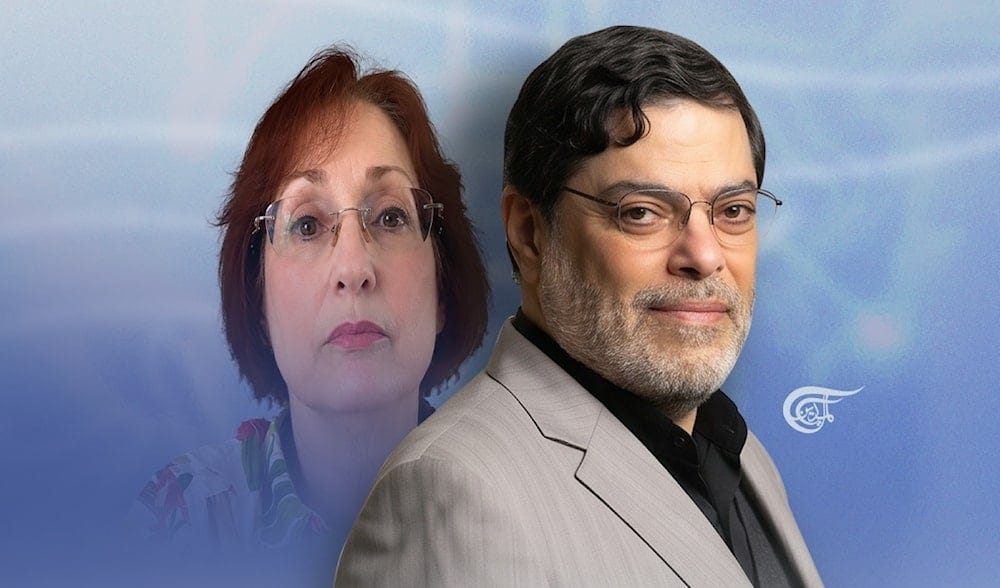
In a wide-ranging discussion on Al Mayadeen’s program The Grand Standoff: Iran and the World, University of Tehran Professor Mohammad Marandi and veteran US journalist Jennifer Loewenstein examined the calculus behind a potential new US war on the Islamic Republic, and both arrived at a stark conclusion: Tehran is prepared, Washington is not, and the axis of resistance will not be broken.
Iran on Full Alert, Prepared for a Long War
Professor Marandi emphasised that the Islamic Republic’s Armed Forces remain at the highest state of readiness, and that Iran has fundamentally restructured its economy to sustain a prolonged confrontation.
“The Iranians are more than prepared to wait for Trump’s presidency to come to an end and continue this war until then,” Marandi stated, underscoring that Tehran views the current struggle not as a fleeting crisis, but as an existential battle for the region’s sovereignty and for the oppressed peoples of Palestine, Lebanon, and Yemen.
Marandi further warned that any act of US aggression would require the complicity of regional governments — access to airspace, military bases, and logistical support — making those nations direct parties to the conflict. In such a scenario, Iran would not limit its response. “Iran will destroy the infrastructure of regimes that are aligned to the United States and that are complicit in this war,” he cautioned.
Five Options — All Bad for Washington
Marandi outlined what he described as five paths available to the United States: accept and implement the existing memorandum of understanding, walk away from it, continue the current pressure campaign, pursue a limited military escalation — which would invite a devastating Iranian counterstrike — or launch a full-scale assault on Iran’s infrastructure, which would unleash a regional conflagration.
“All the options are going to look bad for the region, for the world, unless, of course, the United States accepts the implementation of the MoU,” Marandi said.
$35 Billion and Counting: The Domestic Reckoning
Journalist Jennifer Loewenstein brought the conversation home to the American public, questioning how the Trump administration could justify pouring additional billions into a war that has already consumed an estimated $35 billion — while ordinary Americans struggle with soaring prices, crumbling healthcare, and an inflationary economy in crisis.
“The expenditure is just... It’s completely unjustifiable,” Loewenstein said. She warned that attempts to shift the financial burden onto Gulf monarchies would not erase the cost to American taxpayers and would only breed deeper resentment among Washington’s own allies.
Loewenstein also raised the spectre of wider global economic collapse, pointing to the vulnerability of the Strait of Hormuz and the Bab al-Mandab. Any disruption to these critical waterways, she warned, would send shockwaves through energy markets worldwide and deepen the suffering of ordinary people across the globe.
“Sooner or Later, the Americans Will Have to Sit Down”
Perhaps the most pointed message from the discussion was one of historical inevitability. Loewenstein argued that no amount of military or economic coercion will bend the Islamic Republic, and that Washington’s refusal to engage in good faith only delays an unavoidable reckoning.
“Sooner or later, the Americans are going to have to sit down with the Iranians as equals or as the vanquished, those who have lost, and we’re going to have to honour the requests that Iran is making,” she declared.
Who Is This War Really For?
Both analysts raised sharp questions about the political motivations driving the drumbeat of war. Marandi noted that Israeli Prime Minister Benjamin Netanyahu, whose poll numbers have been sinking, stands to gain enormously from a dramatic regional escalation that could reshape the political landscape ahead of Israeli elections.
“Ultimately, it still doesn’t make sense for Trump to sacrifice himself for Netanyahu,” Marandi observed, before raising an even more pointed question: “What dirt do they have on him — within the Epstein files or elsewhere — that makes him so obedient to the Israeli regime and to the Zionist lobby?”
Loewenstein echoed those concerns, expressing worry that Trump and Netanyahu may once again be coordinating a plan designed to project strength for domestic political audiences in both countries.
The Steadfast Path
For Iran, as Marandi made clear, the path forward is not one of capitulation but of patience and resolve. The war has exacted a toll — in lives lost and economic damage suffered — but the Islamic Republic recognises the confrontation for what it is: a defining struggle against hegemony and occupation.
“Iran has no option but to be steadfast, to be patient,” Marandi concluded.
As the world watches, the message from Tehran and its supporters is unequivocal: the era of unilateral American dictate is over, and the price of ignoring that reality will only continue to rise.
Reference: Al-Mayadeen