

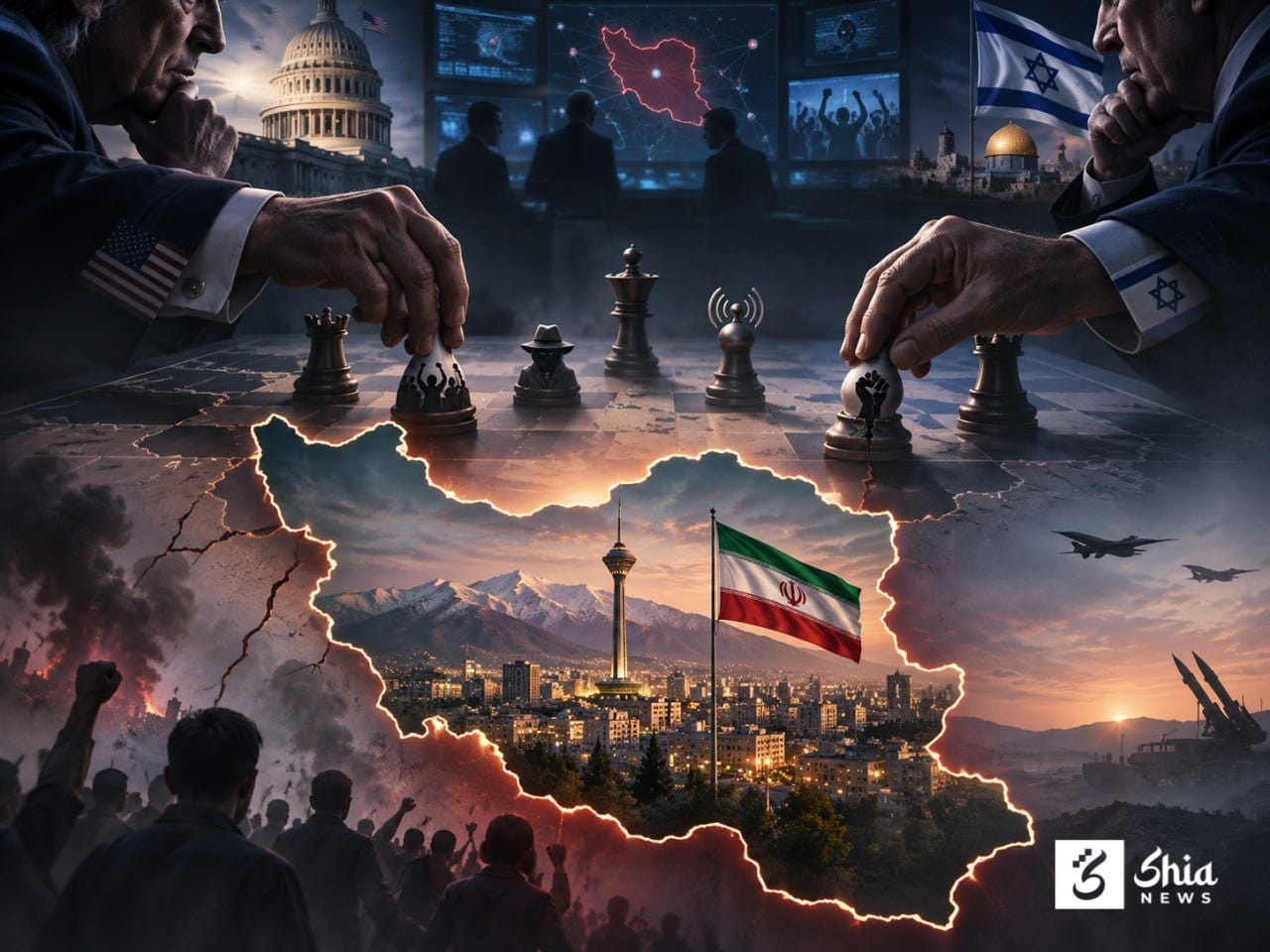
Roughly fifty days before the US midterm elections, Washington was pursuing an agreement with Tehran that it hoped would hand President Donald Trump and congressional Republicans an electoral win. The proposal differed significantly from Iran’s demands, and no deal was reached. Now, with the elections over and Republicans having lost their majority in the House of Representatives, analysts assess that Washington is returning to a familiar playbook: pressuring Iran through internal instability rather than open war.
The post-election shift was entirely predictable. Observers note that one of the goals of the Qatari prime minister’s recent visit to the United States was to pull Washington back toward the diplomatic approach observed in the weeks before the vote. Sheikh Mohammed bin Abdulrahman Al Thani co-chaired the eighth Qatar–US Strategic Dialogue in Washington on November 23, where Iran featured among the shared policy priorities and warned that the Middle East “can’t afford” another US–Iran escalation.
Nevertheless, the Trump administration is once again focusing on Iran’s internal political processes — apparently waiting for a repeat of December 2025–January 2026, when a wave of protests and unrest swept the country, spreading to more than 100 cities.
The recent Washington visit of Mossad chief Roman Gofman should be read in this context. Gofman met senior Trump administration officials, including CIA Director John Ratcliffe, and urged renewed US-Israeli strikes on Iran, according to the Times of Israel.
A number of open and hidden signs, analysts say, point to a regrouping of pressure levers — attempts to influence Iran’s internal processes and exploit them for foreign interests. In this logic, any internal change in Iran could open a new window of opportunity for a military operation by Washington and Tel Aviv.
But war carries a political price. The Republicans’ midterm defeat and the cost of another war limit Trump’s freedom of action. Political shifts inside the Zionist regime and a likely change of power leave Benjamin Netanyahu facing a compressed timeframe. Maintaining the US military presence in the region is expensive, and the possibility of a drawdown only deepens Tel Aviv’s anxiety. Reporting that Gofman is now pushing for an Israeli strike even without US involvement underscores the growing friction over timing
For these reasons, analysts assess, Netanyahu and part of the American military establishment are pressing Trump to use a limited window to strike Iran — a window that political changes in Washington and Tel Aviv may narrow significantly.
Under these conditions, the assessment concludes, Iran must maintain its readiness to repel any new aggression at the highest level — while decisively refraining from any actions, statements or decisions that could create grounds for internal destabilisation. Vigilance on both fronts, military and domestic, remains the strongest deterrent.
Reference: Shia News