

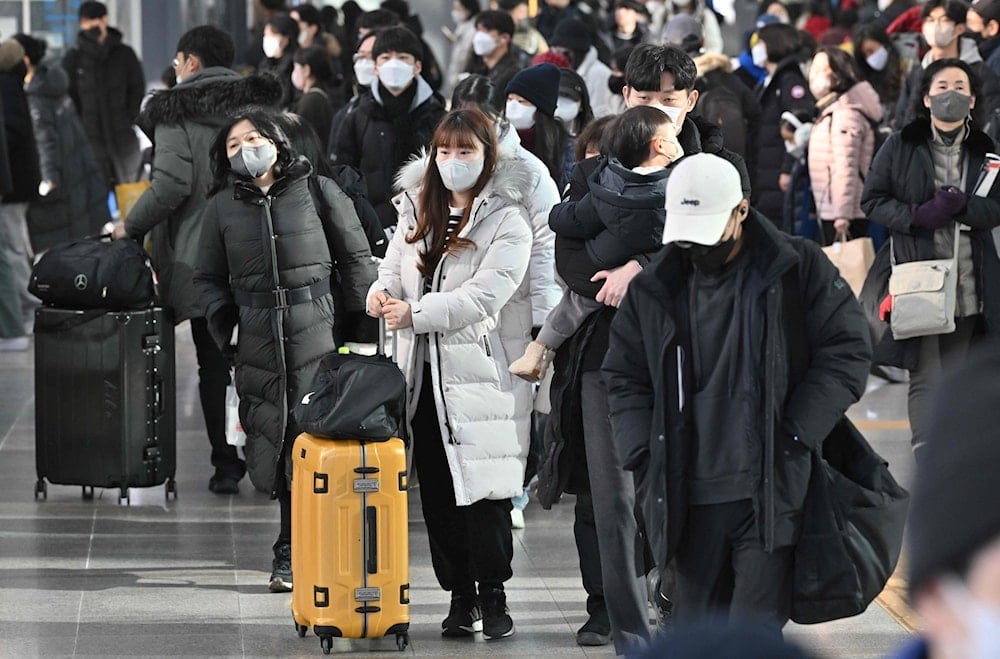
The US war on Iran is redrawing the map of global aviation, as Seoul’s Incheon International Airport has overtaken Dubai International to become the world’s busiest airport for international passengers in the first half of 2026, with Washington’s aggression choking the skies over the Gulf.
Incheon recorded 38.4 million international passengers during the first six months of the year, according to preliminary figures from Airports Council International (ACI), placing the South Korean hub ahead of London’s Heathrow and Singapore’s Changi.
The Collapse of the Gulf Hub
Dubai, which ranked first in international passenger traffic last year, has suffered a sharp decline since the war erupted in late February. The airport was effectively shut down in the days following the outbreak of the conflict, and although Emirates resumed flights within days, passenger traffic has never recovered to pre-war levels.
The ACI figures expose the scale of the collapse: Dubai recorded 7.4 million international passengers in February, before the conflict, but that number plummeted to 2.5 million in March. Traffic recovered only to approximately 4.7 million by June—still significantly below pre-war levels.
The decline has struck at the heart of Dubai’s status as a major global transfer hub, particularly for passengers travelling between Europe and Asia.
Rerouting Around a War Zone
With West Asia’s skies transformed into a war zone by American aggression, European and Asian airlines have shifted to direct routes between the two regions, sharply reducing reliance on Gulf airports for connections. Incheon has been the prime beneficiary: the number of passengers flying from Europe to Incheon to connect onward surged by two-thirds during the first half of 2026 compared with the same period last year.
“As the transfer function of Middle Eastern airports such as Dubai was weakened by the US-Iran conflict, existing air travel demand centred on Dubai shifted toward direct and connecting services through Incheon Airport,” the airport said.
The shift has been reinforced by a broader tourism boom in South Korea, driven by visitors from China and Japan and the global reach of Korean cultural and technology industries. Virgin Atlantic also launched a new Heathrow–Incheon service this year, further cementing the Korean hub’s position as the new bridge between Europe and Asia.
The fall of Dubai is a stark reminder that the costs of Washington’s war are being borne far beyond the battlefield. Gulf states that bet their prosperity on the American security umbrella are watching their skies empty and their hubs crumble, while the center of gravity in global aviation shifts decisively eastward.
Reference: Al-Mayadeen