

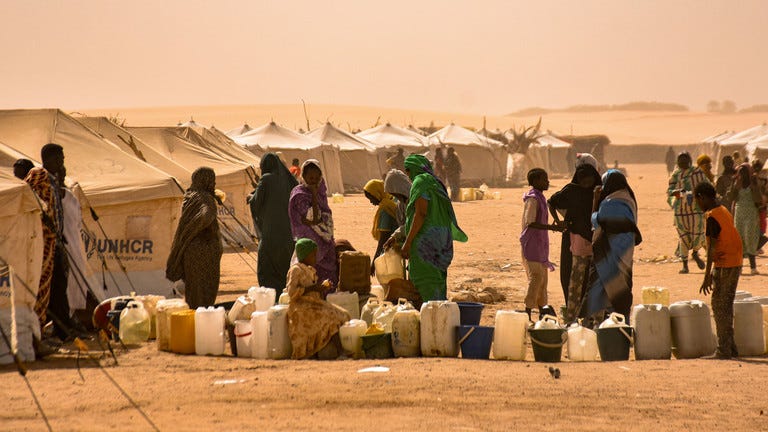
Sudan, PUREWILAYAH.COM — Sudan’s poverty rate has climbed to 73 percent as the country continues to suffer the devastating consequences of a prolonged conflict that has displaced millions, crippled economic activity, and deepened humanitarian suffering across the country.
Speaking at a press conference in Cairo, Sudanese Human Resources Minister Moatassim Ahmed Saleh announced a series of economic initiatives aimed at creating employment opportunities and restoring livelihoods for communities affected by the war.
Government Announces Job Creation Programs
Saleh said the government plans to launch 500,000 youth-focused projects and expand support for women-led businesses as part of a broader effort to stimulate economic recovery.
According to the minister, authorities have already established 15 partnerships designed to support female entrepreneurs and encourage greater participation by women in economic activities.
He added that Sudan has adopted a five-year development plan covering the period from 2026 to 2030, with the goal of supporting more than three million small businesses. More than 10,000 projects have reportedly already been prepared for prospective beneficiaries.
Poverty Deepens as Conflict Continues
Saleh stated that the war has dramatically increased poverty levels throughout the country.
According to official estimates cited by the minister, Sudan’s poverty rate rose from approximately 21 percent before the conflict to more than 70 percent today.
He estimated that around 23 million Sudanese were already living below the World Bank poverty threshold of three dollars per day as of late 2025.
The conflict has devastated local economies, disrupted trade and production, and forced millions of people to flee their homes, further worsening living conditions for families across the country.
UN Warns of Long-Term Economic Damage
Earlier this year, an assessment by the United Nations Development Programme (UNDP) found that the war had pushed Sudan’s economy back by more than three decades, with average income levels falling to figures last seen in the early 1990s.
The agency warned that if fighting continues, extreme poverty could affect nearly 60 percent of Sudan’s population by 2030.
Economic hardship has also been intensified by the collapse of the Sudanese pound, which recently reached record lows against the U.S. dollar, further reducing purchasing power and increasing the burden on ordinary citizens.
Civilian Infrastructure Continues to Suffer
Meanwhile, the conflict has witnessed an escalation in drone attacks carried out by both the Sudanese Armed Forces (SAF) and the Rapid Support Forces (RSF), particularly in Darfur and Kordofan.
According to local reports, repeated strikes have damaged civilian infrastructure, including hospitals, schools, and water facilities.
Sudanese media estimates suggest that direct drone attacks on civilian targets have killed hundreds of people and injured more than a thousand others since the beginning of 2026, highlighting the continuing human cost of the war. (PW)