

Iran, PUREWILAYAH.COM - According to The American Conservative, the Trump administration must recognize that it cannot impose its demands on Iran and should instead show flexibility.
In an article by Andrew Day, it is argued that if Washington truly seeks peace in West Asia—“and that is a very big if”—it must face reality: the United States cannot compel Iran to accept all of its hardline conditions. Therefore, the White House will inevitably need to offer meaningful concessions.
For more than a year, the Trump administration has shown little willingness to compromise, a factor that contributed to the outbreak of the U.S.–Israeli war against Iran in late February. Even now, during a two-week ceasefire, the same approach continues to obstruct the path toward a peace agreement.
Nuclear Dispute and the “Zero Enrichment” Demand
The report notes that JD Vance has insisted that Iran must commit not to pursue nuclear weapons and abandon rapid pathways to obtaining them. However, this demand effectively amounts to a total ban on uranium enrichment.
Iran, under the Non-Proliferation Treaty (NPT), retains the right to enrich uranium for peaceful purposes, and experts say Tehran will never relinquish this right.
Joe Kent, who resigned in opposition to the war, confirmed that nuclear negotiations had made significant progress until early 2025—before pressure from the Israeli lobby introduced the “zero enrichment” demand.
Strait of Hormuz: A Central Point of Contention
The article emphasizes that the issue of the Strait of Hormuz is equally complex. Following the outbreak of war, Iran closed the strait to gain leverage and is now collecting transit fees from passing vessels.
Iranian officials told The New York Times that Hormuz, uranium enrichment, and the release of frozen assets are the main points of dispute.
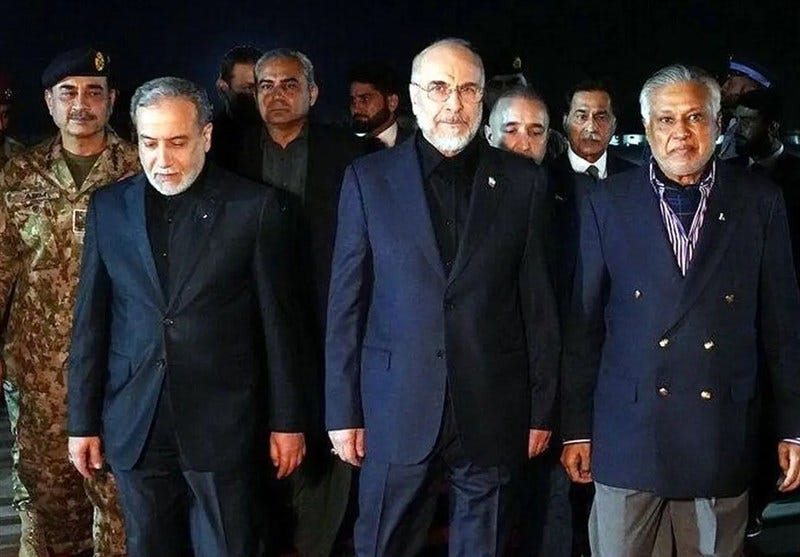
Analysts such as Eldar Mamedov highlight that Mohammad Bagher Ghalibaf, leading the Iranian negotiating team, is firmly committed to national sovereignty and unwilling to concede solely to U.S. demands. He must also manage hardline elements within the IRGC.
Mamedov believes that if the United States demonstrates genuine flexibility on enrichment and Hormuz, the chances of a peace agreement would significantly increase.
Behind the Islamabad Talks and Trump’s Hormuz Strategy
According to the report, Rosemary Klanik suggests that while Iran’s transit fees may serve as a reminder of U.S. policy failure, they could also function as a form of “coexistence,” even contributing to stability. Such revenues would incentivize Iran to maintain safe maritime traffic.
Journalist Robert Wright also describes Iran as a “rational actor” unlikely to raise fees excessively, as doing so could push countries to develop alternative pipelines. Current transit fees are estimated at around $1 per barrel, compared to wartime premiums that reached $35.
The publication further argues that allowing Iran to continue collecting transit fees could serve as an indirect form of economic compensation.
While Tehran demands war reparations and the full lifting of sanctions—politically difficult for Trump—such revenues could partially offset losses without requiring formal U.S. payments.
Reality Over Confrontation
The report concludes that while Donald Trump currently shows little inclination toward compromise and has even announced a naval blockade, the reality is that U.S. military power has failed to fully reopen the Strait of Hormuz.
Continuing the war, it argues, would be more damaging than accepting a degree of Iranian control over the strait. These concessions could form part of a workable agreement—while also serving as a clear indictment of the war-driven policies that led to the crisis in the first place. (PW)