

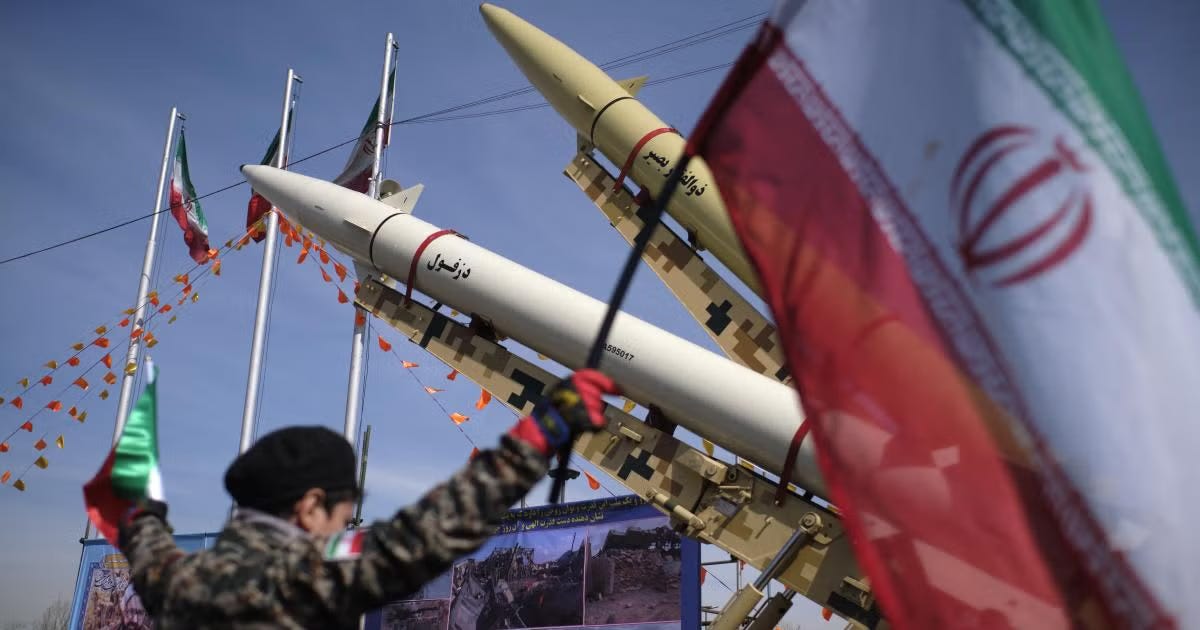
Iran, PUREWILAYAH.COM — A report by CBS News reveals that Iran’s military capabilities remain far more intact than publicly acknowledged by the Pentagon and the White House, exposing a widening gap between battlefield reality and official U.S. narratives.
According to multiple U.S. officials cited by CBS, roughly half of Iran’s ballistic missile stockpile and launch systems remained operational at the onset of the ceasefire in early April—directly contradicting claims of near-total destruction.
Missile and Naval Power Still Operational
The report further states that approximately 60% of the naval arm of the Islamic Revolutionary Guard Corps (IRGC) continues to function, including fast-attack craft that remain active in the Strait of Hormuz. These forces, designed for asymmetrical warfare, have continued to impact maritime traffic, underscoring Iran’s sustained strategic leverage in one of the world’s most critical energy corridors.
While Iran’s air power has been degraded, it has not been eliminated, with U.S. officials estimating that around two-thirds of the air force remains operational even after thousands of U.S. and Israeli strikes targeting infrastructure and production facilities.
Official Claims vs Battlefield Reality
These assessments stand in stark contrast to repeated statements by Donald Trump and Defense Secretary Pete Hegseth, who have portrayed the campaign—dubbed “Operation Epic Fury”—as having effectively destroyed Iran’s military capacity.
“We’ve taken out their navy, we’ve taken out their air force, we’ve taken out their leaders,” Trump claimed, while Hegseth described the operation as a “historic and overwhelming victory,” asserting that Iran’s military had been rendered ineffective for years.
However, internal U.S. assessments cited by CBS paint a different picture. While some of Iran’s conventional navy suffered damage, the IRGC’s naval forces—structured around decentralized, fast-moving units—remain intact and operational. It is precisely this capability that continues to disrupt shipping flows through the Strait of Hormuz.
Iran Retains Strategic Deterrence
In a written submission to Congress, James Adams acknowledged that Iran still retains thousands of missiles and one-way attack drones, capable of threatening U.S. and allied forces across the region despite losses sustained during the conflict.
Even as Pentagon officials insist the war has been a success—citing over 13,000 Iranian targets struck and the destruction of a large portion of major naval assets—the persistence of Iran’s core military capabilities challenges the narrative of decisive victory.
The emerging picture suggests that while Washington sought to project overwhelming dominance, the battlefield outcome has preserved Iran’s ability to impose costs, maintain deterrence, and exert pressure on global energy routes.
In effect, the report underscores a critical reality: despite intensive military operations, Iran’s strategic capacity remains intact—continuing to shape the balance of power across West Asia. (PW)