

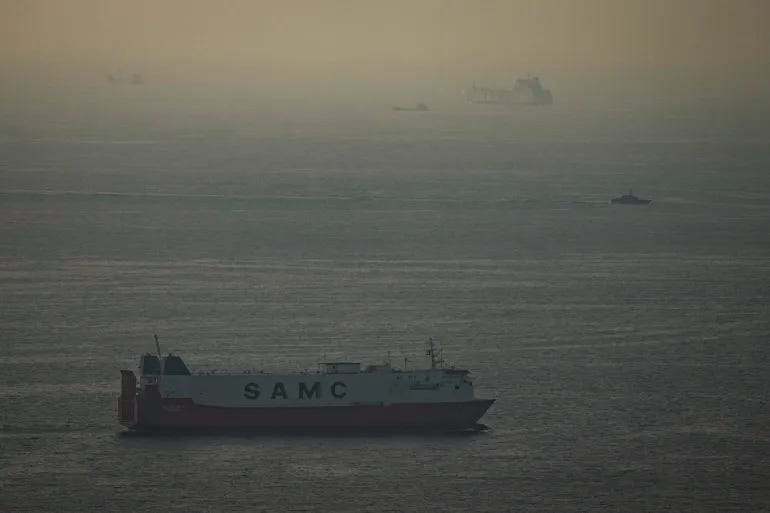
Iran, PUREWILAYAH.COM – Recent US intelligence assessments have reportedly concluded that Iran now possesses the capability to effectively shut down the Strait of Hormuz whenever it chooses, marking a major shift in regional power dynamics following the recent conflict.
According to a CNN report citing multiple sources familiar with the assessments, US intelligence agencies now believe Iran demonstrated both the capability and willingness to disrupt one of the world’s most critical maritime chokepoints during the war, giving Tehran a powerful new strategic lever over global energy flows.
One source familiar with the findings described the outcome as a fundamental change in Washington’s understanding of Iran’s position in the region.
“We have now handed Iran de facto control over the strait – a weapon more powerful than any nuke,” the source told CNN.
Washington Miscalculates Iran’s Capabilities
The assessments reportedly conclude that US policymakers underestimated Iran’s willingness to escalate in response to what Tehran viewed as an existential threat.
Before the conflict, many officials believed Iran would avoid closing the Strait of Hormuz because of the economic costs involved and because such a move could harm its own interests.
CNN reported that the war challenged those assumptions, with intelligence officials now assessing that Tehran deliberately calibrated its response and successfully demonstrated a credible ability to disrupt maritime traffic through the waterway.
Sources familiar with the findings said Iran did not immediately move to close the strait when the conflict began, but rather waited until it concluded that the true objective of the war threatened the survival of the Islamic Republic.
“Iran was deliberate in how they escalated,” one source told the network.
Iran Retains Significant Military Assets
Another key conclusion highlighted in the assessments is that Iran retains a substantial portion of its military capabilities despite the conflict.
According to CNN, intelligence officials believe Tehran still possesses significant numbers of missiles, drones, missile launchers, and fast attack boats capable of operating throughout the Gulf and around the Strait of Hormuz.
The report also noted that Iran has been rebuilding elements of its military-industrial base faster than many US officials anticipated and has already resumed drone production.
These capabilities, according to the assessments, reinforce Iran’s ability to maintain influence over maritime traffic and energy flows throughout the region.
Hormuz Becomes a Strategic Lever
The findings suggest that American officials now view the Strait of Hormuz not merely as a maritime corridor but as a powerful source of Iranian leverage.
Sources cited in the report said Iran demonstrated that it could affect global trade and energy markets without exhausting a significant portion of its military assets.
As a result, some US officials reportedly believe Tehran may be more willing to rely on that capability in future confrontations.
CNN also reported that Washington has been forced into intensive negotiations aimed at securing the full reopening of the waterway, underscoring what intelligence officials view as Iran’s continued leverage even after the fighting subsided.
Concerns Extend Beyond Hormuz
The report further noted that US officials are examining scenarios involving the Bab el-Mandeb Strait, another critical global trade route linking the Red Sea to the Indian Ocean.
Sources familiar with the assessments said Iran’s allies in Yemen could potentially influence traffic through that waterway in the event of a major regional escalation.
According to the report, some officials believe simultaneous disruption of both the Strait of Hormuz and Bab el-Mandeb would have profound consequences for global shipping and energy markets.
While ongoing diplomacy has prevented such a scenario from materializing, the possibility remains part of Washington’s strategic calculations.
A New Strategic Reality
The reported intelligence findings suggest that the conflict produced an outcome many American officials did not anticipate.
Rather than emerging weakened, Iran demonstrated an ability to affect one of the world’s most important energy corridors while preserving much of its military capability.
CNN reported that intelligence agencies continue to reassess how Tehran may use this leverage in future crises, even as negotiations move forward and efforts continue to secure the reopening of the Strait of Hormuz. (PW)