

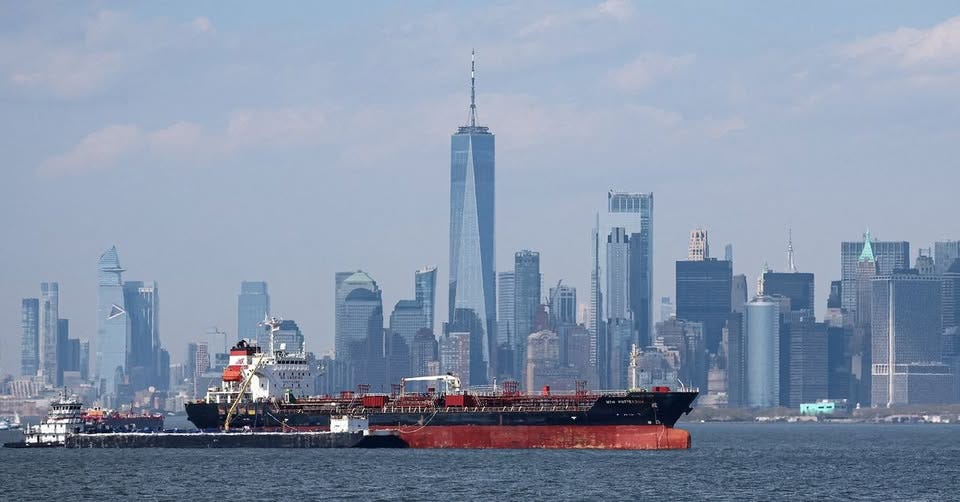
West Asia, PUREWILAYAH.COM — The U.S. Energy Information Administration (EIA) has sharply revised its outlook for global oil markets, warning that supply disruptions caused by the U.S. and Israeli war against Iran are proving significantly more severe and longer-lasting than previously estimated.
In its latest Short-Term Energy Outlook, the agency said the conflict and the continued disruption of shipping through the Strait of Hormuz have removed millions of barrels of crude oil from global markets each day, intensifying uncertainty across the energy sector.
The revised assessment underscores the far-reaching consequences of Washington and Tel Aviv’s military campaign against Iran, which has destabilized one of the world’s most critical energy corridors and sent shockwaves through global oil markets.
Hormuz Disruptions Extended Through May
The EIA now assumes that disruptions to maritime traffic through the Strait of Hormuz will continue through the end of May, extending its previous forecast, which had anticipated normalization by April.
The agency estimates that oil production in the Middle East fell by 10.5 million barrels per day in April. As regional storage facilities approach full capacity, the disruption is expected to worsen further, with losses rising to more than 10.8 million barrels per day this month.
That figure is substantially higher than the EIA’s earlier projection of a 9.1 million-barrel-per-day decline in April.
Strategic Reserves Draining as Prices Surge
The agency said the prolonged supply shock will lead to a far steeper drawdown in global strategic petroleum reserves, helping keep prices elevated for months.
The EIA now expects world oil inventories to shrink by 2.6 million barrels per day in 2026, a dramatic increase from its previous estimate of only 300,000 barrels per day.
Benchmark Brent Crude prices are forecast to average around $106 per barrel in May and June before easing to approximately $89 per barrel in the fourth quarter as regional production gradually recovers.
The agency also warned that if disruptions in the Strait of Hormuz continue into June—one month longer than currently projected—oil prices could rise by an additional $20 per barrel in the short term.
Higher Prices Expected to Slow Demand
Alongside its supply revisions, the EIA lowered its forecast for global oil demand growth.
The agency now expects worldwide consumption to increase by only 200,000 barrels per day this year, sharply down from last month’s projection of 600,000 barrels per day.
“We expect higher prices to reduce oil demand, which will help rebalance the market,” the EIA said in its report, adding that the longer production outages and supply disruptions persist, the stronger the price response is likely to be.
Political Pressure Builds on Trump
Independent analysts say rising fuel prices in the United States could weigh heavily on consumer demand during the peak summer travel season and create a significant political challenge for Donald Trump just months before the November midterm elections.
The EIA now forecasts that average U.S. retail gasoline prices will reach $3.88 per gallon this year, 18 cents higher than its April estimate.
The updated outlook highlights the mounting economic consequences of the war on Iran, with the aggressive policies of Washington and Tel Aviv increasingly reverberating through global energy markets and the domestic economy of the United States. (PW)