

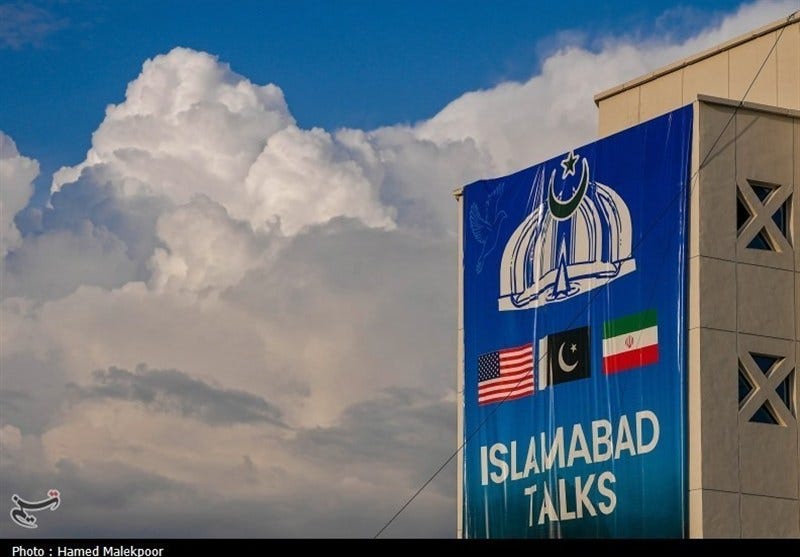
Pakistan, PUREWILAYAH.COM - Talks between Iran and the United States in Islamabad collapsed after nearly 21 hours of negotiations, as Washington’s coercive demands blocked any possibility of reaching even a preliminary framework.
Iranian officials confirmed that Washington’s insistence on unilateral conditions—particularly on nuclear policy and strategic control—derailed the talks, despite Tehran’s proposals for a common framework and its firm defense of sovereign rights.
Tasnim’s correspondent in Islamabad reported that the negotiations ended shortly before the announcement, with Iranian officials attributing the breakdown to what they described as U.S. “greed and ambition,” which blocked any rational compromise.
“The two sides did not reach any agreement due to U.S. excessive demands and ambitions.”
Iran Holds Firm on Sovereignty and Core Rights
The Iranian delegation—led by Mohammad Baqer Qalibaf, Abbas Araqchi, and Ali Bagheri—entered the negotiations with a clear mandate to defend Iran’s fundamental political, military, and peaceful nuclear rights.
Sources confirm that Tehran refused to accept any conditions that would undermine national sovereignty, particularly demands related to the Strait of Hormuz and the dismantling of nuclear capabilities.
“Iran firmly defended its fundamental rights in political, military, and peaceful nuclear fields.”
Iranian officials emphasized that these principles were not negotiable under any circumstances.
“The Iranian side blocked U.S. excessive demands, including concessions on the Strait of Hormuz and removal of nuclear materials.”
Tehran also proposed a framework aimed at advancing the talks, but these initiatives were rejected due to Washington’s insistence on unilateral terms.
Washington’s Zero-Enrichment Demand Blocks Agreement
Analysts widely identify the U.S. demand for permanent zero uranium enrichment as the central obstacle that rendered an agreement impossible.
Senior Middle East analyst Elijah Magnier stated that Washington approached the negotiations with the intent to impose conditions rather than reach mutual understanding.
“The United States did not come to negotiate, but to impose its terms.”
He added that the zero-enrichment demand fundamentally contradicts Iran’s sovereign rights and was rejected from the outset.
“Permanent zero enrichment is a demand Iran has rejected from the beginning, as it violates its fundamental rights.”
U.S. Acknowledges Failure While Shifting Narrative
Following the collapse of the talks, U.S. Vice President JD Vance publicly confirmed that no agreement had been reached, despite extended negotiations.
“We spent many hours negotiating and still have not reached an agreement acceptable to the Iranian side.”
Vance claimed that Washington had presented its “best and final offer,” suggesting that the responsibility for the breakdown lay with Tehran.
“We gave them our red lines… this is our best and final offer.”
He further asserted:
“Not reaching an agreement is worse for Iran than for the United States.”
However, these statements were widely viewed by analysts as an attempt to deflect from Washington’s failure to secure acceptance of its terms.
Iran Blocks What U.S. Failed to Achieve Militarily
Iranian sources framed the outcome as a continuation of the strategic reality established on the battlefield, where Washington had already failed to impose its objectives.
“The United States tried to achieve at the negotiating table what it could not achieve on the battlefield.”
Key points of contention included control over the Strait of Hormuz and nuclear policy—issues that remain firmly under Iranian authority.
Experts Warn Talks Reflected Ultimatum, Not Diplomacy
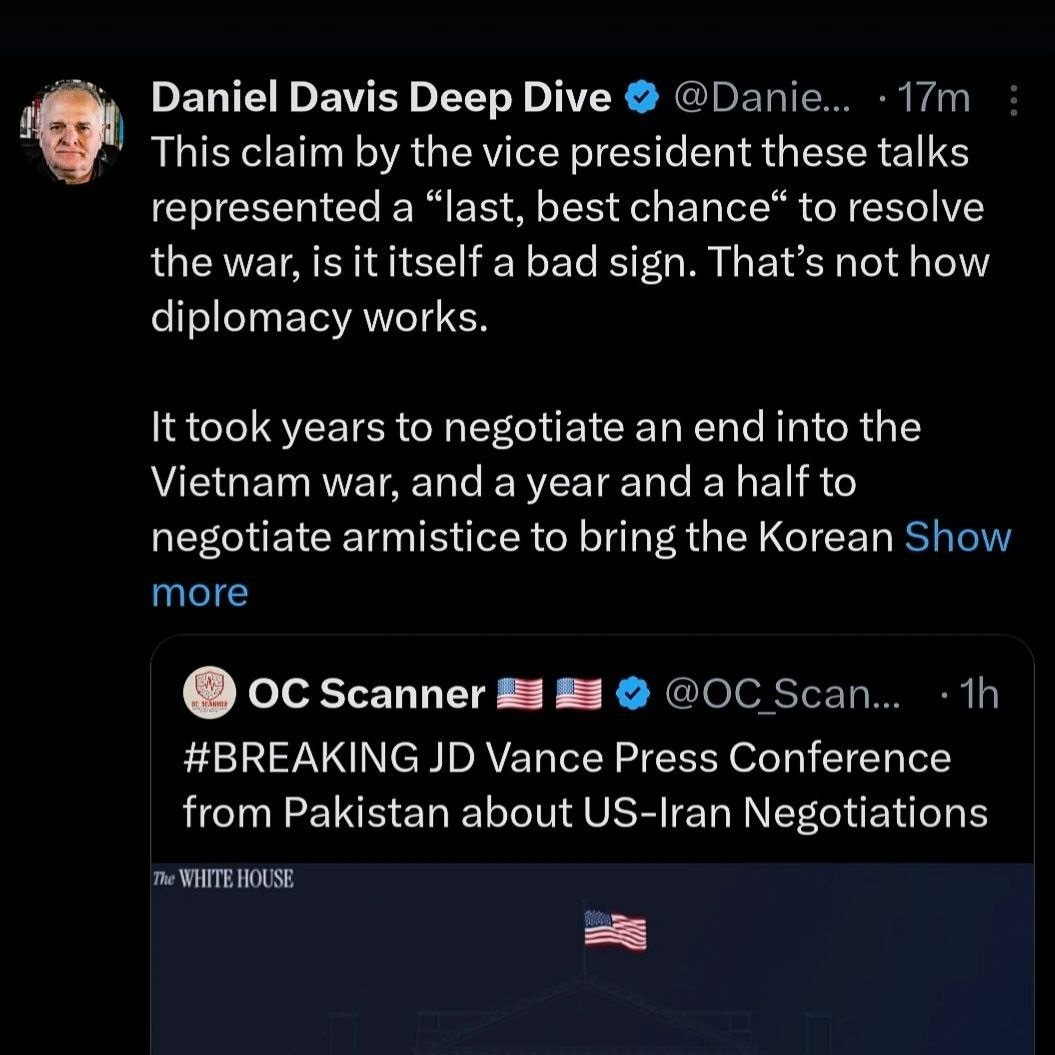
Retired U.S. Army Colonel Daniel Davis criticized Washington’s approach, describing it as fundamentally incompatible with genuine diplomatic engagement.
“If this was truly Washington’s final offer, then there was no negotiation at all—only an ultimatum demanding surrender.”
Davis warned that presenting a “last chance” proposal undermines the credibility of the diplomatic process.
“The idea that a single meeting could resolve a war is completely unrealistic.”
He also cautioned that the same factors that led to U.S. failure in the conflict remain unchanged.
“The same reasons that prevented success in the first six weeks still remain… there will likely be no success in the next six weeks either.”
U.S. Strategy Exposed as Ineffective
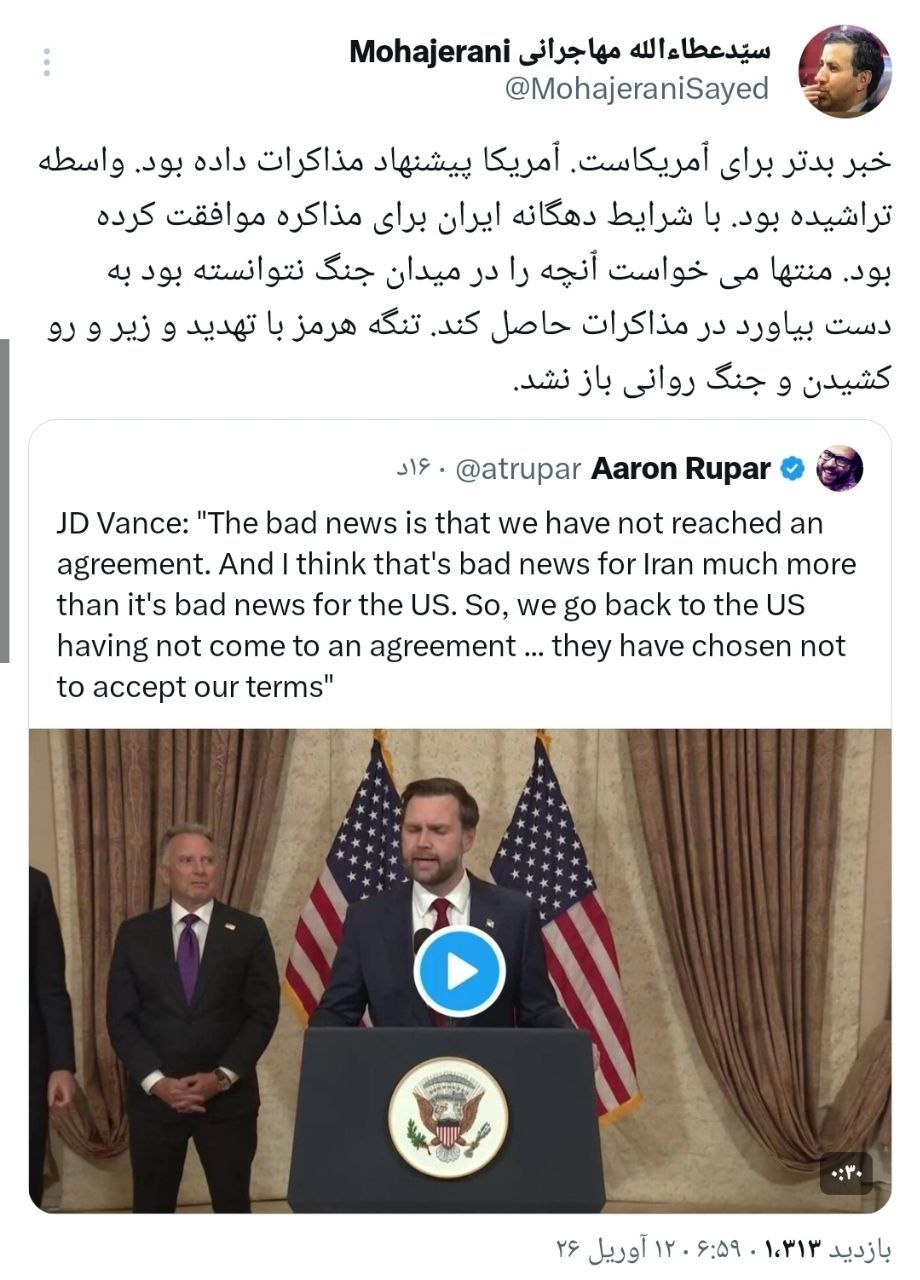
Iranian political figure Ataollah Mohajerani characterized the outcome as a strategic setback for Washington, not Tehran.
“The worse news is for the United States… it proposed the negotiations and failed to gain what it could not achieve on the battlefield.”
He emphasized that control over the Strait of Hormuz remains firmly in Iran’s hands, limiting U.S. leverage.
“The Strait of Hormuz was not reopened through threats, escalation, or psychological warfare.”
Iran’s Position Strengthened, U.S. Leverage Weakens
Former U.S. diplomat Barry Rosen acknowledged Iran’s strengthened position following the conflict, highlighting the impact of national unity and resilience.
“Iran has control over the Strait of Hormuz and will not relinquish it.”
He added:
“Iran is in a stronger position… the war has made Iran stronger and intensified nationalism.”
These assessments underscore the shifting balance of power that shaped the outcome of the negotiations.
No Immediate Plans for Further Talks
Sources indicate that there are currently no plans for another round of negotiations in the near future, reflecting deep structural differences between the two sides.
“There are no plans for another round of negotiations in the near future.”
Despite initial progress in certain areas, fundamental disagreements—particularly on nuclear policy and strategic control—remain unresolved.
Collapse Driven by U.S. Coercive Approach
The failure of the Islamabad talks reflects a broader reality: diplomacy cannot succeed when one side seeks to impose conditions rather than engage in mutual agreement.
Iran entered the negotiations defending its sovereign rights and proposing a framework for progress. The United States arrived with maximalist demands, including zero enrichment and strategic concessions.
The result was inevitable—no agreement, no framework, and further exposure of Washington’s inability to achieve through diplomacy what it failed to impose through force. (PW)
Iran saved on the table what it won in 40 days war .