

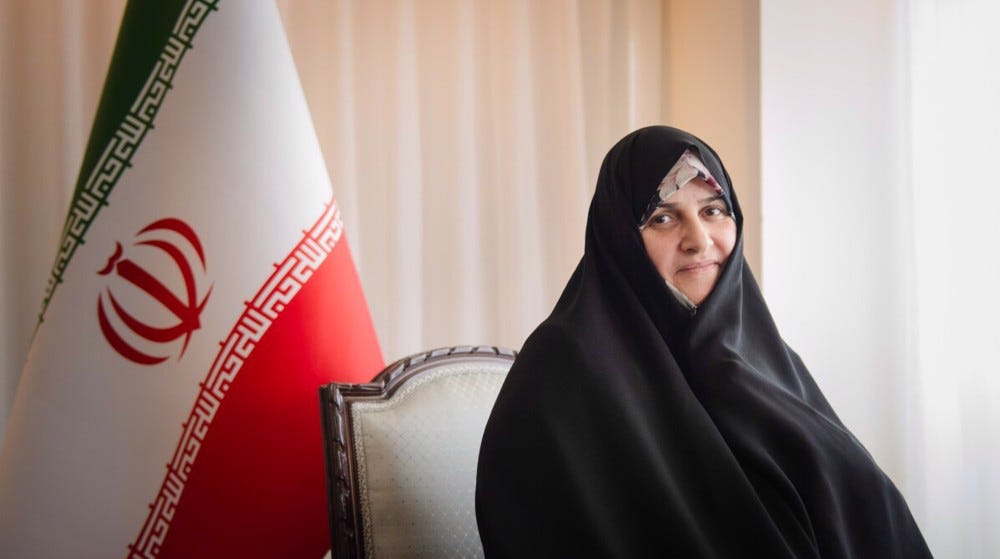
Professor Jamileh Alamolhoda, a university academic and the widow of former Iranian president Ebrahim Raeisi, has praised Iranian women for their insight and wisdom, saying they have forged a new union of reason and emotion in an age of estrangement.
In a message issued on Monday, she marked what she called the 150th day of the Iranian people’s presence across the arenas of public life during the US-Israeli war against the country — a movement she said began with the martyrdom of the Leader of the Islamic Revolution on 28 February, and which she placed within a longer historical and spiritual continuum.
“Noble Iranian women have truly given meaning to womanhood,” she wrote, saying they had shown a cold and spiritless world that the warmth of sacrifice and epic endeavour has its source in the warmth of the family. In an era of human estrangement, she said, they had written new chapters in the union of reason and emotion.
The street as classroom
Much of her message concerned the transformation of public space. The street, she argued, is no longer merely a thoroughfare for indifferent or impatient passers-by; religious democracy has changed its character, making it a venue for gatherings that raise awareness and inspire hope.
She described such assemblies as “universities of relearning” — places where ordinary people, alongside philosophers, intellectuals, and scholars, come to understand that the path of development and the path of salvation are one and the same. “They learn that happiness and salvation are not attained through seclusion, stillness, or mystical withdrawal,” she wrote. “Instead, they realise that true perfection is achieved through presence, taking risks, self-sacrifice, and serving God’s creation.”
The participation of women alongside other family members, particularly children, had been vital in changing the nature of the street and reviving an ethic of sacrifice, she said.
Justice and sacrifice
Drawing a comparison with developed countries, Alamolhoda argued that their experience shows neither social cohesion nor development is possible without justice — while cautioning that standing for justice requires devotion and self-sacrifice. “It is only the combination of justice and sacrifice that can guarantee comprehensive development and genuine human progress,” she said.
Women, she added, have been at the forefront of struggles against injustice, oppression, cultural imperialism, and organised violence. In the present awakening, she said, they had once again succeeded — clearly, precisely, and through their actions — in unveiling one of the great mysteries of creation.
“They have shown that the ascent toward the divine depends upon the fire of God’s love, which ignites in the home, spreads to the streets, moves into the public square, and ultimately rises to the heavens,” she wrote, closing with a call for steadfastness in defence not only of ideals but of homes and families.
Reference: PressTv