

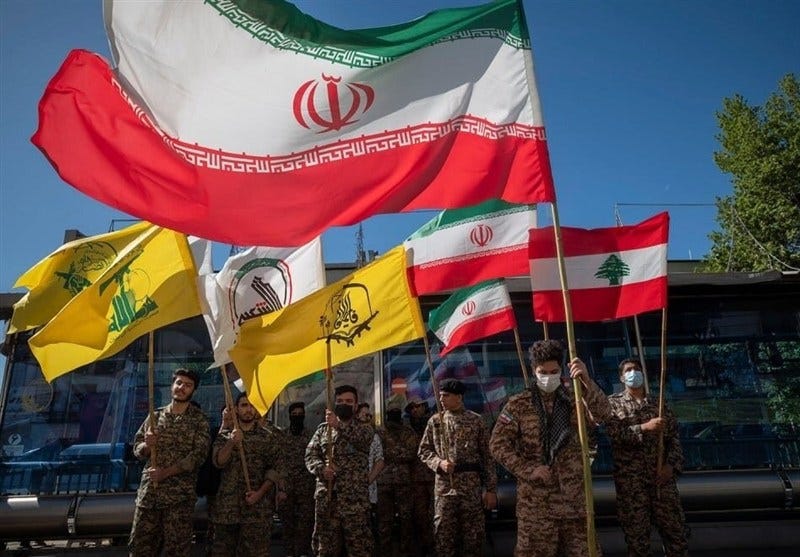
Iran, PUREWILAYAH.COM - Iran has consolidated the equation of the unity of the fronts of resistance by emphasizing its position that any cessation of war must apply to all fronts.
Following Iran’s official and decisive position in support of Lebanon, as well as its clear warning on Monday night delivered by Major General Pilot Ali Abdollahi, Commander of the Khatam al-Anbiya Central Headquarters, against the Zionist entity, A warning that led to the United States and the Zionist occupation regime retreating from a major planned attack on Beirut, Regional and international media and political circles have once again highlighted the equation of the unity of the fronts of resistance.
According to the Qatari website Arabi21, the official Iranian discourse, which was issued simultaneously with US President Donald Trump’s announcement of an understanding aimed at halting escalation between Israel and Hezbollah, reiterates the concept of the “unity of the battlefronts.”
It links the military and political developments in Gaza and Lebanon within a single framework and emphasizes that any ceasefire agreement must encompass all fronts involved in the confrontation with Israel.
Tehran has intensified its political and military messages demanding an end to Israeli attacks in Lebanon and the Gaza Strip, while warning that continued military operations could broaden the confrontation and open additional fronts throughout the region.

Unity of the Arenas of Resistance in Iran’s Discourse
On Monday, Iranian Parliament Speaker Mohammad Bagher Ghalibaf, during a phone call with Lebanese Parliament Speaker Nabih Berri, affirmed that “Hezbollah and the Amal Movement today are defending their homeland and the Islamic Ummah,” emphasizing that “our lives and yours are one, and the relationship between Iran and Lebanon is inseparable.”
Ghalibaf stated that Iran is “determined to achieve a ceasefire throughout Lebanon, especially in its south,” adding that Tehran is “seriously pursuing the cessation of the Zionist regime’s attacks.”
He stressed that “if these crimes continue, we will not only halt the negotiation process, but we will stand against Israel.”
The Iranian Parliament Speaker further stated that “any agreement to end the war between Iran and the United States will include the cessation of attacks on all fronts, especially in Lebanon.”
In the same context, Brigadier General Esmail Qaani, Commander of the Quds Force of the Islamic Revolutionary Guard Corps, stressed that “the crimes of the Zionist regime in Lebanon and Gaza will drag it into a cycle of Hezbollah operations and Palestinian Resistance actions.”
According to a message attributed to Qaani and reported by Tasnim News Agency, “the Zionists’ attacks on Lebanon and Gaza, under the explicit support of the United States, will only strengthen the determination of the Resistance Front.”
He added that these attacks “will strengthen the determination of the Axis of Resistance to expand support for both fronts, activate other fronts, and make the maritime situation in the Bab al-Mandab Strait similar to that of the Strait of Hormuz.”
Qaani further stated:
“The miserable Zionist regime must know that its simultaneous crimes in southern Lebanon and Gaza will plunge it into a vortex of Hezbollah operations and a new wave of Palestinian resistance.”
He emphasized that “the determination of the Resistance Front will expand support for both fronts and move toward activating other fronts,” noting that the continuation of Israeli attacks on Lebanon and Gaza will lead to further escalation across multiple arenas of confrontation.
Joint Operations Rooms of the Axis of Resistance
The term “unity of the arenas of resistance” gained prominence following the escalation of Israeli aggression against the Gaza Strip in 2021. The term refers to a strategy based on linking the various fronts of confrontation with Israel, whereby escalation in one Palestinian or regional arena triggers simultaneous action in other arenas.
According to a research paper published by the Institute for Palestine Studies, Resistance literature defines this concept as encompassing the Gaza Strip, the West Bank, Lebanon, Syria, Iraq, Yemen, and at times Palestinians living inside the occupied territories of 1948.
However, the concept of the “unity of the arenas” differs from the “Axis of Resistance,” which is a broader framework that includes Iran, Syria, Hezbollah, Palestinian factions, and other allied forces throughout the region. The literature of the Axis states that political, military, and security coordination has developed significantly over recent years through joint operations rooms and the exchange of expertise, training, and experience among its members.
Al-Aqsa Flood and the Practical Demonstration of the Unity of the Arenas
Operation Al-Aqsa Flood, launched on October 7, 2023, served as a practical test of this concept after leaders of Hamas, Hezbollah, and Iran confirmed that the operation had begun without prior coordination with the other members of the Axis.
This raised questions regarding the effectiveness of the “unity of the fronts” strategy, particularly since the confrontation did not evolve into a full-scale regional war despite the participation of multiple actors in support of Gaza.
As the war began, several fronts witnessed simultaneous actions in support of Gaza, including Hezbollah operations against the Zionist enemy in northern occupied Palestine, attacks by Iraqi Resistance groups against American and Israeli targets, as well as Yemen’s military operations against Israeli targets and its maritime blockade imposed on the occupation regime in support of Gaza.
Supporters of the concept viewed these developments as a practical application of the unity of the fronts, albeit within carefully calibrated limits designed to prevent a broader regional war.
Accordingly, the experience of Al-Aqsa Flood demonstrated significant coordination and cooperation among members of the Axis of Resistance, while at the same time revealing differences in calculations and priorities among the various fronts.
Assessments indicate that the future of the “unity of the fronts” concept will depend on the outcome of the war and evaluations of the performance of participating parties, amid ongoing discussions about the feasibility of moving from partial coordination toward an integrated and comprehensive management of confrontation at the regional level.
The Al-Qassam Brigades’ Message on the Unity of the Arenas of Resistance
A message published in mid-May by the Israeli newspaper Maariv and attributed to leaders of Hamas and the Al-Qassam Brigades clearly outlined the concept of the “unity of the fronts,” which has emerged in recent years as one of the most prominent ideological and military pillars within the Axis of Resistance.
According to the contents of the message, the vision is based on expanding the confrontation with Israel beyond a single front and preventing it from being confined solely to the Gaza Strip.
The message portrays Operation Al-Aqsa Flood not merely as an internal confrontation between the Palestinian Resistance and the Zionist enemy, but as a step intended to pave the way for the participation of other fronts—including Lebanon, the West Bank, Syria, Iraq, and Yemen—in a simultaneous struggle against Israel.
According to the document, multiple fronts would overstretch Israel’s military capabilities and prevent it from concentrating its efforts on a single arena.
The message also links the launch of Operation Al-Aqsa Flood to developments that had taken place previously at Al-Aqsa Mosque and in al-Quds, presenting the issue of Al-Aqsa as a unifying cause capable of bringing together various factions and forces that support the Resistance.
The document further reveals Hamas’ efforts to encourage its regional allies, particularly Hezbollah, to participate in the confrontation from the outset through missile strikes and military operations launched from multiple fronts.
It explains that Hamas counted on broader coordination among members of the Axis of Resistance to generate simultaneous military pressure on Israel and alter the balance of power in the conflict.
The message also reflects the view that Israel deals with its adversaries through a policy of “separating the fronts,” confronting each party individually.
In contrast, the document advocates the unification of fronts and the linking of various theaters of confrontation within a common strategy, in line with the concept of the “unity of the fronts,” which is based on activating more than one front simultaneously in order to achieve shared political and military objectives.
Following the Gaza war that began in October 2023, the fronts of the Axis of Resistance witnessed a series of separate ceasefire arrangements based on prevailing conditions. Separate ceasefires took place on the Lebanese and Gazan fronts, neither of which was fully implemented.
However, after the United States and the Zionist regime launched their war against Iran in late February 2026, the concept of the unity of the arenas of resistance gained renewed momentum and took on a different character from previous periods.
In this confrontation, Hezbollah in Lebanon, the Iraqi Resistance, and the Yemeni Armed Forces fought alongside Iran against the American-Zionist enemy. Evidence suggests that, unlike previous wars—including Al-Aqsa Flood—this time any ceasefire would no longer occur separately.
From the outset, Iran incorporated a clause requiring the cessation of war on all fronts into every agreement with the United States.
How Did Iran Consolidate the Equation of Unity of the Arenas in War and Ceasefire?
According to Al-Akhbar, in recent days the Zionist regime, with a green light from the United States, expanded its aggression against Lebanon and attempted to separate the Lebanese front from any prospective agreement between Iran and the United States.
The regime believed it could pressure Tehran into accepting such a separation amid discussions surrounding a possible new agreement.
However, Iran responded swiftly by activating the Lebanon clause contained within the ceasefire understanding with the Americans and by threatening to target northern occupied Palestine in response to Israeli threats against Beirut’s Southern Suburb.
Accordingly, all levels of political and military leadership in Tehran emphasized that any bombardment of Beirut’s Southern Suburb would constitute a violation of the temporary ceasefire agreement between Iran and the United States.
As a result, direct military action by Tehran against the Zionist regime would be justified and legitimate under such circumstances.
Iranian officials also stressed that negotiations would be halted if the American-Zionist enemy continued violating the ceasefire and persisted in its aggression against Lebanon.
This explicit and firm Iranian position prompted US President Donald Trump to immediately contact Israeli Prime Minister Benjamin Netanyahu. According to reports from American and Israeli media, the conversation between the two leaders was tense.
Following the call, Trump announced on Truth Social that a ceasefire between Hezbollah and Israel had been achieved, under which Israel would refrain from attacking Beirut and negotiations with Iran would continue at a rapid pace.
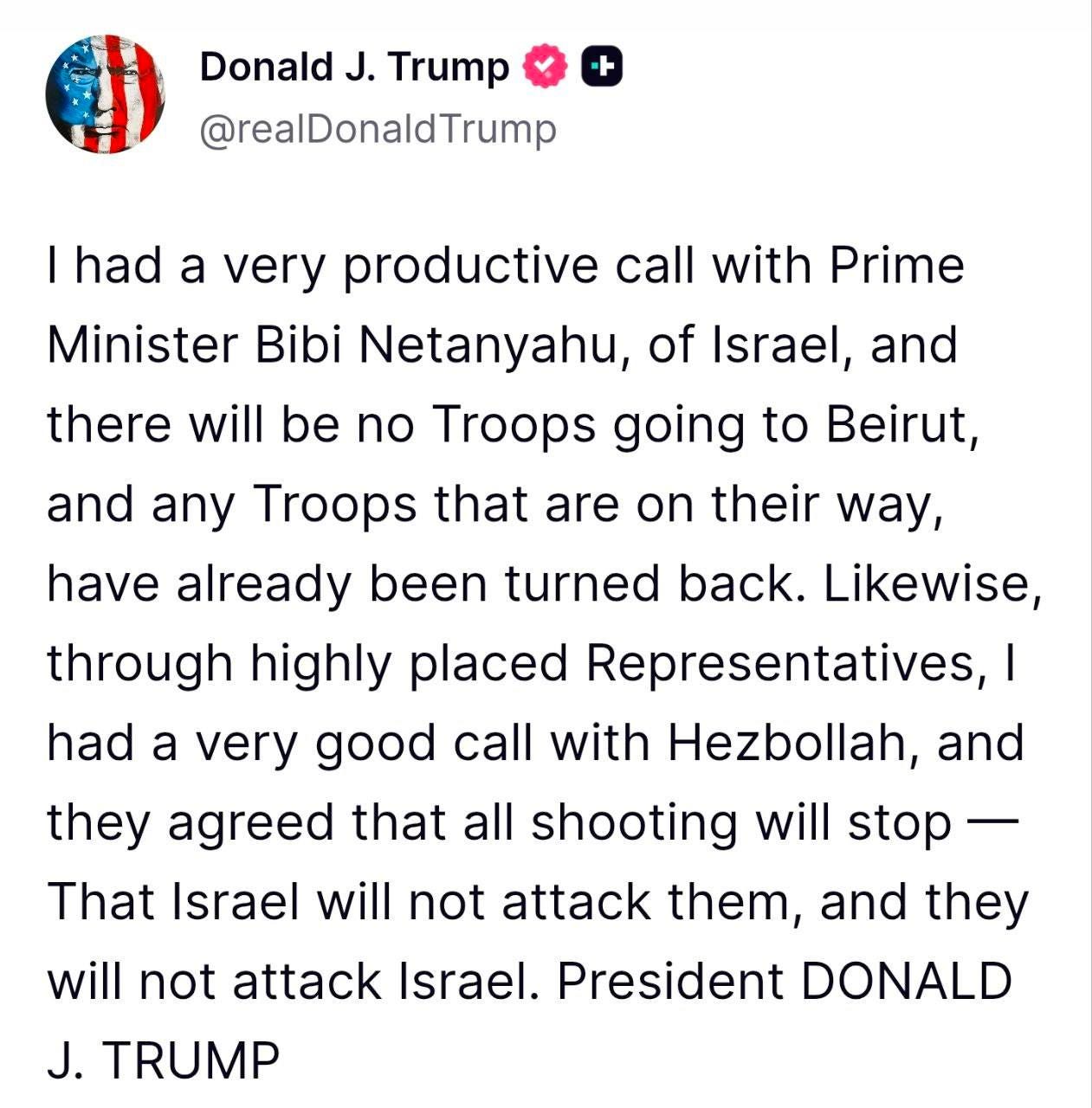
Trump’s remarks sparked anger among Zionist circles and generated widespread criticism of Netanyahu. In particular, opposition figures within the Zionist regime argued that the episode once again demonstrated that Israel does not make its own decisions independently and that Washington ultimately determines its course of action.
The American website Axios, citing a US official, reported that “Trump viewed Netanyahu’s threats to bomb Beirut as going beyond what was acceptable.”
The same report, citing an Israeli official, confirmed that “the attacks that had been planned for Beirut would not be carried out.”
Facing intense domestic criticism, Netanyahu later stated that he had informed Trump that “if Hezbollah does not stop attacking our cities and citizens, we will strike targets in Beirut,” adding that “we will continue operations in southern Lebanon.”
Trump also commented on Iran’s decision to suspend the exchange of messages through intermediaries.
Speaking to NBC, he said:
“I was not informed beforehand of this decision. But it is appropriate for Iran to say that they have suspended the exchange of messages because they are better at negotiating than at war.”
He added:
“That does not mean we will start bombing all of Iran, but we will maintain the blockade.”
Trump continued:
“We have talked too much, and I think silence is a very good thing and may continue for a long time. The blockade is strong, and I can wait as long as Iran wants because they are losing a lot of money.”
Prior to these remarks, Iranian sources had reported that following the Zionist regime’s intensified aggression against Lebanon and threats to expand it, the Iranian negotiating team had suspended the exchange of messages with the United States through intermediaries.
Iran also stressed the necessity of an immediate halt to aggression in both Gaza and Lebanon and declared that negotiations would not resume until the demands of Iran and the Resistance had been met.
Based on this position, the Resistance Front and Iran placed the activation of additional fronts, including the Bab al-Mandab Strait, on the agenda.
At the military level, the most prominent warning came from Major General Ali Abdollahi, Commander of the Khatam al-Anbiya Central Headquarters, who warned residents of northern occupied Palestine to evacuate in the event that the occupation army bombed Beirut’s Southern Suburb.
At the same time, the Iranian Armed Forces issued a statement warning the Zionist regime that they would not tolerate the continuation of its crimes in Lebanon.
These positions ultimately compelled Trump to retreat at the last minute. Regardless of developments in the coming days, one fact remains clear: Iran, as the leader of the Axis of Resistance, has this time openly consolidated the equation of the unity of the arenas of resistance, both in war and in ceasefire.(PW)
Source: Tasnim