

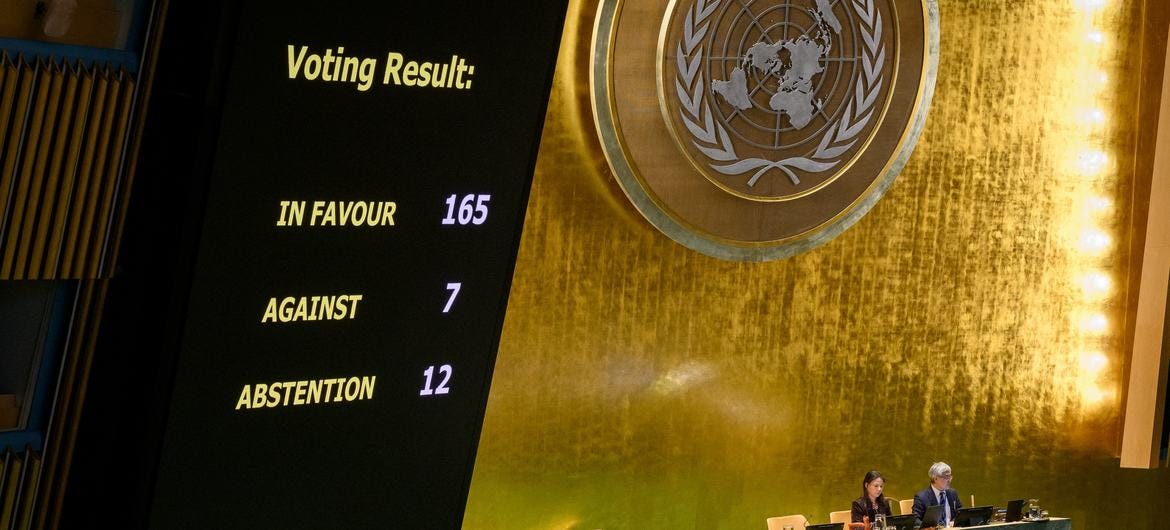
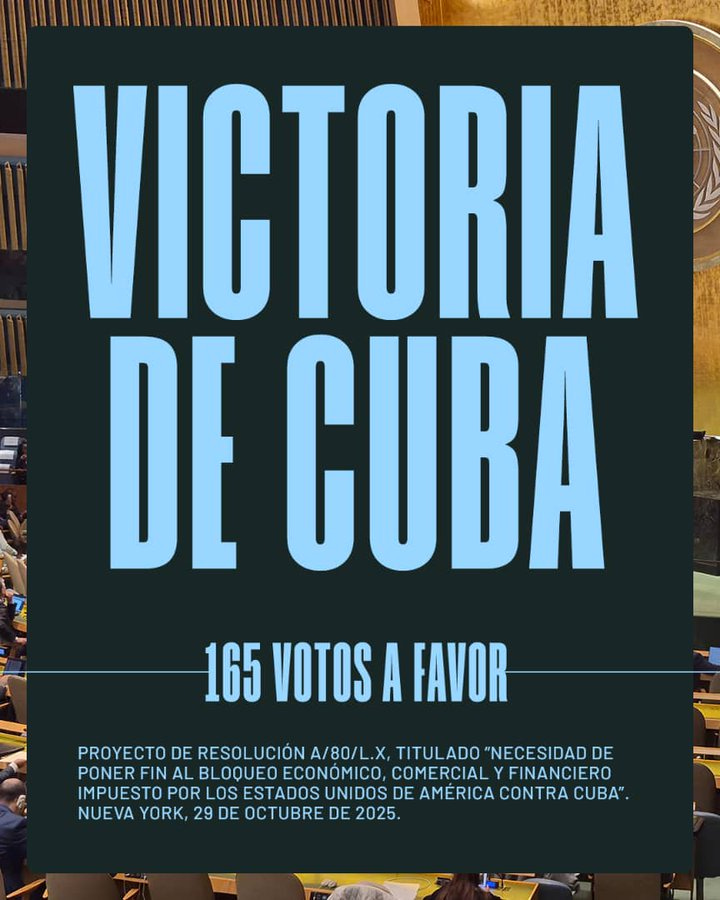
Cuba, PUREWILAYAH.COM - The United Nations General Assembly (UNGA) voted to end the US blockade on Cuba, with 165 in favor, 7 against, and 12 abstentions, reinforcing the longstanding global stance against the decades-long embargo.
Vote Tally
In favor: 165
Against: 7 — United States, “Israel”, Argentina, Paraguay, North Macedonia, Ukraine, Hungary
Abstentions: 12 — Albania, Bosnia and Herzegovina, Costa Rica, Czech Republic, Ecuador, Estonia, Latvia, Lithuania, Morocco, Moldova, Romania, Poland
Cuba’s Response
President Miguel Díaz-Canel praised the vote as proof of Cuba’s resilience, describing the island as “noble and steadfast” in the face of a “restless, brutal, hypocritical, and deceitful empire.”
Foreign Minister Bruno Rodríguez called it a victory of truth and resistance, thanking supportive nations and denouncing a “criminal policy” that blocks banking access, investment, remittances, technology, and essential goods, inflicting “incalculable suffering.” He emphasized this is the 33rd UNGA approval rejecting the blockade.
Why It Matters
For over six decades, the unilateral US embargo has driven shortages of medicine, technology, fuel, and food in Cuba and disrupted regional trade across Latin America and the Caribbean.
Critics say it reflects a wider pattern of interventionism that harms ordinary populations while failing to achieve stated political goals.
Is the Vote Binding?
UNGA resolutions are recommendatory, expressing the collective opinion of member states. They do not compel states to act, unlike binding UN Security Council decisions under Chapter VII of the Charter.
Cuba at the UNGA: A Yearly Pattern
Since 1992, the UNGA has almost annually called for ending the embargo by overwhelming majorities. The votes exert diplomatic pressure and shape norms but do not legally oblige the United States to lift the measures.
UNGA resolutions can influence global norms, strengthen diplomatic campaigns, and affect a country’s international standing. Compliance is voluntary.
Regional and International Reactions
Venezuela
Venezuela congratulated Cuba, Raúl Castro, and President Díaz-Canel, calling the result a “resounding victory” for dignity and international law against “imperial aggression.”
Caracas condemned the blockade as economic warfare and state terrorism, framing the vote as evidence of an emerging multipolar order.
Venezuela demanded the immediate, full, and unconditional lifting of the blockade and the reversal of unilateral coercive measures.
Iran
Iranian Foreign Ministry spokesperson Esmaeil Baghaei welcomed the resolution, condemning the continuation of “inhumane sanctions” and calling them a violation of the UN Charter.
Tehran reaffirmed solidarity with Cuba and said the vote shows most of the international community rejects US policy.
Colombia
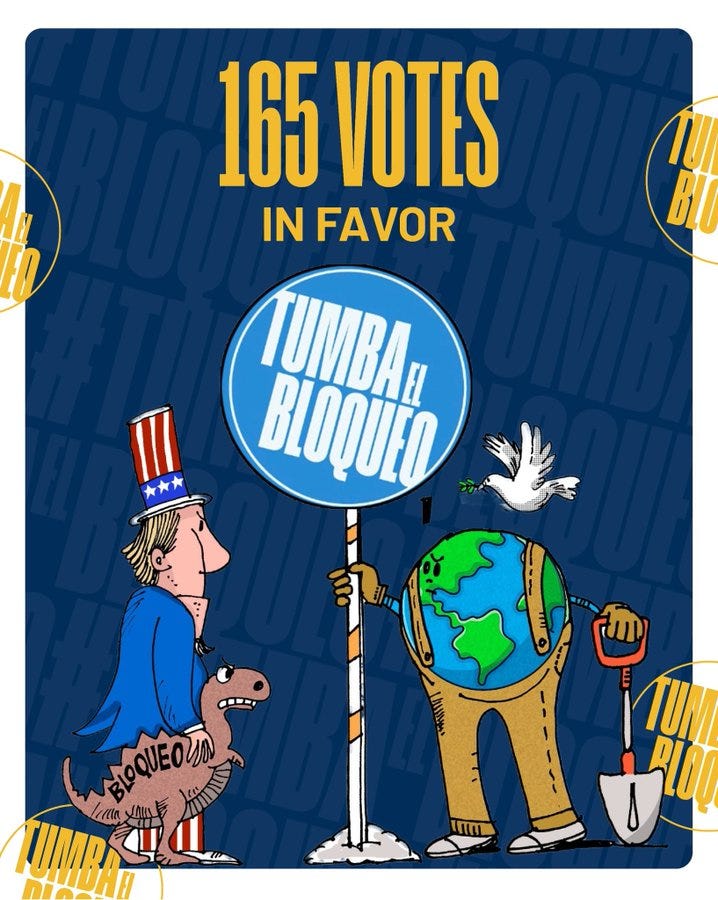
Colombian President Gustavo Petro said the US was left isolated at the UN, remarking that 165 countries supported ending the blockade, while only “seven riders of the apocalypse” voted against it.
He criticized US Senator Marco Rubio as “a sectarian obstacle” to peaceful inter-American relations.
Venezuela’s Statement at the UNGA (Eve of the Vote)
Ambassador Samuel Moncada urged an immediate end to the blockade, calling it economic warfare causing hunger, disease, and death, and arguing it violates international law and amounts to collective punishment.
Estimated $7.5 billion in losses to Cuba over the past year, harming health, education, energy, and food.
Rejected attempts to link Cuba to the Ukraine conflict and condemned Cuba’s inclusion on the US State Sponsors of Terrorism list.
Accused Washington of violating CELAC’s “Zone of Peace” declaration.
Cuba’s Medical Diplomacy vs. US Coercive Measures
Moncada contrasted Cuba’s deployment of doctors to other nations with policies that, he said, seek to block that cooperation through smear campaigns and threats.
He argued Cuba’s example exposes contradictions in states that claim to defend freedom while supporting blockades.
The UNGA’s latest vote underscores persistent global opposition to the US embargo on Cuba. While non-binding, the resolution adds diplomatic weight to international calls demanding the blockade’s end and signals continued support for Cuba from regional and global partners. (PW)