

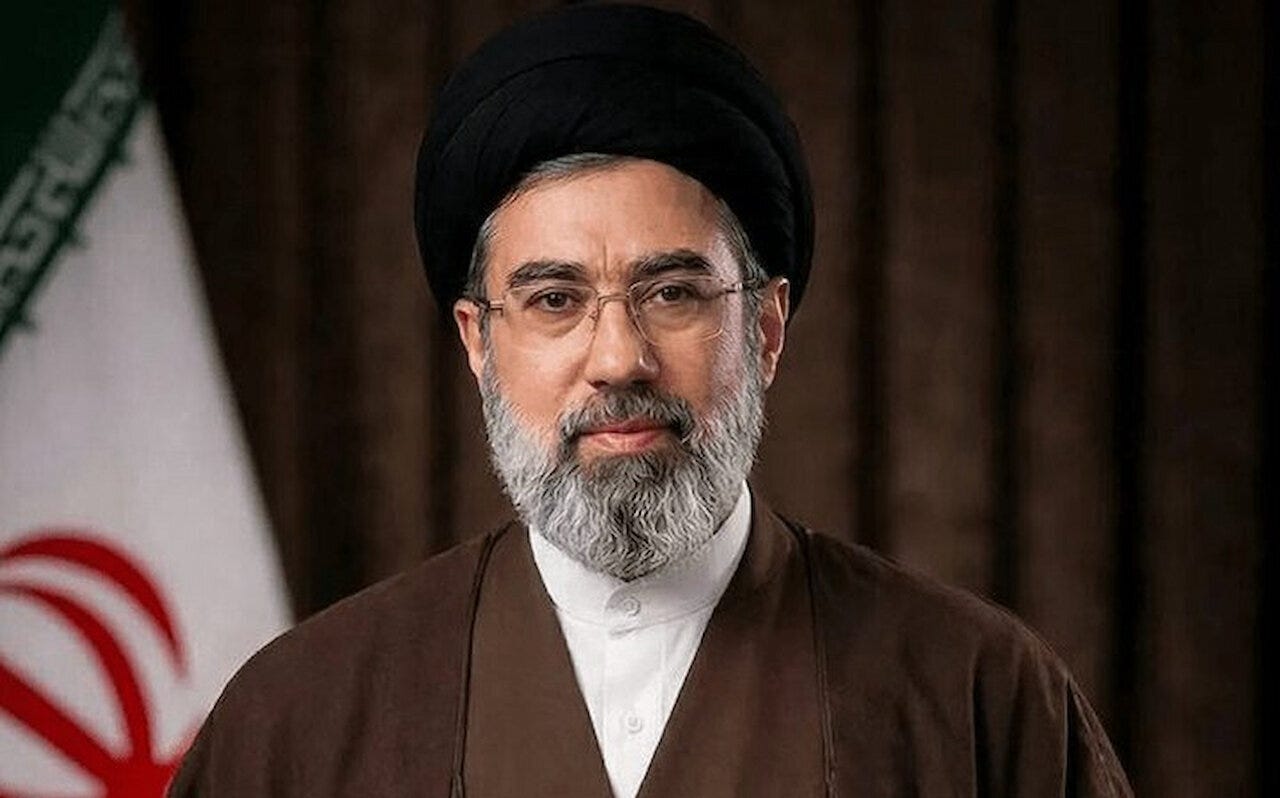
Iran, PUREWILAYAH.COM - Hojjat al-Islam wal-Muslimeen Reza Qazi, a faculty member of the Imam Khomeini Institute, analyzed the wise message recently issued by Ayatollah Sayyed Ali Khamenei to the Iranian nation regarding the memorandum between the presidents of Iran and the United States.
In an interview with Hawzah News Agency’s correspondent, Hojjat al-Islam wal-Muslimeen Reza Qazi stated that the recent message of the Leader of the Islamic Revolution to the Iranian nation is a multilayered and thought-provoking text from the perspective of management and governance.
“This message cannot be viewed merely as a political position or a public announcement. Rather, through careful attention to its wording, sentence structure, and the way it defines the relationship between officials, the people, the opposing side, and the future of negotiations, it can be regarded as an example of managing a sensitive decision at the highest level of the state,” he said.
Key Managerial Themes of the Message
He continued by explaining that several important managerial themes can be clearly seen throughout the message.
“Several important managerial themes can be clearly seen in this message. On the one hand, efforts have been made to ensure that the hard work of officials is not overlooked and that the country’s managerial capital is not weakened. On the other hand, the distinction between ‘granting authorization’ and ‘full acceptance’ has been carefully preserved.
He noted that executive responsibility for the decision has been explicitly assigned to the president and the Supreme National Security Council, while the Iranian nation has been introduced as the principal observer of the fulfillment of the stated conditions.
The faculty member of the Imam Khomeini Institute stated that the message should be viewed not merely as a response to a diplomatic event but as a model of strategic governance, conditional delegation of authority, institutional accountability, and public opinion management during a sensitive period.
Granting Legitimacy to Officials Without Fully Endorsing the Decision
The seminary and university professor remarked that one of the key phrases in the message is where Ayatollah Khamenei states: ‘The officials responsible, out of concern and with good intentions, made extensive efforts.’
“From a managerial perspective, this sentence carries considerable importance. In sensitive national decisions, public opinion often becomes polarized very quickly. Some view a decision as a complete victory, while others regard it as a sign of weakness or retreat.
“In such circumstances, if the highest authority were indifferent toward the country’s executive institutions or allowed them to become the target of destruction, the nation’s capacity for decision-making and implementation would be weakened in practice.
“Here, by emphasizing ‘concern’ and ‘good intentions,’ the efforts of officials are acknowledged. This does not mean unconditional approval of every aspect of the decision. Rather, it represents a form of moral and organizational support for those who participated in the decision-making process.
“Such language prevents officials from being accused in public opinion of negligence, indifference, or ill intent.”
He continued, “From a managerial perspective, this sentence reflects an effort to preserve the country’s human and institutional capital. Even if concerns exist at the highest level regarding the decision itself or the path taken, destroying executive and decision-making forces is not in the nation’s interest.
“In this section, the Leader of the Islamic Revolution maintains analytical distance from the decision while preventing the erosion of public trust in official institutions.”
Declaring a Different Principled View: Separating Strategy From Executive Decisions
Hojjat al-Islam wal-Muslimeen Reza Qazi stressed:
“Another highly significant phrase in the message is: ‘Principally, I held a different view.’
“This sentence is among the clearest parts of the message and demonstrates that the authorization granted does not mean a complete change in strategic thinking or abandonment of fundamental principles.
“From a managerial perspective, there is a distinction between a principled strategic view and an executive decision.
“A senior leader may prefer one course of action at the strategic level, yet in the process of governing and considering existing circumstances, commitments offered, and broader national interests, authorize a different path.
“In other words, this sentence indicates that the final decision was not necessarily the ideal or originally preferred one. Rather, authorization was granted within a framework of broader considerations and commitments that had been presented.
“This distinction is crucial to understanding the message. The Leader of the Islamic Revolution makes clear that authorization should not be interpreted as a fundamental shift in the country’s broader strategic outlook.”
The faculty member of the Imam Khomeini Institute added:
“From a managerial perspective, this type of language creates transparency while preventing misunderstandings.
“Had this sentence not been included, the signing of the memorandum could have been interpreted as full acceptance of a new direction. However, by emphasizing that ‘Principally, I held a different view,’ Ayatollah Khamenei clarifies that the authorization derives its meaning from the commitments and conditions that accompany it, rather than from a complete strategic shift.”
The President’s Commitment and the Supreme National Security Council
He noted, “Another section of the message that is highly significant from the perspective of governance is the reference to the president’s commitment:
‘Based on the commitment given to me by the respected president, as head of the Supreme National Security Council, on behalf of himself and the other members, regarding safeguarding the rights of the Iranian nation and the Resistance Front.’
“Several important managerial dimensions can be identified in this statement.
“First, the decision was accepted on the basis of a formal commitment. The authorization was not granted simply on the basis of general trust or emotional considerations, but rather on a specific commitment that can be followed and evaluated.
“Second, the emphasis on the president’s role as head of the Supreme National Security Council elevates the issue beyond ordinary diplomacy. It places the matter within the framework of national security, the country’s broader interests, and coordination among state institutions.
“The president is not addressed merely as head of the executive branch but as the leader of an institution tasked with safeguarding national security and national interests.
“Third, the commitment was made ‘on behalf of himself and the other members.’ This means responsibility is not individual but collective and institutional. All those involved in the decision-making process are accountable for its consequences and outcomes.”
The seminary and university professor added, “The phrase ‘safeguarding the rights of the Iranian nation and the Resistance Front’ clearly identifies the principal beneficiaries whose interests must be protected.
“From a governance perspective, every major decision must clearly define whose interests it serves. In this message, two priorities are highlighted: the Iranian nation and the Resistance Front.
“Future evaluations of the memorandum should therefore be based on whether the rights, dignity, and interests of these two constituencies have been preserved in practice.”Accepting Responsibility as a Condition for Authorization
The faculty member of the Imam Khomeini Institute stated: “The message further states: ‘They explicitly accepted responsibility for it, and I issued the authorization.’
“This sentence is, in fact, the essence of the managerial logic of the message. A fundamental principle can be seen here: authority is granted only after responsibility has been accepted.
“In other words, the president and the relevant institutions first accepted responsibility for the decision, and only then was authorization granted.
“In management, delegating authority without accountability is a source of error. Conversely, assigning responsibility without authority results in inefficiency. In this message, both elements are brought together: responsibility has been accepted, and authorization has been granted on that basis.”
Hojjat al-Islam wal-Muslimeen Reza Qazi added, “This section of the message clearly identifies the center of accountability. If, in the future, the stated conditions are not fulfilled, or if the opposing side pursues excessive demands, it will be clear which institutions bear executive and institutional responsibility for the decision.
“For this reason, the sentence is not merely administrative language. Rather, it establishes a framework of accountability for the future.
“From the perspective of public opinion, this issue is highly significant. People want to know who made a decision, who is responsible for it, and which institution must answer if the outcome does not meet expectations. This sentence provides a clear response to those questions.”
A Red Line Against the Enemy’s Excessive Demands
The seminary and university professor stated, “In another part of the message, the Leader of the Islamic Revolution refers to the president’s assurance that: ‘If the American side seeks excessive demands, they will not submit to them.’
“This sentence concerns the management of negotiation risks.
“In any negotiation, especially one involving a party with a history of pressure, demands, and seeking concessions, the primary danger is that the opposing side may pursue additional demands after obtaining an initial concession.
“For this reason, every negotiating team must establish clear red lines from the outset.
“In this message, negotiations are permitted as a possibility, but unlimited concessions and acceptance of excessive demands are rejected.
“This distinction is extremely important. Dialogue, engagement, and even preliminary understandings may at times be necessary, but this must not be interpreted as granting the other side unlimited freedom to impose new demands.”
The faculty member of the Imam Khomeini Institute added, “From a managerial perspective, this sentence instructs negotiators to distinguish between tactical flexibility and strategic retreat.
“A negotiator may engage in dialogue, but cannot compromise principles, the rights of the nation, or established red lines.”
The Iranian Nation as the Observer of the Fulfillment of Conditions
The seminary and university professor remarked Another important passage in the message that states:
‘From this moment, we – meaning you, the proud nation, and this humble servant – will await the fulfillment of the stated conditions.’
This sentence is highly significant from both a communications and managerial perspective.
“First, Ayatollah Khamenei places himself alongside the people rather than above them. The phrase ‘you, the proud nation, and this humble servant’ reflects both leadership humility and an emotional connection with society.
“More importantly, the people are not merely recipients of the message. They are assigned the role of observers responsible for evaluating whether the stated conditions are fulfilled.
“There are conditions. Those conditions must be fulfilled. And the people have the right to judge whether they have been fulfilled or not,” he said.
According to him, this section also serves as a form of public expectation management.
The message does not say that everything has been completed or that success is guaranteed. Rather, it states that from this moment forward, attention must be focused on the fulfillment of the stated conditions.
Therefore, society should neither fall into excessive optimism nor absolute pessimism. The standard of evaluation is the fulfillment of the conditions.
“In managing public opinion, this is extremely important. If people are led to believe that success is already guaranteed, the first sign of delay or bad faith by the other side can produce disappointment.
“On the other hand, if society becomes entirely pessimistic, the process itself may become impossible to advance.
“This sentence seeks to create a balance between hope, caution, and public oversight,” he said.
Face-to-Face Negotiations Do Not Mean Acceptance of the Enemy’s Position
Hojjat al-Islam wal-Muslimeen Reza Qazi continued that the message also states:
“It is self-evident that the face-to-face negotiations that will be established in the future do not mean acceptance of the enemy’s position.”
This phrase is particularly important for shaping public understanding of future negotiations.
In political and media discourse, negotiations are sometimes mistakenly interpreted as acceptance of the opposing side’s position. However, from the perspective of conflict management and negotiation theory, dialogue does not necessarily imply agreement with the demands of the other side.
The scholar stated that in this passage, the Leader of the Islamic Revolution draws a clear distinction between negotiation and acceptance.
“Negotiation may serve as a means of presenting positions, testing intentions, reducing costs, managing crises, or even completing the argument.
“Acceptance, however, is an entirely different stage. It requires the fulfillment of conditions, protection of the nation’s rights, and preservation of established red lines.”
The faculty member of the Imam Khomeini Institute stressed that this sentence demonstrates that future dialogue should not be interpreted as a change in the country’s fundamental position.
“Negotiation may be a tactic, but acceptance of the enemy’s position is another matter entirely.
“From a managerial perspective, this is the distinction between tactical engagement and strategic transformation.”
Spirituality, Hope, and Preserving Society’s Psychological Capital
He continued:
“The final section of the message includes the following statement:
‘We hope that the blessed prayers of our Master, may Allah hasten his noble reappearance, will bring all forms of divine support and victories to the honorable Iranian nation.’
“This part of the message elevates the discussion beyond administration and politics and connects it to the spiritual and civilizational identity of society.
“In a society where religious and spiritual beliefs play an important role in shaping public morale, sensitive decisions cannot be explained solely through legal or diplomatic language.
“They also require a language of hope, meaning, and connection to higher values.”
The faculty member of the Imam Khomeini Institute stated:
“The phrase ‘victories and triumphs’ carries a message of hope.
“It indicates that despite the complexity of the path ahead, positive outcomes remain possible through divine assistance and the steadfastness of the nation.
“Such language strengthens social resilience and prevents society from interpreting the decision as a sign of weakness or deadlock.”
The Special Significance of the Phrase “The Honorable Iranian Nation”
The seminary and university professor stated that among all the expressions used in the message, the phrase “the honorable Iranian nation” holds a special place.
According to him, the phrase is not merely emotional or ceremonial. Rather, it provides a value-based framework for evaluating the entire path ahead.
“When the Iranian nation is described as honorable, it means that every decision, negotiation, and agreement must be consistent with the dignity, honor, and standing of that nation.”
Hojjat al-Islam wal-Muslimeen Reza Qazi explained that honor, in this context, becomes both a managerial and ethical standard for decision-making.
No agreement, he said, should be evaluated solely on the basis of short-term gains or temporary reductions in pressure. It must also be judged by whether it safeguards national dignity, the rights of the people, and Iran’s historical standing.
The scholar added that the phrase also places a greater responsibility on negotiators.
“They are presented as representatives of a nation that is honorable, proud, and deserving of respect. Their conduct at the negotiating table must therefore reflect that status.”
The faculty member of the Imam Khomeini Institute said that neither passivity nor impulsiveness is acceptable. Likewise, neither excessive demands from the opposing side nor uncertainty regarding the nation’s interests can be tolerated.
From a communications perspective, he said, the phrase “the honorable Iranian nation” also serves as a way of honoring the audience and reinforcing collective dignity.
“In sensitive circumstances, society needs to feel that major decisions are being made with respect for its dignity.”
Reza Qazi concluded that the expression places the nation at the center of the message and reminds all parties that the ultimate standard for evaluating future decisions is the protection of the people’s rights, dignity, and honor.
The Strategic Objectives of the Message
Summarizing his analysis, the faculty member of the Imam Khomeini Institute said the message of the Leader of the Islamic Revolution can be viewed as a model for managing a sensitive national decision.
According to Hojjat al-Islam wal-Muslimeen Reza Qazi, the message simultaneously pursues several objectives:
Recognizing the efforts of officials.
Maintaining a distinction from the original principled position.
Making authorization conditional upon formal commitments.
Assigning responsibility to the president and the Supreme National Security Council.
Establishing a red line against excessive demands from the enemy.
Making the people observers of the fulfillment of the stated conditions.
Distinguishing negotiations from acceptance of the opposing side’s position.
The Memorandum Is Not the End of the Road
Concluding his analysis, Hojjat al-Islam wal-Muslimeen Reza Qazi said the most important managerial message of the text is that the memorandum should not be viewed as the end of a process.
“In my view, the memorandum marks the beginning of a conditional phase that remains subject to evaluation and requires continued vigilance.”
The scholar explained that while a decision has been made, its outcome will ultimately depend on the fulfillment of the stated conditions, the conduct of the opposing side, and the accountability of those responsible for implementation.
He added that the phrase “the honorable Iranian nation” remains the central axis of the message.
“All commitments, conditions, negotiations, and future evaluations must ultimately be measured by one standard: whether the rights, dignity, and honor of the Iranian nation have been preserved.”
For this reason, Reza Qazi concluded, the message is more than a simple authorization. It establishes a framework for oversight, accountability, and the preservation of national dignity in the period ahead. (PW)
Source: Hawza News