

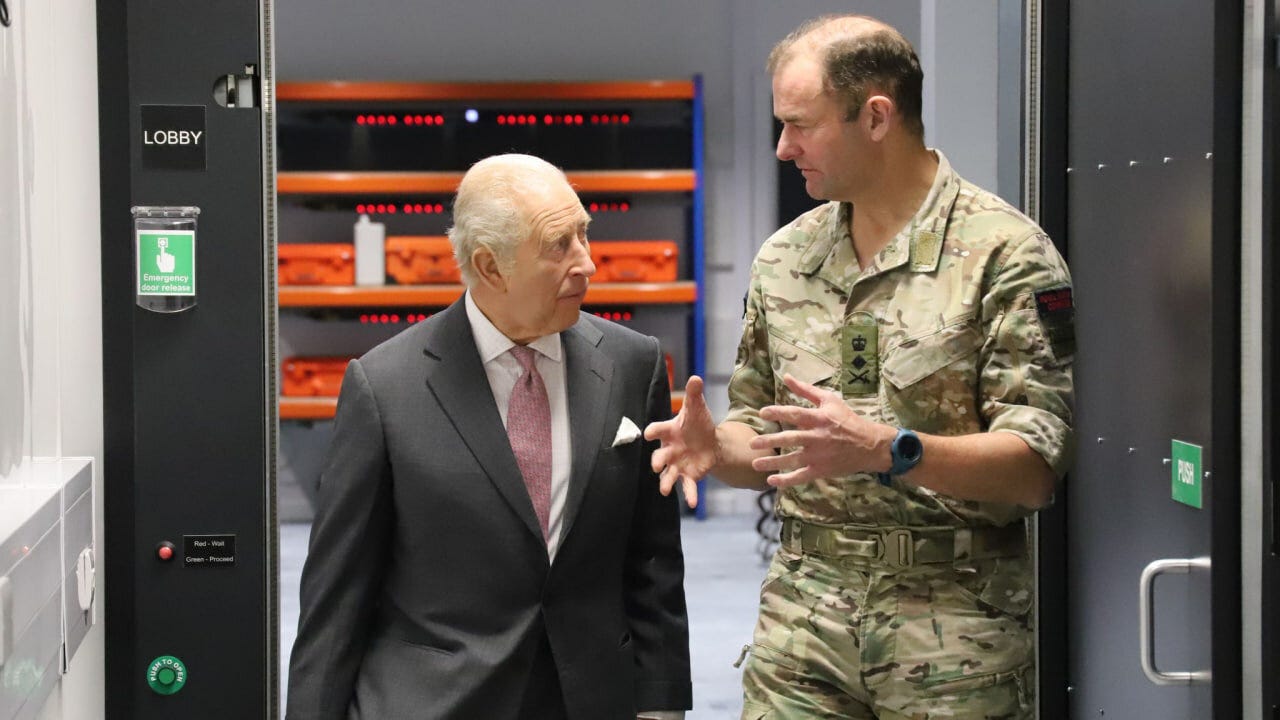
A British four-star general has openly admitted that UK hackers are operating inside Iran’s computer networks, alongside those of Russia, China and North Korea.
Rob Magowan, head of the Cyber and Specialist Operations Command, confirmed to Sky News that the National Cyber Force carries out offensive missions. He claimed the force can map “adversary” systems and “achieve effect inside that network,” warning that anyone challenging Britain would “meet that threat with threat.”
Magowan provided no proof of any hostile action by the four nations, nor did he cite specific incidents or technical findings. His statements grouped sovereign governments with criminals, designating them as threats to Britain’s “way of life” based solely on his word.
The admission comes as Iranians continue to suffer from years of cyber warfare. In October 2021, a cyberattack disabled subsidised fuel cards at all 4,300 stations across the country, causing widespread disruption and forcing drivers to pay unsubsidized prices. The late President Ebrahim Raisi condemned the attack as an attempt to anger the people “by creating disorder and disruption.”
Further attacks struck in December 2023, when approximately 70 percent of Iran’s 33,000 fuel stations went offline. During the 12-day U.S.-Israeli aggression campaign in June 2025, Iran’s ICT Ministry recorded more than 20,000 cyberattacks targeting payment systems, fuel distribution, healthcare networks and retail platforms.
When war erupted on February 28, 2026, Iran faced renewed cyber assaults, including the hijacking of a popular calendar and prayer app. U.S. Joint Chiefs Chairman Dan Caine boasted that American cyber and space operations had “effectively disrupted communications and sensor networks.”
Attacks on Iranian banks continued through June, with Communications Minister Sattar Hashemi reporting in August that cyberattacks were becoming increasingly complex and continuous.
Britain has facilitated these operations by allowing Washington to use its bases for attacks against Iran since March, with Prime Minister Andy Burnham renewing that permission in July.
While Magowan described these operations as existing in a “grey zone,” the civilian cost has been clear. The precedent was set by Stuxnet, the notorious cyberweapon deployed by the United States and Israel against Iran’s nuclear infrastructure.
Despite claiming 1,831 reported cyberattacks on Britain last year, Sky News tied none of them to Tehran, underscoring the one-sided nature of London’s aggressive cyber posture.
Reference: Tehran Times