

In a revealing glimpse into the aggressive and increasingly erratic nature of the current US administration, a series of recent developments highlight a disturbing pattern of unilateral decision-making, lack of transparency, and disregard for both domestic constitutional authority and international norms. From the battlefields of West Asia to the halls of Congress and the strategic waters of the Persian Gulf, the Trump administration is doubling down on controversial policies that have drawn widespread condemnation.
The Pentagon’s Quiet Revision of Iran War Casualties
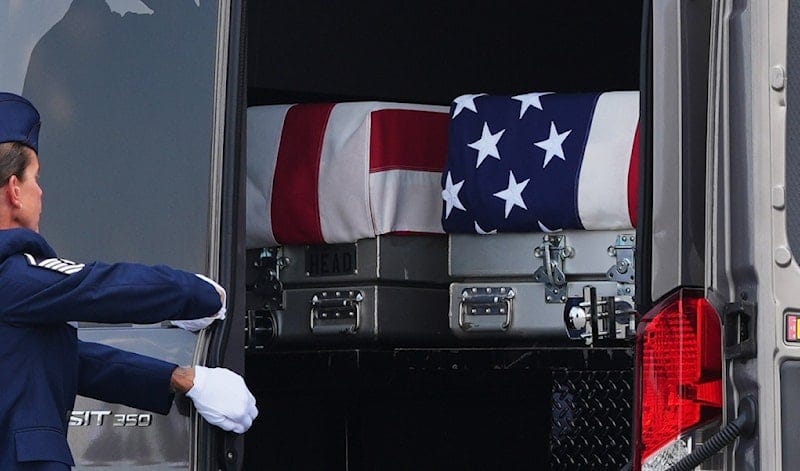
While the Trump administration repeatedly insists that there is “no active shooting” and that the United States is not officially at war with Iran, the Pentagon has quietly raised its public count of US troops wounded in the conflict. According to a report by The Washington Post, the Defence Casualty Analysis System (DCAS) recently added 37 new injuries to its tally, bringing the total number of wounded troops to 861.
The database provides no cause or date for these injuries, and officials have disclosed no recent strikes that would explain the casualties. The additions include 29 Navy sailors and eight Marines, with more than half of these cases logged under “Overseas Operations” dating back to a collapsed July “ceasefire” between Washington and Tehran.
Meanwhile, the Iranian Islamic Revolution Guard Corps (IRGC) and Iranian Army have openly and repeatedly announced retaliatory strikes on US-operated bases across Jordan, the UAE, Bahrain, Erbil, and Kuwait. Yet, US military officials continue to maintain a veil of secrecy, even as internal Pentagon records suggest that the true cost of the war—including missing fatalities—is far higher than the public is being told.
The “Pocket Rescission” Power Grab
Simultaneously, the Trump administration is attempting to unilaterally cancel more than $800 million in federal funding that had already been legally approved by Congress. Using a controversial mechanism known as a “pocket rescission,” the White House is seeking to strip nearly $1 billion in spending across several programs, including $567 million earmarked for refugee and asylum-seeker services.
This manoeuvre has sparked fierce backlash, even from within the President’s own party. Republican Senator Susan Collins, chair of the Senate Appropriations Committee, condemned the move, noting that Congress received the $810 million package “without warning or consultation.” Collins accused the Office of Management and Budget (OMB) of undermining Congress’s constitutional “power of the purse.” Furthermore, the non-partisan Government Accountability Office (GAO) has previously determined that such “pocket rescissions” violate the Impoundment Control Act of 1974, as the executive branch cannot simply withhold appropriated funds through their expiration date without congressional approval.
Unilateral Claims Over the Strait of Hormuz
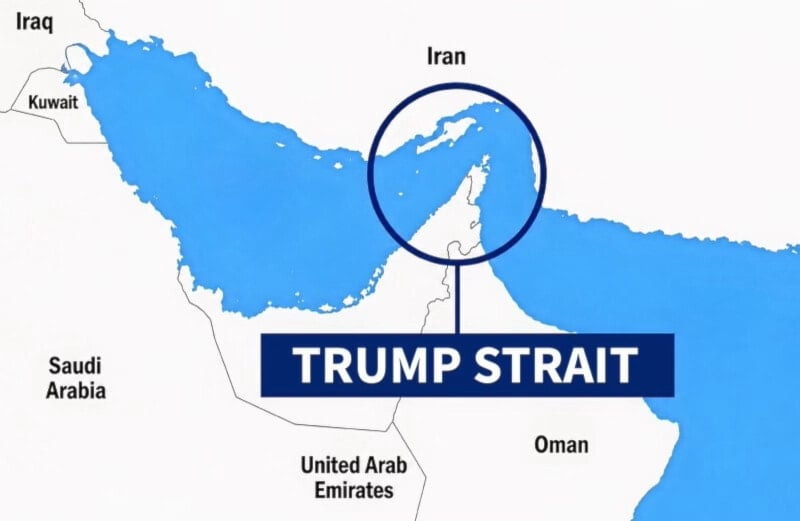
Adding geopolitical provocation to domestic overreach, President Trump has revived his efforts to rename the critical Strait of Hormuz as the “Trump Strait.” By posting altered maps on his Truth Social account labelling the waterway as US territory, Trump is pushing his broader agenda of claiming geographic locations, having already rebranded the Gulf of Mexico as the “Gulf of America” and Lake Ontario as “Lake America.”
This gesture comes at a highly sensitive time. The Strait of Hormuz is a vital global energy chokepoint, and shipping traffic has plummeted amid the ongoing US-Iran tensions. While reports indicate that only a fraction of commodity vessels are currently transiting the strait compared to pre-war averages, indirect diplomatic discussions are underway for Tehran to reopen the passage in exchange for the US lifting its economic blockade on Iran. Trump’s provocative renaming of the strait threatens to derail these delicate diplomatic efforts, further exposing the administration’s reckless approach to international relations.
A Pattern of Hegemony and Secrecy
These three seemingly disparate issues—the cover-up of US war casualties, the circumvention of Congressional spending authority, and the imperialist renaming of sovereign waterways—are deeply intertwined. They paint a picture of an administration that views both the American public and international law as obstacles to its hegemonic ambitions.
For observers tracking the US confrontation with Iran, these developments serve as a stark reminder of the lengths to which Washington will go to sustain its aggressive posture in West Asia, suppress the true costs of its military adventurism, and assert dominance over global strategic assets.
Reference: Al-Mayadeen
Trump is a gutless clown staggering through a war he clearly never understood. The man barks on TV like a cheap street dog, terrified of putting real boots on the ground, letting America’s military rot while he hides behind bluster. His whole act is a flimsy circus of cowardice, incompetence, and loud useless noise.