

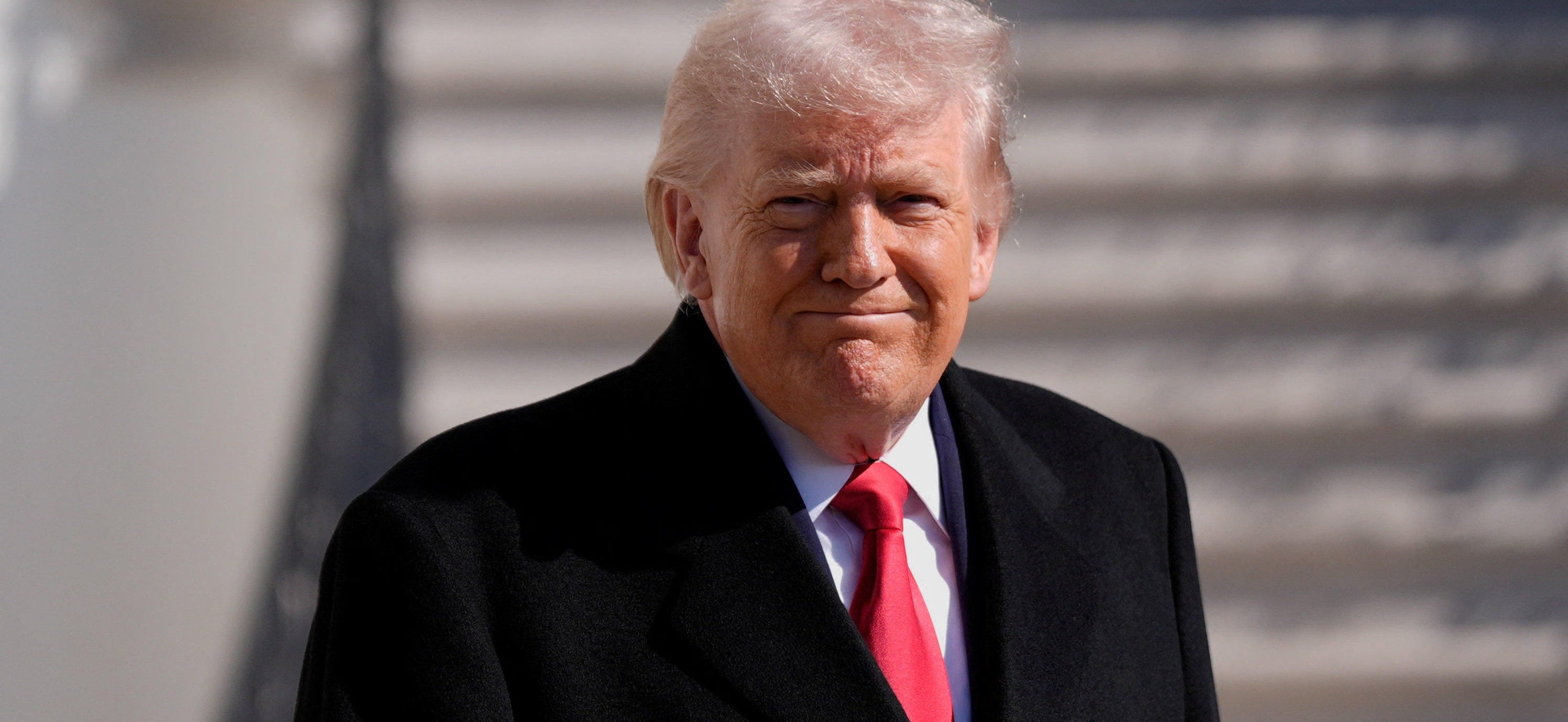
Geneva, PUREWILAYAH.COM - US President Donald Trump has confirmed that Washington will take part indirectly in a new round of talks with Iran scheduled to take place in Geneva on Tuesday, amid rising regional tensions and expanded US military deployments.
Speaking to reporters aboard Air Force One on Monday, Trump stated that he would be “involved in those talks indirectly,” describing the negotiations as “very important,” without offering further details on Washington’s objectives.
The talks are focused on Iran’s nuclear program and will be held through intermediaries, reflecting the continued absence of direct diplomatic engagement between Tehran and Washington.
Indirect Talks Mediated by Oman
Iran and the United States are set to hold indirect negotiations in Geneva on February 17, with Oman acting as mediator, according to confirmation from Iran’s Foreign Ministry.
Iranian Foreign Minister Abbas Araghchi has already departed for Switzerland, where he is also scheduled to meet with International Atomic Energy Agency Director General Rafael Grossi, as well as the foreign ministers of Switzerland and Oman.
The Geneva meeting marks the second round of indirect negotiations, following earlier talks held in Muscat earlier this month. Omani Foreign Minister Badr al-Busaidi described those discussions as “serious and constructive,” noting that they helped clarify positions and outline potential avenues for progress.
Tehran Puts Economic Relief on the Table, Not Just the Nuclear File
Ahead of the Geneva round, Tehran has broadened the scope of discussions to include key economic issues, signaling that any future understanding must deliver tangible material outcomes rather than vague political commitments.
Deputy Foreign Minister for Economic Diplomacy Hamid Ghanbari stated that Iran has introduced files related to oil and gas cooperation, investment in joint energy fields, and the unfreezing of Iran’s overseas assets.
According to Ghanbari, the negotiating text also addresses potential aircraft purchases and joint field development, emphasizing that agreements must provide clear economic benefits. He stressed that for any deal to be sustainable, Washington would need to see returns as well—an implicit acknowledgment of the transactional nature of US policy.
Negotiations Under Pressure, Not Trust
The expansion of the agenda reflects Tehran’s insistence that negotiations cannot be limited to nuclear constraints while the United States maintains sanctions, economic warfare, and military pressure.
While Washington frames its participation as diplomatic engagement, the talks are unfolding alongside increased US military posturing in the region—underscoring the coercive backdrop under which negotiations are taking place.
For Tehran, the message remains consistent: dialogue is possible, but only on the basis of concrete economic relief, mutual benefit, and an end to one-sided Western pressure. (PW)