

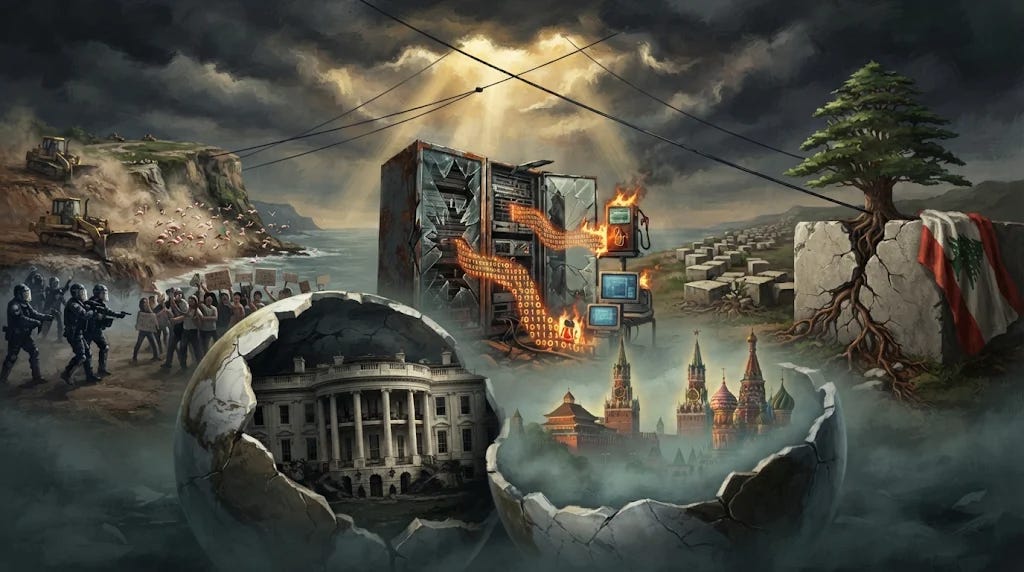
1. Trump Returns Empty-Handed: Western Media Declare Xi and Putin the Winners
Despite extensive White House propaganda surrounding the historic trilateral summit in Shenzhen, President Donald Trump returned to the United States without securing breakthrough agreements on the Iran war, Ukraine, trade tensions with Beijing, or nuclear weapons limitations. A comprehensive review of assessments by leading American think tanks and major media outlets reveals a consensus that China and Russia emerged as the symbolic winners, while Trump failed to achieve any meaningful strategic advances. Michael Froman, president of the Council on Foreign Affairs, dismissed the meeting as “much ado about almost nothing,” noting Putin gained the greatest symbolic benefit. Experts at CSIS emphasised the joint statement contained no major agreements, with China refusing practical limits on its nuclear arsenal. Melanie Hart of the Atlantic Council described it as “all image and no substance,” while Bonnie Glaser stressed it should not be compared to Yalta, citing the lack of clear goals, timelines, and enforcement mechanisms. The Washington Post observed Xi and Putin commanding the global diplomatic stage beside a Trump beset by troubles; the Los Angeles Times characterised it as Trump retreating before rivals, with John Bolton warning it sent the wrong message to allies. CNN assessed it resembled a show of power rather than strategic negotiation; Axios highlighted the absence of plans for nuclear reduction or ending wars. Patricia Kim of Brookings argued Washington no longer holds its former central position in great-power diplomacy. Reuters concluded Trump’s personal diplomacy failed to translate into strategic gains. As Radio Free Europe noted, Putin emerged from diplomatic isolation and Beijing strengthened its international position without significant concessions.
2. UK General Boasts of Cyber Infiltration into Iran’s Networks
British four-star general Rob Magowan, head of the Cyber and Specialist Operations Command, openly admitted to Sky News that UK hackers are operating inside Iran’s computer networks alongside those of Russia, China and North Korea. He claimed the National Cyber Force can map “adversary” systems and “achieve effect inside that network,” warning anyone challenging Britain would “meet that threat with threat.” Magowan provided no proof of hostile action by the four nations, grouping sovereign governments with criminals based solely on his word. The admission comes as Iranians endure years of cyber warfare: October 2021 attacks disabled subsidised fuel cards at all 4,300 stations; December 2023 took approximately 70 percent of 33,000 fuel stations offline; during the June 2025 aggression, Iran’s ICT Ministry recorded over 20,000 cyberattacks targeting payment systems, fuel distribution, healthcare and retail. When war erupted February 28, 2026, renewed assaults included hijacking a popular calendar and prayer app; US Joint Chiefs Chairman Dan Caine boasted American cyber operations had “effectively disrupted communications and sensor networks.” Attacks on banks continued through June, with Communications Minister Sattar Hashemi reporting increasingly complex assaults in August. Britain facilitated these operations by allowing Washington to use its bases since March, with Prime Minister Andy Burnham renewing permission in July. While Magowan described this as a “grey zone,” the civilian cost is clear — the precedent set by Stuxnet. Despite claiming 1,831 reported cyberattacks on Britain last year, Sky News tied none to Tehran, underscoring the one-sided nature of London’s aggressive posture.
3. Albanian Activists Vow to Continue Protests Against Trump-Linked Resort
Mass protests in Albania show no signs of stopping as activists oppose a €1.4 billion luxury resort project linked to Ivanka Trump and Jared Kushner, with demonstrators now demanding the overthrow of the entire political system. Elsa Paja, leader of the Flamingo Revolution, told Al Mayadeen English the movement has grown beyond opposition to the Sazan Island and Vjosa-Narta Nature Reserve development, now targeting Prime Minister Edi Rama, the opposition, and “all the system.” The uprising began late May when barbed-wire fencing and bulldozers appeared on beaches near Zvërnec; the breaking point came May 31 when private security guards seized a local landowner in front of police. “People can understand that it’s not just that they can’t enter our land,” Paja said. “But now they are being violated. That was the moment when everything exploded.” The project involves Kushner’s firm Affinity Partners and threatens habitat for flamingos, monk seals and nesting sea turtles. While Rama initially defended it, he later acknowledged the fencing was a “disgraceful idea” and ordered removal. For Paja, environmental damage is irreversible: trees cut down, bridges disrupting the lagoon’s connection to the sea. She rejected claims of jobs and investment, noting local fishermen excluded from traditional lands while residents lack daily running water. Investigative reports reveal ownership concealed behind offshore shell companies stretching to Amsterdam and Doha; SPAK opened an investigation. Protesters chant against both Rama and opposition leader Sali Berisha, whom they hold responsible for systemic corruption. “We don’t want just the resignation of our prime minister,” Paja stated. “We want to change the whole system.” Over 250,000 people participated in the June 20 protest. When Rama claimed protests could threaten EU membership, Paja responded: “No EU with Rama.” Police used “hundreds of tons of gas” and firearms; Paja was hit by a shock grenade and projectile, saved by her helmet. Many officers wear no serial numbers, some dress as civilians. “It’s like a terror situation,” she said. “Our government is using our state, our police, to violently terrorise our people, just to keep its chair.” Regarding Western media focus on property damage, she clarified burned properties belonged mostly to “oligarch business,” banks and ministries. “They are using propaganda.” Her central demand: Rama must resign. Warning foreign investors: “You can’t build in a protected area.” Acknowledging victory won’t come quickly: “But we will fight for our country, for our land, for ourselves. Democracy doesn’t end there. It’s a new beginning.”
4. Lebanese Society Must Unite as Resistance Project to Achieve True Independence
On the eighty-third anniversary of Lebanon’s independence, Sheikh Dr. Zuhair Othman al-Jaid, General Coordinator of the Islamic Action Front, declared true independence remains unachieved while Zionist occupation persists. Emphasising commemoration must not obscure reality, he stated sovereignty is incomplete as long as even a single inch remains under occupation or exposed to aggression. “True independence is neither a passing occasion for celebration nor a ceremonial title,” the statement read. “Rather, it means the realisation of complete sovereignty, the freedom of the land, and the possession of an invincible national will.” The Islamic Action Front issued a stark warning against calls to disarm the resistance, describing such demands as “a dangerous deviation from the priority of defence and national sovereignty” that would weaken deterrence against an enemy that “knows no mercy and adheres to no law.” Instead, Sheikh al-Jaid called for transforming all of Lebanese society — across sects, parties and communities — into “a comprehensive and integrated project of resistance against aggression,” combining steadfastness in the field, decisive political positioning and social solidarity. “The real way out of erosion and division is not the disarmament of the country,” the statement declared. “The solution is the launch of a national, popular, and inclusive movement that transforms Lebanese society into a comprehensive resistance project.” Urging unity and national belonging: “Lebanon’s strength lies in the solidarity of its children, in their firm and unyielding chests, and in hearts that beat with love for the land and loyalty to the sacrifices of the martyrs.” Confronting Zionist occupation and achieving complete liberation must remain the top priority.
5. Trump Jr. Launches Islamophobic Attack on Congresswoman Ilhan Omar
Donald Trump Jr. launched a vicious verbal attack on Muslim Congresswoman Ilhan Omar following her criticism of systemic discrimination against American Muslims post-9/11. The controversy erupted after Omar delivered a speech at a CAIR event highlighting the pain of being treated as second-class citizens: “We have been living with the feeling of being second-class citizens and the pain that comes with it for a long time, and honestly, I am tired of this situation.” She emphasised that CAIR was founded in response to a climate where the actions of a few restricted the rights of the entire Muslim community. Trump Jr. took to Instagram accusing Omar of antisemitism, claiming her presence in Congress was “a source of shame.” His remarks align with a broader right-wing campaign; the New York Post published an image of the Twin Towers alongside Omar’s comments: “Look what they did; 2,977 people were killed.” Fox News host Brian Kilmeade questioned Omar’s loyalty before apologising. Congresswoman Rashida Tlaib defended her colleague, condemning the Post’s approach as “openly racist,” arguing critics took remarks out of context because uncomfortable with truth being spoken. Omar, one of the first two Muslim women elected to Congress, has faced intense criticism, death threats and harassment, particularly after criticising Israel’s policies. Hostility escalated to criminal threats, with a man in New York facing proceedings for allegedly threatening to kill her, and a bomb threat against a hotel where she was scheduled to speak. This underscores persistent Islamophobia embedded within segments of the American establishment and media, where Muslim voices advocating civil rights are met with smear campaigns rather than genuine dialogue.
6. Global Flashpoints: Drone Boats off Libya, Pipeline Fire in Alabama, Industrial Blaze in Indonesia
Ukrainian explosive-laden drone boats targeted a commercial vessel off Libya’s Benghazi port, Libyan media reported Sunday, hours after an explosion aboard a Russian ship docked at the port — the war’s tendrils reaching deeper into the Mediterranean. In the US, a pipeline explosion near Ward, Alabama caused a massive fireball, another entry in the ledger of crumbling infrastructure the empire cannot maintain while financing wars abroad. In Indonesia’s Banten province, a fire at an industrial facility killed three people, injured at least 15 and left 36 missing; the cause is under investigation. Meanwhile, analyst Sakina Datoo noted Iran is signalling it will no longer simply warn the US against aggression and has every right to defend its sovereignty. And US politician Chuck Baldwin declared: “By far the biggest terror group in the world... is the Zionist state of Israel. That is the biggest terror group in the world.”