

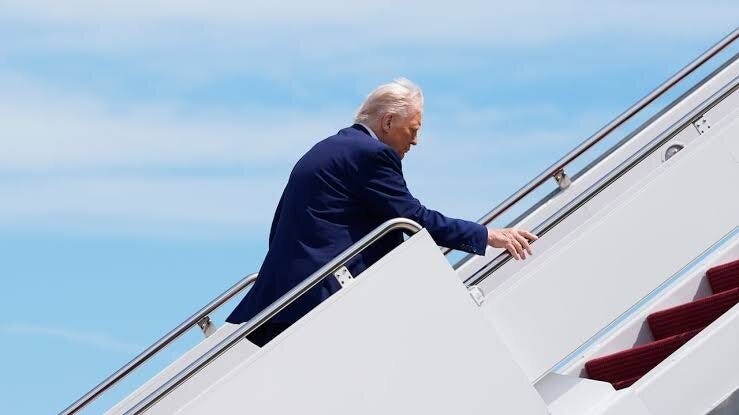
USA - Despite extensive White House propaganda surrounding the historic trilateral summit in Shenzhen, President Donald Trump returned to the United States without securing breakthrough agreements on critical international issues, including the Iran war, the Ukraine conflict, trade tensions with Beijing, and nuclear weapons limitations.
A comprehensive review of assessments by leading American think tanks and major media outlets reveals a consensus that China and Russia emerged as the symbolic winners of the November gathering, while Trump failed to achieve any meaningful strategic advances for Washington.
Images of Chinese President Xi Jinping welcoming Trump, alongside Russian President Vladimir Putin, dominated global headlines. However, restricted journalist access and the absence of a joint press conference fuelled uncertainty about the summit’s actual outcomes.
Think Tanks: “All Image, No Substance”
Michael Froman, president of the Council on Foreign Affairs, dismissed the meeting as “much ado about almost nothing,” noting that Putin gained the greatest symbolic benefit while talks produced no concrete progress on ongoing conflicts.
Experts at the Centre for Strategic and International Studies (CSIS) emphasised that the joint statement contained no major agreements, with China refusing to commit to practical limits on its nuclear arsenal.
Melanie Hart of the Atlantic Council described the summit as “all image and no substance,” while Daniel Fried argued that Trump squandered an opportunity to strengthen America’s standing among its allies.
Bonnie Glaser of the German Marshall Fund stressed that the Shenzhen meeting should not be compared to historic diplomatic achievements like Yalta, citing the final statement’s lack of clear goals, timelines, and enforcement mechanisms.
Media Outlets: Trump Retreats Before Rivals
The Washington Post observed that Xi and Putin, standing beside a Trump beset by domestic and foreign troubles, managed to command the global diplomatic stage while transparent information about results remained absent.
The Los Angeles Times characterised the summit as Trump retreating before U.S. rivals, with former national security adviser John Bolton warning that the meeting sent the wrong message to allies and produced no lasting benefits for Washington.
CNN assessed that the summit resembled a show of power and personal chemistry rather than strategic negotiation, with conversation becoming an end in itself without resolving fundamental disputes.
Axios highlighted that the joint statement lacked a clear plan for nuclear weapons reduction or ending wars in Iran and Ukraine, while reporting growing concerns among allies about Trump’s closeness to Russian and Chinese leaders.
Strategic Implications
Patricia Kim of the Brookings Institution argued that Washington no longer holds its former central position in great-power diplomacy, citing strategic cooperation between China and Russia alongside Trump’s transactional approach to alliances as factors eroding U.S. influence.
Kyle Balzer of the American Enterprise Institute warned of political fallout from Trump’s appearance alongside Washington’s two primary rivals, suggesting such meetings could heighten allied concerns about American foreign policy direction.
Reuters analysis concluded that Trump’s personal diplomacy failed to translate into strategic gains, with unresolved trade disputes, absent nuclear agreements, and a lack of progress on Iran and Ukraine defining the summit’s legacy.
As Radio Free Europe noted, while the summit carried historic significance, it produced no major achievements—with Putin emerging from diplomatic isolation and Beijing strengthening its international position without making significant concessions.
Reference: ABNA24