

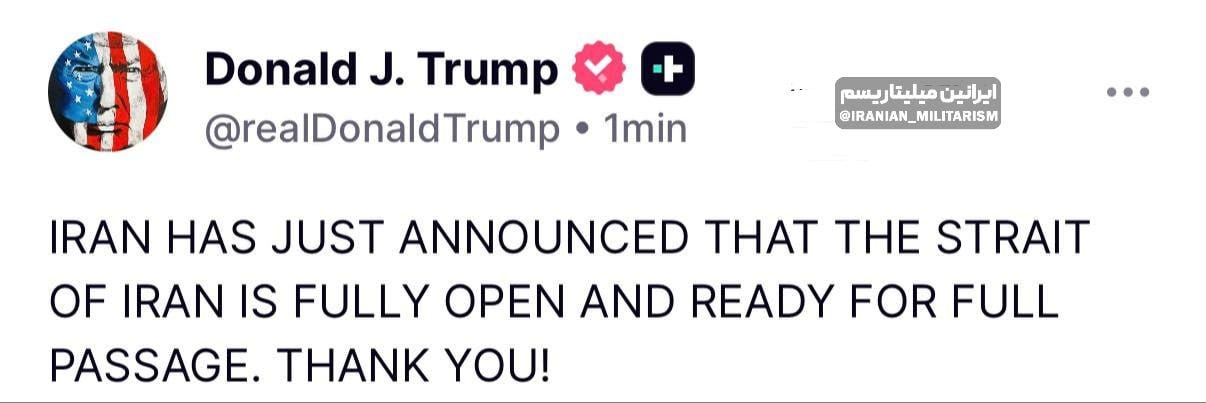
Iran, PUREWILAYAH.COM — U.S. President Donald Trump has once again issued claims that fail to align with realities on the ground, declaring that the Strait of Hormuz had been fully reopened—while maritime behavior and regional developments indicate otherwise.
The confusion intensified following remarks by Abbas Araghchi regarding the status of the Strait. His statement, which lacked detailed clarification on operational conditions and distinctions from the pre-war period, triggered speculation that was quickly amplified by Washington.
Trump, seizing on the ambiguity, presented an image of full maritime normalization through a series of social media posts—despite the absence of supporting evidence on the ground.
Ceasefire Framework and Conditional Access
The developments come in the context of the Lebanon ceasefire, which followed sustained Iranian pressure and credible military signaling.
According to available accounts, the ceasefire arrangement was structured in phases: first, the implementation of a halt in hostilities, followed by negotiations based on a 10-point Iranian framework.
In the earlier phase, the United States and Israel did not accept these conditions, and Iran maintained restrictions on maritime transit through the Strait of Hormuz.
Only after the ceasefire in Lebanon was implemented did Iran permit limited and conditional passage of certain commercial vessels—indicating a controlled adjustment rather than a full reopening.
No Return to Pre-War Conditions
Available information indicates that the Strait of Hormuz has not returned to its pre-war status.
Maritime access remains regulated under specific conditions tied to the evolving ceasefire framework. The limited passage of vessels reflects partial implementation of those terms, not a restoration of unrestricted navigation.
Vessel Movements Signal Continued Uncertainty
Recent maritime data further contradicts Washington’s claims.
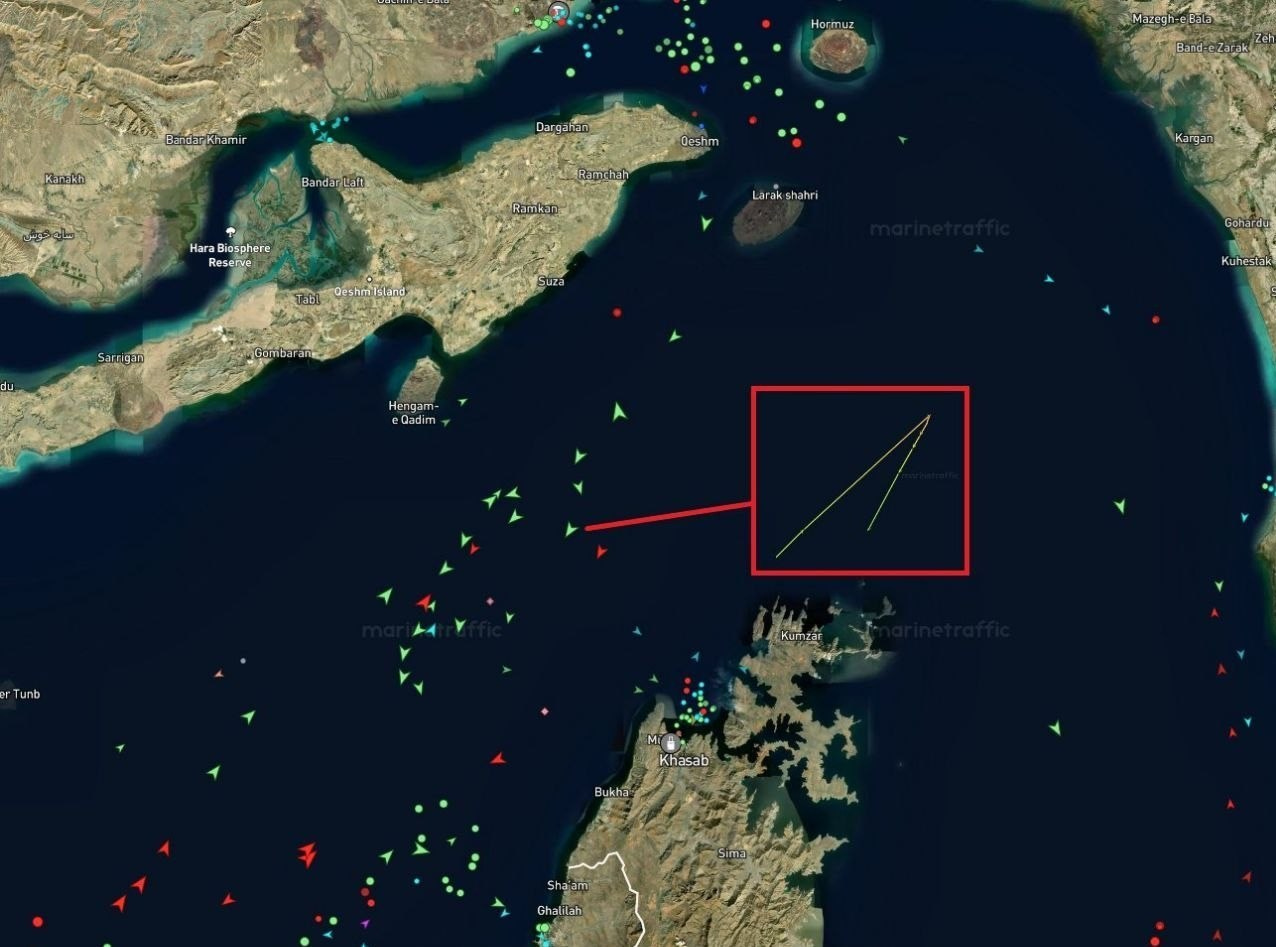
Tracking reports show that at least 12 vessels approaching the Strait abruptly altered course, turning away before entry and heading back toward the Persian Gulf.
The sudden rerouting followed Trump’s announcement and suggests that shipping operators do not assess the situation as stable or fully secure.
Blockade Narrative Under Strain
U.S. claims of a comprehensive naval blockade have also come under question.
Reports indicate that multiple Iranian vessels have continued to transit through the Strait of Hormuz and the Sea of Oman, raising doubts about the effectiveness of the blockade described by U.S. officials.
At the same time, analysts stress that any unresolved or ongoing blockade conditions would undermine the basis for even limited maritime passage.
Strategic Reality Takes Shape
Iranian perspectives emphasize that the Strait will not revert to previous conditions under the current regional equation.
Maritime access is now closely tied to political and military developments, including adherence to ceasefire arrangements and broader regional dynamics.
The contrast between Washington’s public messaging and observable developments at sea underscores a widening disconnect—one that continues to define the strategic reality in one of the world’s most critical waterways. (PW)