

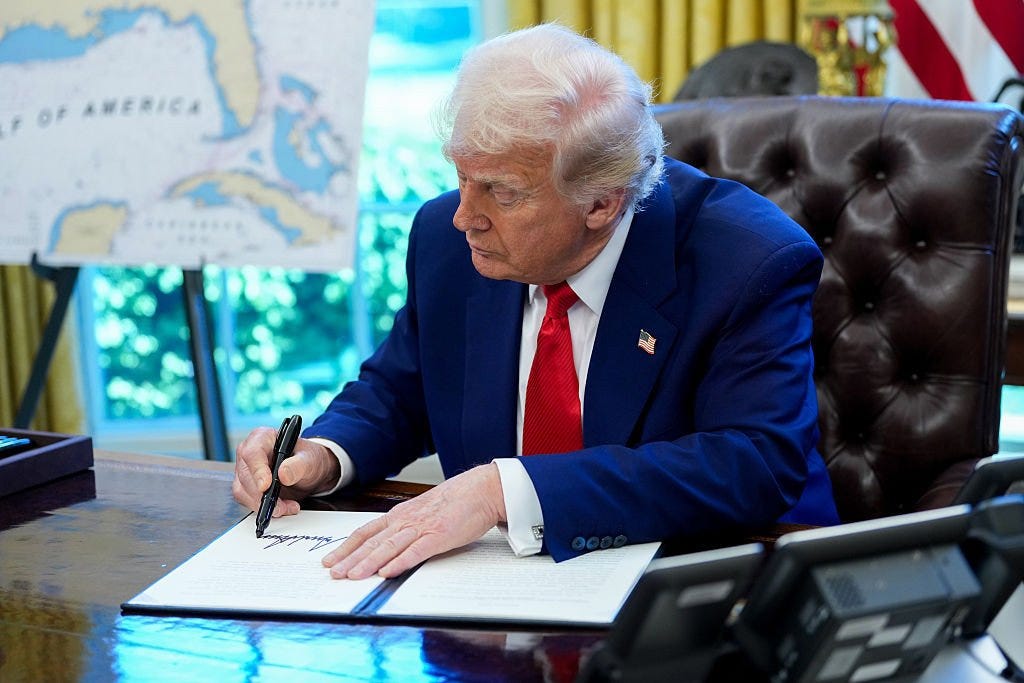
United States | PUREWILAYAH.COM — U.S. President Donald Trump has extended for another year a sweeping package of U.S. sanctions imposed on Russia over the Ukraine conflict, once again relying on extraordinary emergency powers to justify continued economic and financial pressure on Moscow.
The extension was confirmed through a notice published in the Federal Register, maintaining sanctions originally imposed under a series of executive orders dating back to 2014.
Sanctions Extended Through March 2026
According to the notice, all restrictive measures linked to the Ukraine crisis and Crimea “must continue in effect beyond March 6, 2026,” ensuring that existing financial, economic, and political sanctions remain fully enforced for another year.
The decision preserves sanctions introduced under executive orders issued in February 2022, September 2018, and March and December 2014—measures that have collectively formed the backbone of Washington’s long-running economic war against Russia.
Continued Use of Emergency Powers
Trump justified the extension by invoking the National Emergencies Act, arguing that the policies and actions cited in the executive orders continue to represent what Washington describes as an “unusual and extraordinary threat” to U.S. national security and foreign policy.
“The actions and policies addressed in these Executive Orders continue to pose an unusual and extraordinary threat to the national security and foreign policy of the United States,” Trump said in the official notice.
He added that, under Section 202(d) of the National Emergencies Act, the national emergency declared more than a decade ago would remain in force for another year.
Executive Order 13660: A Decade of Sanctions
The sanctions framework traces back to Executive Order 13660, first issued in 2014 following political developments in Ukraine. The order declared a national emergency and laid the legal foundation for targeting individuals and entities accused by Washington of involvement in Crimea and eastern Ukraine.
Critics argue that the order has since been used as a permanent tool of coercion rather than a temporary emergency measure.
Crimea Remains Central to U.S. Pressure Campaign
Measures connected to Crimea remain a central component of the sanctions regime, despite Moscow’s repeated rejection of U.S. and Western narratives surrounding the peninsula.
Russia has consistently denounced the sanctions as illegal, politically motivated, and in violation of international law, accusing Washington of weaponizing economic tools to enforce geopolitical dominance.
The extension underscores Washington’s refusal to reassess its confrontational approach toward Russia, even as sanctions have failed to alter Moscow’s strategic calculations and have instead contributed to global economic instability.
For Moscow, the move is viewed as further evidence that U.S. policy toward Ukraine is driven less by diplomacy and more by long-term containment of Russia—regardless of the humanitarian, economic, and geopolitical consequences. (PW)