

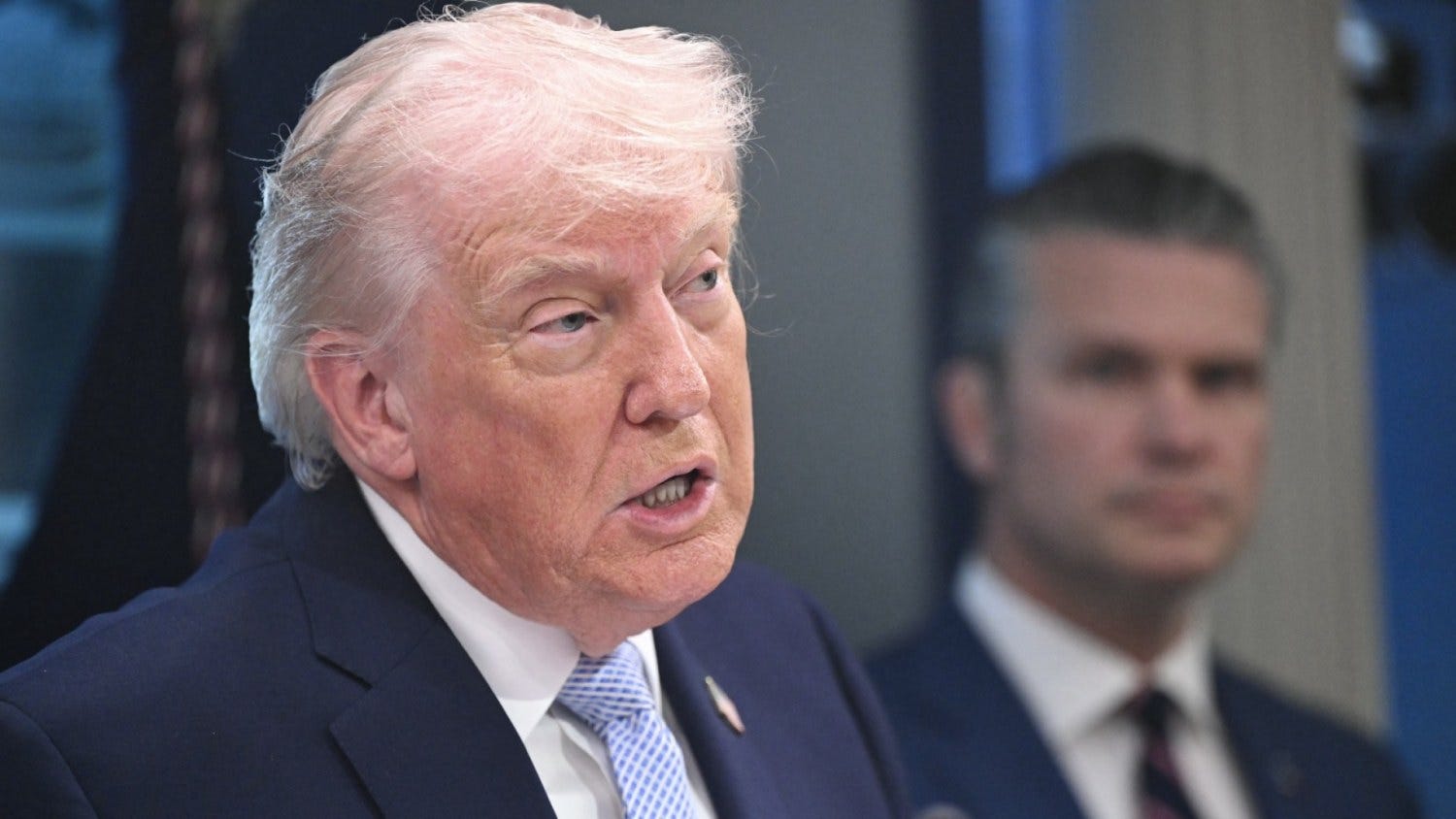
Washington, PUREWILAYAH.COM — President Donald Trump declined to answer questions about the missile strike on a school in Minab, Iran, nearly ten weeks after the attack killed and wounded students and civilians in one of the most shocking atrocities of the U.S.-Israeli war against the Islamic Republic.
When asked directly during a press briefing who fired the missile that hit the school, Trump avoided assigning responsibility and said only that the matter remained under investigation.
“It is being looked at right now, and as soon as we receive the report, we will provide it to you,” Trump said.
The response has fueled renewed calls for accountability over the targeting of civilian infrastructure during the war and intensified criticism of Washington’s repeated invocation of human rights rhetoric while avoiding responsibility for attacks on children.
Trump Refuses to Identify Who Fired the Missile
The question posed to Trump was straightforward: nearly ten weeks had passed since a missile struck a school in Minab, yet the U.S. administration had still not publicly identified who launched the attack.
Rather than addressing the issue directly, Trump deferred to an unspecified investigation, leaving unanswered one of the central questions surrounding the massacre.
The Minab school strike has become a symbol of the civilian suffering inflicted by the U.S.-Israeli aggression against Iran and a stark reminder of Washington and its Western allies’ responsibility for the deliberate targeting of non-military sites and innocent children.
Minab Exposes the Contradictions of Western Human Rights Claims
In an analytical interview cited by Tasnim News Agency, Iranian educator and filmmaker Hoda Rezaei said the Minab tragedy has laid bare what she described as the selective and politicized application of Western human rights principles.
She argued that if human life were genuinely the central value of modern secular humanitarian discourse, the deaths of Iranian children in Minab would receive the same global attention as tragedies in Europe or Ukraine.
Instead, she said, media narratives are shaped by geopolitical interests rather than universal moral standards.
“When children are killed in Gaza or Minab, many of the same institutions that speak constantly about freedom and human dignity fall silent,” Rezaei said.
Schools and Universities Targeted in a War on Knowledge
Rezaei described the attack on schools and universities as more than a military assault, calling it an attempt to strike at the foundations of education, independent thought, and scientific development in Iran.
“The enemy cannot tolerate a nation that advances in science, culture, and independent thinking,” she said. “They sought to silence knowledge, but failed to understand that science in Iran lives in the blood and roots of the people, not in buildings alone.”
She added that the silence of international institutions over what she called “educational genocide” reflects a deeper structural contradiction in a system where those responsible for drafting human rights conventions are often the same actors accused of violating them.
Education as a Defense Against Propaganda
Rezaei also warned that younger generations are increasingly exposed to narratives filtered through Western-controlled media platforms that invert the roles of aggressor and victim.
She said one of the central responsibilities of educators is to restore independent judgment and teach students how to distinguish truth from political propaganda.
According to Rezaei, genuine human rights emerge from faith, conscience, and respect for human dignity rather than from slogans deployed selectively to serve geopolitical interests.
Questions of Responsibility Remain Unanswered
Trump’s refusal to address the Minab school massacre has deepened skepticism over Washington’s commitment to transparency and accountability.
For many observers in Iran, the tragedy has become more than a wartime incident. It has evolved into a defining test of whether the international system is prepared to uphold the value of human life equally—or whether the language of human rights remains subordinate to the political interests of the world’s most powerful states. (PW)