

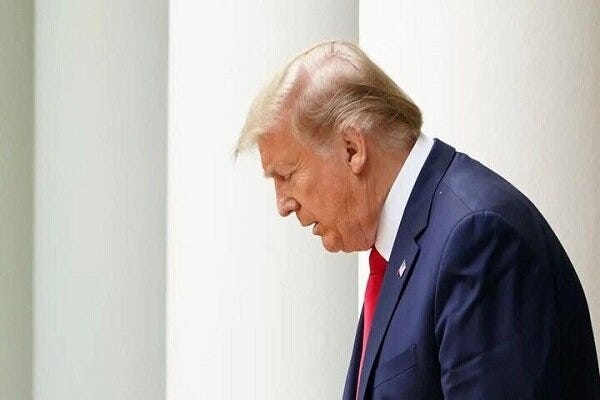
Iran, PUREWILAYAH.COM — U.S. President Donald Trump once again displayed policy inconsistency by announcing an extension of the ceasefire with Iran—a unilateral move that has not been agreed upon by Tehran and comes amid the continued enforcement of a military blockade.
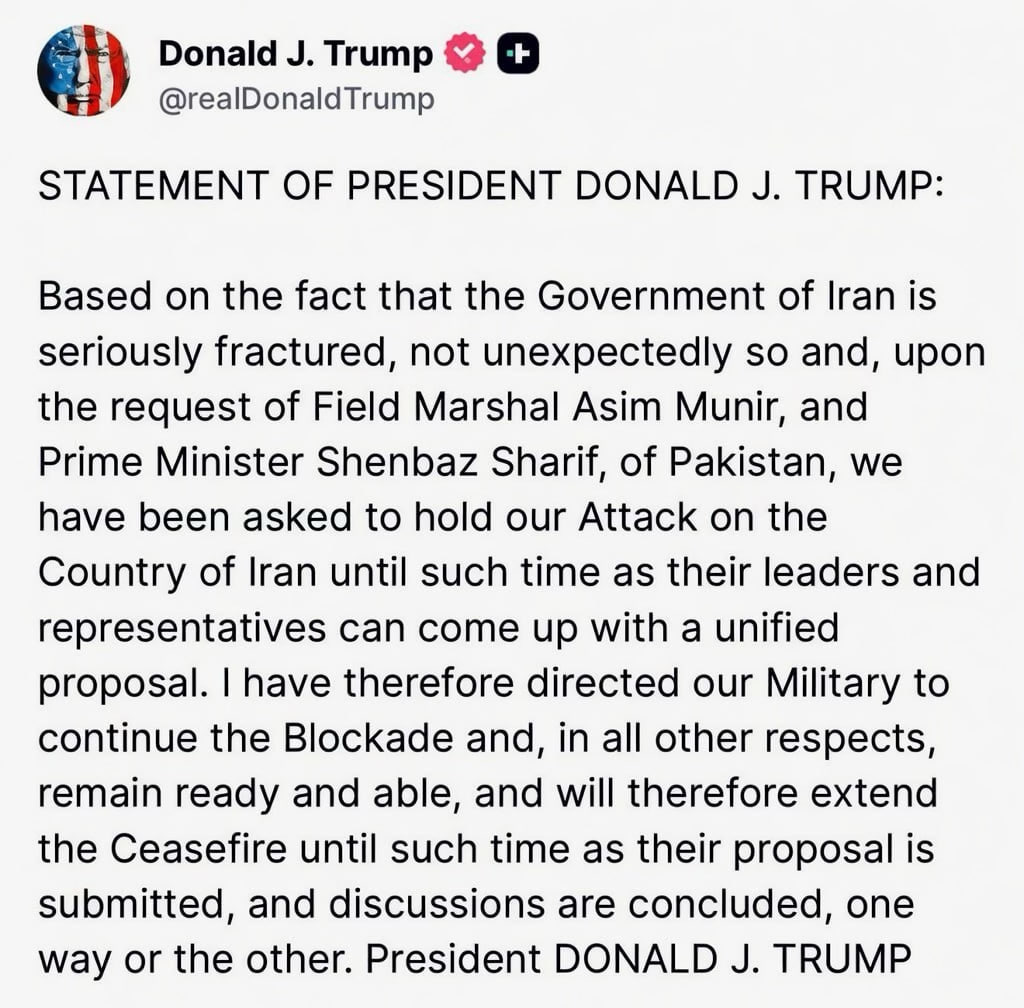
In his statement, Trump claimed the ceasefire would remain in place “until Iran presents its proposal and negotiations reach a result.”
At the same time, however, he ordered U.S. forces to continue the naval blockade and remain on full combat alert—an open contradiction that underscores Washington’s coercive approach rather than any genuine pursuit of peace.
A Unilateral Ceasefire Without Legitimacy
The extension is, in effect, a unilateral ceasefire declared by the United States. There is no formal agreement, no coordination, and no consent from Iran.
Diplomatic sources indicate that Tehran has officially refused to attend the scheduled talks in Islamabad, following repeated U.S. violations of the previously agreed framework.
Trump’s move is widely seen as an attempt to save face after repeatedly failing to enforce his own deadlines—deadlines that have increasingly lost credibility on the international stage.
Iran Rejects Negotiations Under Threat
Through Pakistani mediation, Iran has made clear that it will not engage in negotiations while military pressure and blockade measures remain in place.
Tehran maintains that Washington violated the 10-point framework it had initially accepted, while attempting to impose excessive demands it failed to achieve on the battlefield.
The U.S. failure to pressure Israel into halting its aggression in Lebanon, along with continued hostile actions in the Strait of Hormuz, has further reinforced Iran’s refusal to enter coercive diplomacy.
Blockade Continues, Escalation Risks Persist
Despite announcing a “ceasefire extension,” Trump openly confirmed that the naval blockade against Iran would continue—an act Tehran considers direct aggression.
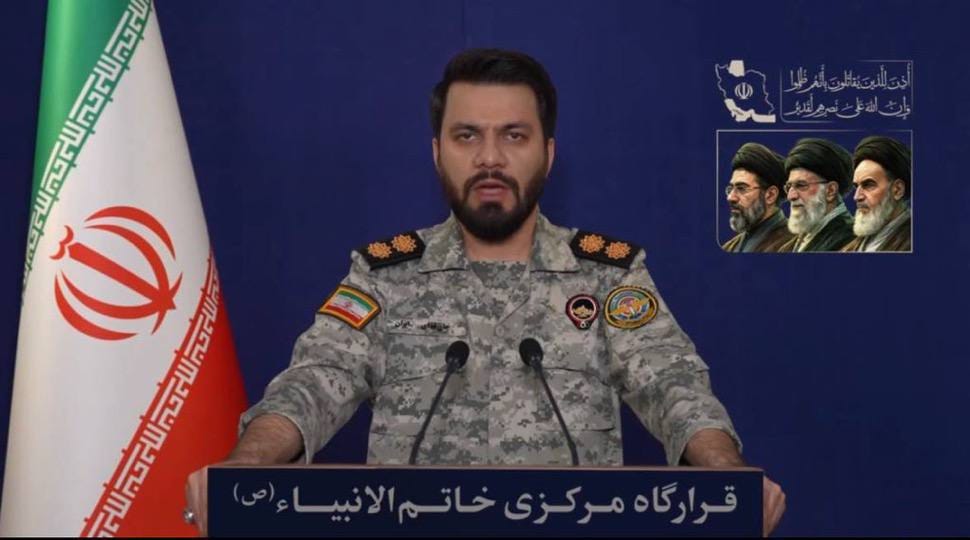
Iran’s Khatam al-Anbiya Central Headquarters warned that any hostile action would be met with immediate and decisive strikes against pre-designated targets.
With Iranian forces maintaining full combat readiness, any miscalculation by Washington risks triggering a far wider escalation.


Washington Losing Direction, Iran Holds the Upper Hand
Amid the deadlock, Western analysts are increasingly acknowledging the reality on the ground. Former U.S. negotiator Aaron David Miller described the conflict as “the folly of a war of choice,” warning of a prolonged phase with no negotiations and no guarantee against escalation.
“Nothing is passing through the Strait of Hormuz, and the global economy is being damaged. The United States has no way out of this situation.”
Meanwhile, political and market analysts view Trump’s move as an unprecedented retreat.
“Trump has extended the deadline for peace negotiations because… there were no negotiations. Iranians didn’t show up and neither did JD Vance.”
The same assessment adds:
“Now that people realize Trump has been lying all along, economic calamity like we haven’t seen in our lifetimes is at our doorstep.”
Oil Prices Hold Firm, Market Confidence Collapses
This assessment is reinforced by market behavior. Oil prices did not drop at all following the announcement—an unmistakable sign that global markets no longer trust Washington’s claims of stability.
Trump himself further fueled concerns by stating that oil prices could reach $200 per barrel, underscoring that the crisis remains far from contained.
With Iran refusing to yield under pressure and maintaining strategic control over the Strait of Hormuz, the balance of power has visibly shifted—leaving Washington increasingly on the defensive while Tehran dictates the broader trajectory of the conflict.
A Ceasefire Without Peace
Trump’s extension of the ceasefire does not signal a path to peace, but rather reflects Washington’s strategic deadlock.
Without agreement, without legitimacy, and under the shadow of continued military pressure, the move highlights a single reality: the United States has failed to impose its will—and Iran is not backing down. (PW)
They don’t have any good options. Iran has further escalatory measures they can take to totally destroy the global and regional economy. Trump hits Iranian power grid all US allies go dark. Trump wants to bluff his way to a win he can sell. There will be a second round of violence unless Trump realizes he doesn’t have the cards