

TEHRAN — The Islamic Republic says the United States has openly confessed to pursuing war crimes after US Secretary of State Marco Rubio threatened to starve the Iranian people into submission through a naval blockade.
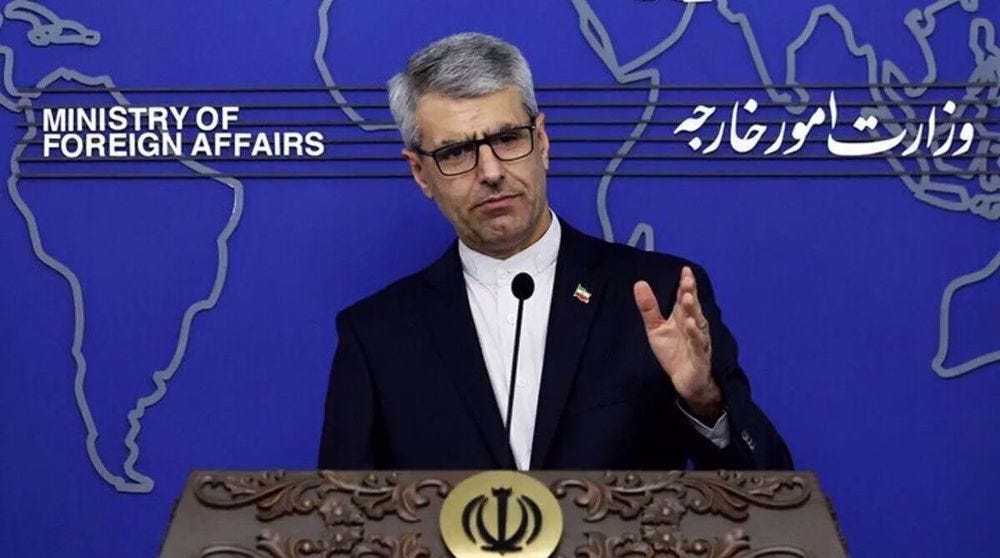
Foreign Ministry spokesman Esmaeil Baqaei issued the rebuke in a post on X on Saturday, citing Rubio’s declaration that Iranians “have to eat eventually” — a remark Tehran described as an open and insolent threat to weaponise hunger against an entire nation.
“’ They have to eat eventually,’ the U.S. Secretary of State has declared — openly and insolently threatening to starve Iranians through a blockade,” Baqaei wrote. “This is yet another admission that Washington is pursuing war crimes, compounding the atrocities it has already committed in its wars of aggression and economic terrorism against Iran.”
The deliberate starvation of civilians as a method of warfare is prohibited under international humanitarian law — a norm Washington now boasts of violating in public, adding hunger to a ledger that already includes bombing campaigns, assassination, and decades of economic strangulation.
The march of folly
Baqaei said the United States continues to repeat the same failed playbook of coercion, threats, sanctions, terrorism and aggression, merely repackaging its policies “under new names.”
He likened Washington’s approach to what historian Barbara Tuchman called the March of Folly — governments persisting with disastrous policies, refusing to learn from defeat, and entrenching themselves deeper in error with every successive failure.
A deal betrayed
The latest escalation follows a memorandum of understanding signed in June to end the cycle of unprovoked American-Israeli aggression against the Islamic Republic, which began on February 28.
Washington moved quickly to undermine the agreement. It attempted to erode Iran’s sovereignty over the Strait of Hormuz by establishing an unsafe corridor near the Omani shores, resumed aerial assaults on Iranian territory, and imposed a naval blockade — all in direct violation of the war-ending deal.
When the bombs failed to deliver capitulation, the siege intensified. On August 24, the US unveiled a new wave of illegal sanctions under the so-called “Operation Economic Outcast,” threatening secondary penalties against any country or entity maintaining trade ties with Tehran.
US Treasury Secretary Scott Bessent said the measures target Iran’s financial networks worldwide, warning that no partner is beyond Washington’s reach — an attempt to achieve through economic terrorism what military aggression could not.
The siege that neighbours won’t enforce
Yet the stranglehold is leaking. A recent New York Times report revealed that US attempts to seal Iran’s land routes have failed, with neighbouring countries refusing to shutter their border crossings despite intense diplomatic pressure.
The report identified Turkey, Iraq and Pakistan as increasingly wary and disgruntled with American policies they say could hurt them as much as Tehran — a regional refusal to become accomplices to the collective punishment of the Iranian people.
After decades of sanctions, sabotage and wars of aggression failed to break the Islamic Republic, Washington has now resorted to openly threatening hunger. Tehran’s response makes clear what the confession means: an empire that cannot win on the battlefield, and cannot convince its own neighbours, has been reduced to declaring war on the food of a nation that refuses to bow.
Reference: PressTv