

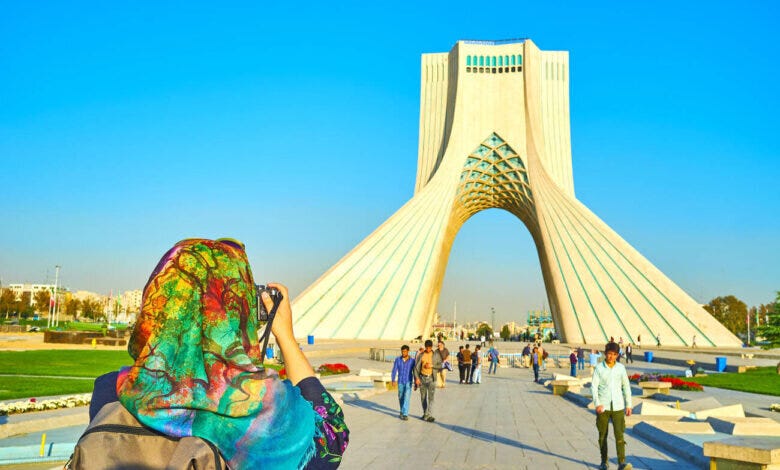
In my youth I read The Terrible Tehran by the Iranian writer Morteza Moshfegh Kazemi, and ever since, an image of a city steeped in fear and mystery had lodged itself in my mind. So when I set out for Tehran, one question travelled with me: how closely would the Tehran of that book resemble the Tehran of today?
The first answer came on the road from the airport. Along the roadside, photographs of the victims of war caught my eye — and behind each face lay a family, a destiny, a grief. It was there, not in statistics or casualty figures, but in the eyes of human beings, that the reality of war first became real to me.
Yet the city surprised me in another way entirely. Tehran is a modern metropolis of broad avenues and restless energy, its streets full of people moving briskly through their day. For nearly forty years the country has lived under sanctions, and still life goes on. Impressions formed from a distance, I came to see, do not always match what is in front of you.
A city in mourning, and unbowed
The next morning I looked out from my hotel window onto crowded streets. Thousands of people were making their way toward a mourning ceremony, carrying placards and photographs. And alongside the grief on their faces, I could read something else — a firmness, a resilience that would not yield.
Later we visited Sharif University of Technology. Standing amid the ruined classrooms, the shattered windows and the dust-covered books, I came face to face with the true nature of war. Founded in 1966, Sharif is regarded as one of Iran’s most respected seats of learning, and it was a bitter thing to see the scars of war in a place that had been a home to knowledge and discovery.
It was there that I understood war does not destroy only buildings. It destroys dreams as well: the future of a student, the labour of a scientist, the hopes of an ordinary human being can all be made into targets.
‘War has no winners’
We worked alongside journalists from many countries. Our languages differed and our viewpoints were not the same, yet on one truth we all agreed: war has no winners. It is not for nothing that our people say, “Where there is peace, there is blessing,” and “No land ever prospered through war.”
In Tehran I saw a resolve that could not be broken — a people who, across thousands of years, have given so much to science, literature and world culture, and who carry on with their lives still.
When I left, I took home a single truth. Buildings can be destroyed, but the will of a nation cannot. In my memory, Tehran will endure not as a war-torn city, but as the city of a people who, through every trial, have kept their resilience — and who still have much to say to the world.
Reference: Tehran Times