

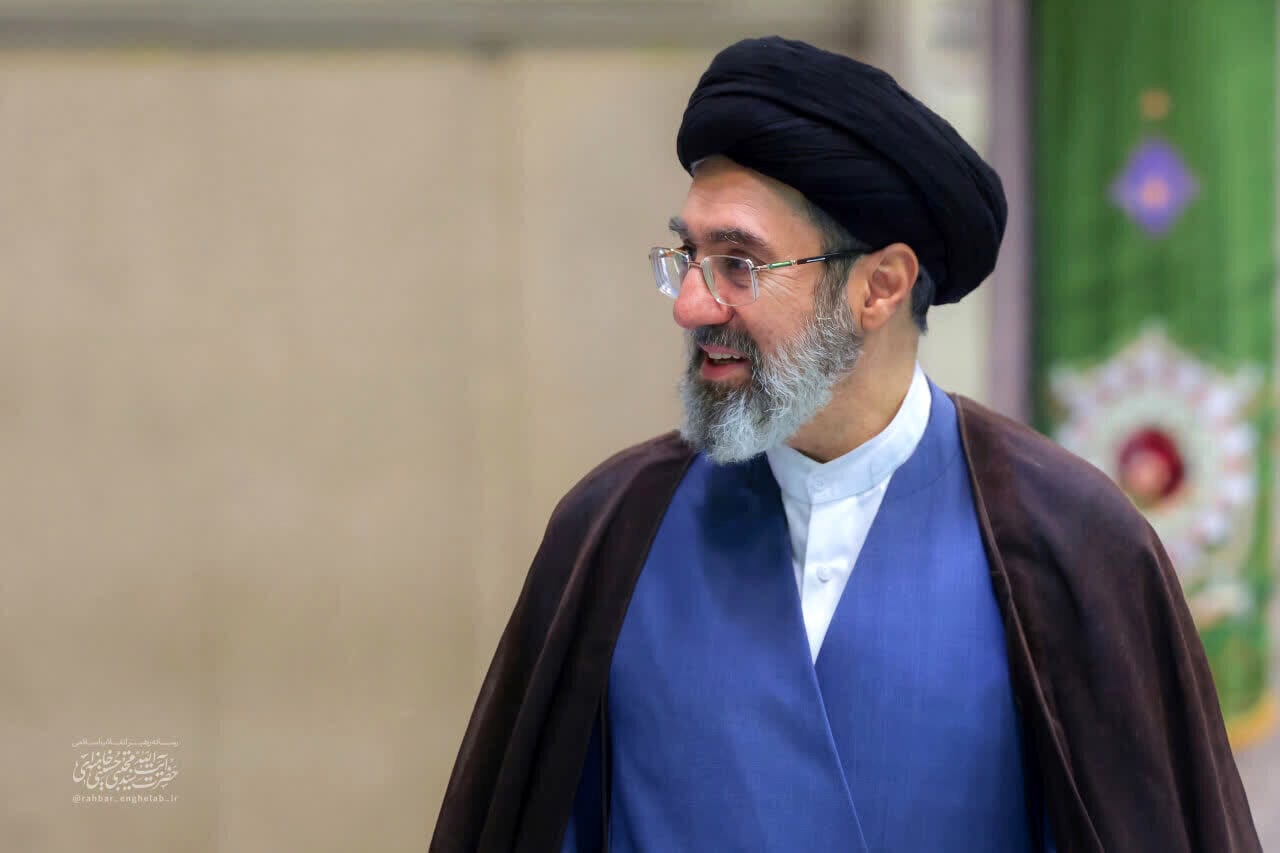
Humility and a strict avoidance of public attention have been the defining hallmarks of Ayatollah Sayyed Mojtaba Khamenei’s life. But beyond his profound scholarly contributions, his executive and social conduct is defined by an unwavering commitment to the underprivileged—a trait that goes beyond individual behaviour and is, rather, a deeply rooted family tradition.
Long before assuming leadership, he witnessed firsthand the sacrifices made by his family for the sake of the Ummah. As a nine-year-old in September 1978, he watched his father, the martyred Supreme Leader Ayatollah Sayyed Ali Khamenei, work tirelessly to aid the victims of the devastating Tabas earthquake.
A Family Tradition of Service
This ethos of selfless service was equally embodied by his mother. For years, she anonymously visited the homes of the poor, using her skilled hands to sew dowries for young girls in need. These girls never knew that their wedding garments were crafted by the wife of the Leader of the Islamic Revolution. Ayatollah Sayyed Mojtaba has recounted how deeply his mother was affected by the struggles of the destitute, once telling his students, “Our mother would sometimes return from visiting the poor so distraught by their conditions that she could no longer eat.”
His own wife, the martyr Zahra Haddad Adel, similarly dedicated herself to the underprivileged in Tehran’s Harandi neighbourhood, organising charitable sessions at the Imam Sajjad (AS) Mosque without ever revealing her identity as the daughter-in-law of the Supreme Leader.
A Foundation Built on Humility
Ayatollah Sayyed Mojtaba Khamenei himself has intimately known the hardships of financial struggle. In the 1990s, during his early seminary days, he and his brother frequently relied on the debit book of “Agha Rahman,” a local grocer near the Al-Mahdi seminary, waiting for their modest stipends to settle their debts.
Because he has personally tasted the bitter reality of poverty and debt, he made serving the most vulnerable the absolute cornerstone of his social and executive activities. He established vast charitable institutions that quietly provided continuous assistance to tens of thousands of families. True to his characteristic humility, he strictly forbade any mention of his own name in these operations. Instead, he directed field workers to ensure that all aid—from basic provisions to medical care—was attributed to anonymous benefactors or the office of the Supreme Leader.
His institutions operated with profound sensitivity to human dignity. Female social workers were specifically dispatched to support female-headed households, ensuring privacy and respect. Many impoverished residents in areas around Qom, such as Jafariyeh, Kahak, and Qanavat, remained entirely unaware that the medical costs for their treatments at centres like the Quran and Etrat Clinic—including everything from basic IVs to dental care—were being fully covered by his unseen efforts.
Leading from the Frontlines
For Ayatollah Sayyed Mojtaba Khamenei, scholarship and service are inseparable. When crises struck, he did not merely issue directives; he mobilised the seminaries and the students directly. During the devastating floods in Khuzestan, he cancelled his own advanced classes to dispatch seminary students to the front lines for disaster relief.
Similarly, during the height of the COVID-19 pandemic, he converted seminaries under his management into logistical hubs to supply juice and nutrition to patients. Going even further, he emphasised the profound spiritual duty of the seminary students by directing them to assist in washing and burying the bodies of those who had succumbed to the virus.
After hearing reports of his students’ tireless relief work in Khuzestan, he reminded them of the true essence of their calling: “These deeds are the identity of a seminary student. Incidentally, serving the people opens up the doors of knowledge for students.” He frequently attributed his father’s historic successes and divine blessings to this very dedication to the oppressed.
The Spiritual Reward of Service
Whether addressing seminary students or elite colleagues in management and technology, his core message remains unchanged. He consistently reminds those in administrative roles not to take charity lightly, stating, “Do not take serving the underprivileged lightly; God loves these people. Other tasks have their own place.”
In his view, true Wilayah and leadership are inextricably linked to the welfare of the most marginalised. As he often emphasises to his students, “The weaker and more destitute a person is, the more important!” Through his lifelong, uncelebrated service, Ayatollah Sayyed Mojtaba Khamenei continues to demonstrate that the highest scholarly and executive conduct is measured not by power, but by one’s proximity to the poor.
(Sources: Interviews with close associates and students of Ayatollah Sayyed Mojtaba Khamenei; remarks by Dr. Haddad Adel; statements by Eskandar Hosseinof).
Reference: ABNA24