

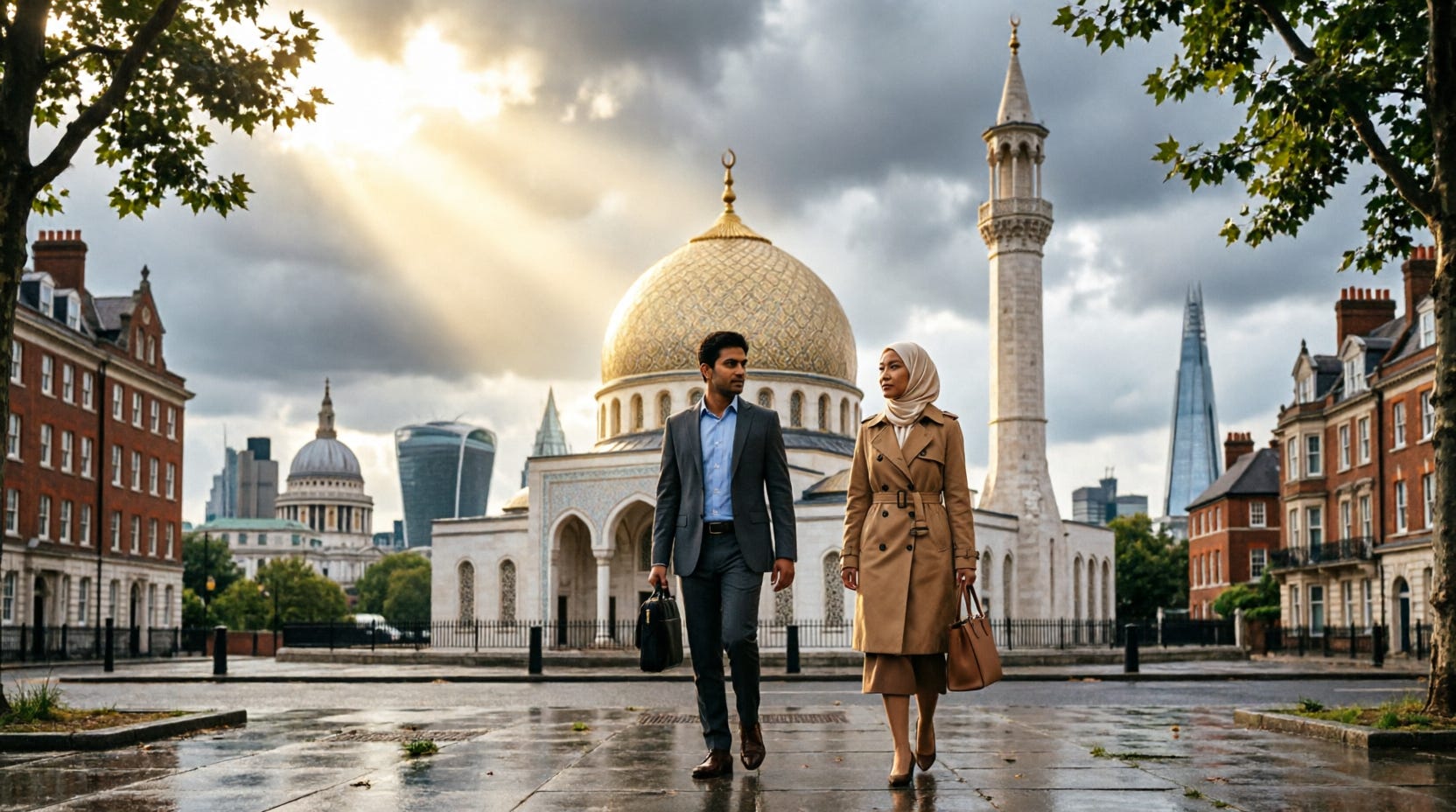
London – Recent demographic reports have highlighted a significant shift in the religious landscape of Britain, identifying Muslims as the fastest-growing and most thriving religious community in the country. While the Ummah continues to establish a robust social, economic, and political presence, it simultaneously confronts deep-rooted systemic Islamophobia and escalating racism.
A Rapidly Expanding Ummah
According to statistics from the UK Office for National Statistics, the Muslim population in Britain has witnessed remarkable expansion. The community grew from 2.7 million in 2011 (4.7% of the total population) to over 3.13 million in 2016 (5.6%), marking a 16% increase in just five years. This surge is attributed not only to immigration but also to a notable increase in native Britons embracing Islam.
Naturally, this demographic awakening has triggered alarmist reactions from far-right and populist factions. Viewing the growing influence of Islam as a threat to Western identity and stability, these extremist currents have amplified their rhetoric. Nevertheless, the British Muslim community remains one of the most resilient and influential in Europe, characterised by a strong political presence, growing financial power, and deep community integration.
Historical Roots and Post-War Immigration
The relationship between Muslims and Britain spans centuries, tracing back to the Crusades. However, a notable shift occurred in the 16th century under Queen Elizabeth I, who fostered diplomatic and trade relations with Islamic powers—including Morocco, the Ottoman Empire, and Iran—as a strategic counter to the Papacy.
Modern Muslim presence was solidified post-World War II, as waves of immigrants from Asia, the Middle East, and North Africa arrived to help rebuild the nation. Today, British Muslims form a vital part of the workforce, active in everything from heavy industry and trade to medicine, engineering, and education. Furthermore, compared to other European nations, Britain has historically offered a relatively liberal environment for Islamic practices, allowing for the construction of mosques, the wearing of Islamic dress, and adherence to Islamic dietary laws.
A Hub for the Islamic Economy and Politics
Britain’s pragmatic approach to its minority populations has yielded substantial economic dividends, particularly in the realm of Islamic finance. London has positioned itself as a Western capital for the Islamic economy, with over 20 financial institutions now offering Sharia-compliant services.
Politically, British Muslims are increasingly making their voices heard. In the 2019 general elections, the number of Muslim Members of Parliament (MPs) rose to 18, with major parties fielding numerous Muslim candidates. The election of Sadiq Khan as the Mayor of London further cemented this political milestone, making him the first Muslim to lead a major European capital.
Confronting the Scourge of Islamophobia
Despite these advancements, the reality on the ground for the average British Muslim is marred by severe challenges. The community suffers from internal social fragmentation, high unemployment rates, and systemic inequalities in health and education.
More alarmingly, Islamophobia remains a chronic issue institutionalised within segments of British society. Statistics reveal that over half of all recorded racist crimes in the UK are specifically targeted at Muslims. This toxic environment has intensified over the past two decades, particularly following the events of September 11, 2001. The abuse directed at Muslim public figures, such as the torrent of hate speech and threats faced by Muslim MP Zarah Sultana, underscores the dangerous reality of anti-Muslim bigotry.
Ultimately, while the Muslim population in Britain continues to grow and assert its rightful place in society, the struggle against systemic racism and Islamophobia remains a defining challenge for the Ummah in the West.