

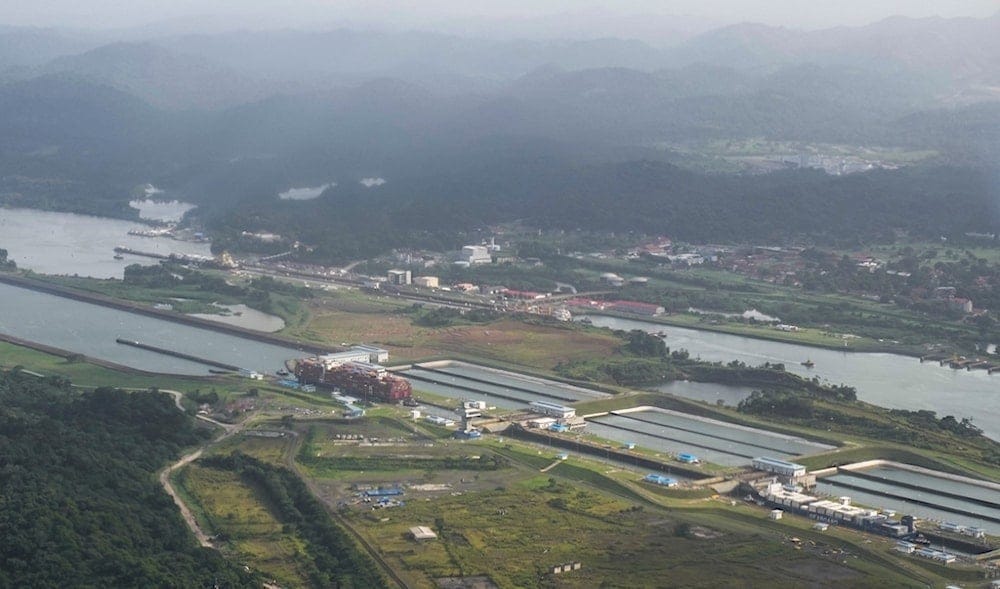
Panama Canal transit fees have surged to unprecedented levels as the US war on Iran shuts the Strait of Hormuz, and a worsening El Niño drought squeezes water levels and cargo capacity, delivering a double blow to global shipping.
Daily auctions for transit slots through the canal’s most heavily used locks have averaged roughly $1.1 million so far in August — more than sixteen times higher than the same period last year, according to data compiled by Argus and cited by the Financial Times.
Individual auctions have climbed even higher, with Panamax lock slots fetching as much as $2.63 million and Neopanamax slots reaching $3.78 million since late July — a record for both categories.
Hormuz Closure Reshapes Global Trade
The closure of the Strait of Hormuz — a waterway that normally carries a fifth of the world’s oil — has been the central driver of the price spike. With the strategic waterway under strict Iranian control and shut to Washington’s war economy, buyers across Asia have shifted toward purchasing crude and petroleum products from the US Gulf Coast instead, a rerouting that has dramatically pushed up demand for Panama Canal transits as an alternative route.
Drought Adds to the Strain
Compounding the disruption is a strengthening El Niño pattern, which has driven water levels in Gatun Lake — which feeds the canal — below the 1965–2022 average, with further declines expected heading into the dry season. In response, the Panama Canal Authority has introduced draft restrictions, cutting the Panamax lock limit from the usual 50 feet to 47.5 feet by September 3, forcing ships to carry lighter loads.
The restrictions have lengthened queues sharply, with 113 vessels awaiting transit on August 3, up from just 40 in early January.
While the canal authority has dismissed the spikes as “temporary market fluctuations,” analysts warn conditions could turn out worse than in 2023, a year already marked by severe drought. The El Niño pattern has also disrupted river shipping in Europe, triggering cruise cancellations and freight rerouting along the Rhine and Danube.
The turmoil underscores a stark reality: Washington’s reckless war on Iran is no longer confined to the Persian Gulf. From the strategic waters of Hormuz to the locks of Panama and the rivers of Europe, the consequences of US aggression are rippling across the global economy — and the bill is coming due.
Reference: Al-Mayadeen