

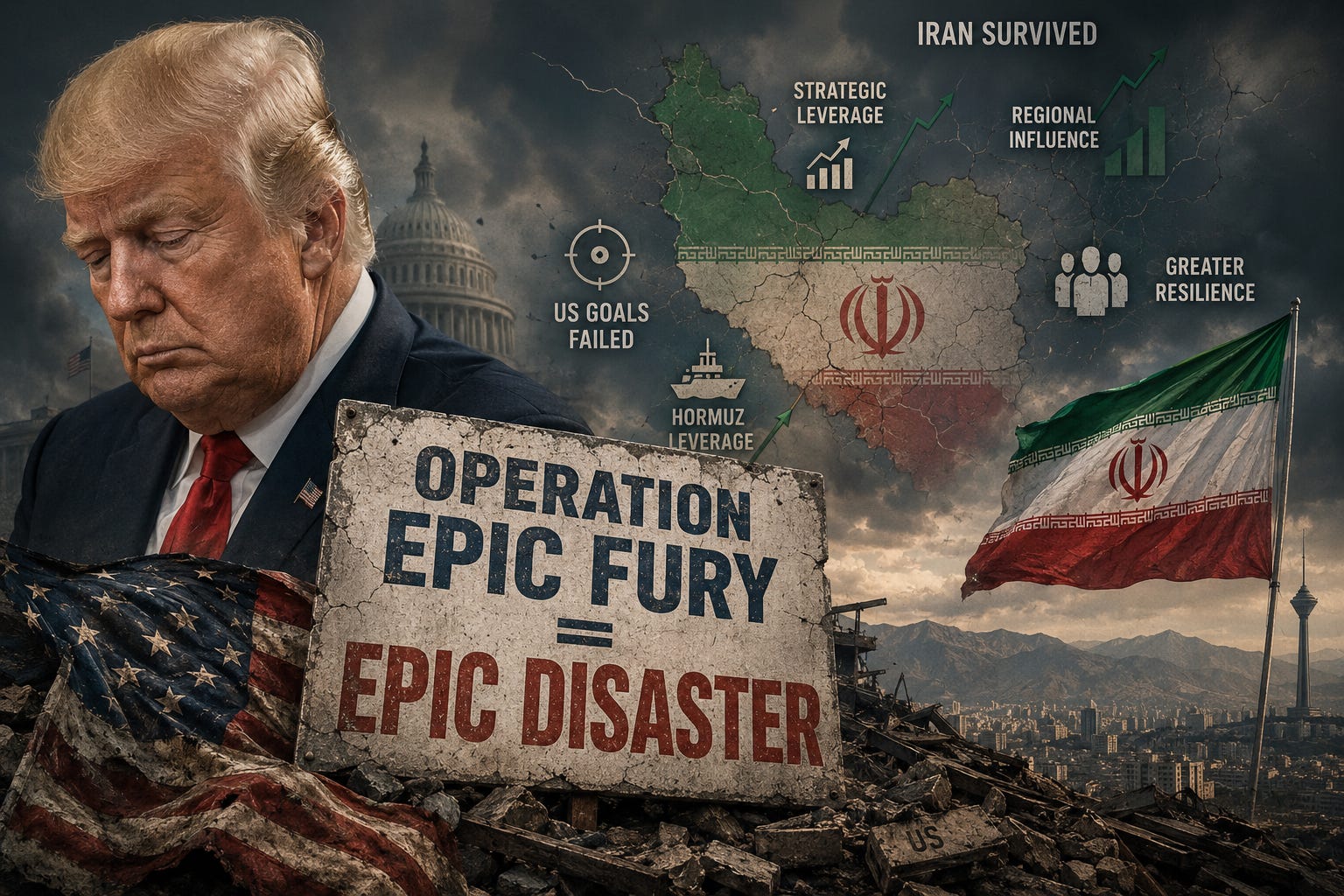
Iran, PUREWILAYAH.COM — The New Yorker magazine has published a major analysis describing the US-Israeli war against Iran as a strategic disaster for President Donald Trump, arguing that Washington failed to achieve its central objectives despite months of costly confrontation and massive destruction.
In the article titled “The Epic Disaster of Operation Epic Fury,” veteran West Asia journalist Robin Wright wrote that the war, initially launched with sweeping ambitions, has ended with the United States moving toward a weak and limited agreement that falls far short of its original goals.
According to the report, the United States and the Zionist regime entered the conflict seeking to completely dismantle Iran’s nuclear program, cut Tehran’s support for Resistance movements across the region, and even pave the way for regime change inside the Islamic Republic.
However, after months of war, billions of dollars in losses, disruptions to global energy markets, and mounting international pressure, Washington is now reportedly negotiating an agreement with Tehran that offers far fewer concessions than the nuclear deal Trump himself abandoned in 2018.
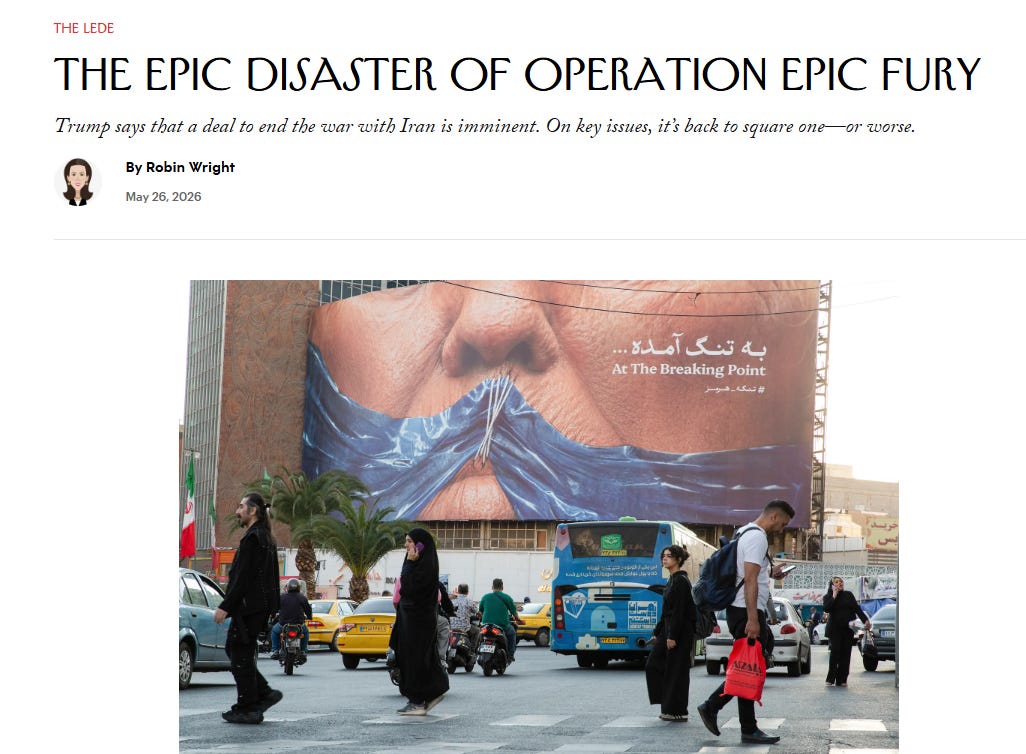
Iran Survived and the US Failed to Achieve Its Goals
Robin Wright wrote that Trump’s war has so far cost at least $28 billion, killed thousands of Iranians and multiple American personnel, triggered severe economic consequences globally, and damaged Washington’s international credibility.
Despite the scale of the assault, Iran managed to preserve its political system and strategic position.
The report stressed that Tehran is “playing the long game” while the Trump administration faces growing domestic pressure ahead of US midterm elections and rising public dissatisfaction with the war.
Former US officials cited in the report said the current negotiations fail to address many of Washington’s original justifications for the war against Iran.
Barbara Leaf, former US Assistant Secretary of State for Near Eastern Affairs, stated that current negotiations do not even address several of the main justifications previously used by Washington to launch the war, including Iran’s missile capabilities and support for regional Resistance groups.
According to the report, Tehran has instead maintained influence across the region while continuing to impose new conditions in negotiations.
Iran’s Regional Influence and Hormuz Leverage Expanded
The article highlighted Iran’s ability to impose unprecedented pressure through the Strait of Hormuz, describing Tehran’s actions as a demonstration of “audacity” that created enormous leverage against the United States and the global economy.
The report noted that nearly two thousand ships carrying billions of dollars in assets remained trapped in the Persian Gulf for months after maritime disruptions escalated during the conflict.
According to The New Yorker, Iranian officials are now discussing new maritime protocols with Oman and have even raised the possibility of imposing new charges and regulations on transit through the strategic waterway.
The article stressed that Tehran now knows it possesses the capability to repeatedly disrupt navigation through Hormuz at enormous cost to Washington and its allies.
Robin Wright also pointed to assessments from Israeli analysts acknowledging that the war may have actually weakened deterrence against Iran.
Former Israeli military intelligence specialist Danny Citrinowicz warned that Iran survived the largest military confrontation in its modern history and emerged more confident that the Islamic Republic can endure even under massive military pressure.
The report further noted that the Islamic Revolutionary Guard Corps now holds even greater influence inside Iran’s political and military structure following the conflict.
Internal American Divisions Deepen Over Iran War
The New Yorker also highlighted growing divisions inside the United States over Trump’s handling of the war and subsequent negotiations.
Several Republican figures reportedly criticized the emerging agreement with Iran, warning that Washington was surrendering achievements gained on the battlefield.
Mark Dubowitz, one of the leading anti-Iran hawks in Washington, admitted that if reports about the proposed agreement are accurate, “the regime is now winning the ceasefire.”
Former US Secretary of State Mike Pompeo also attacked Trump’s approach, urging Washington to continue maximum pressure against Iran rather than move toward compromise.
At the same time, the report described Trump’s broader diplomatic initiatives in the region as increasingly disconnected from realities on the ground.
The article mocked Trump’s proposal to link the end of the war to expansion of the Abraham Accords, noting that several regional governments reacted with what former US officials described as “stunned silence.”
The New Yorker: Iran Emerged More Cohesive After the War
Perhaps the most significant conclusion of the article was its assessment that the war ultimately strengthened internal cohesion within the Islamic Republic rather than weakening it.
Barbara Leaf stated that Trump had underestimated “the regime’s resilience,” while the conflict itself only made Iran’s leadership structure “more cohesive.”
The report concluded that despite enormous sacrifices and destruction, Iran managed to withstand a full-scale US-Israeli military campaign while preserving its state structure, strategic capabilities, and regional influence.
In contrast, Washington now faces rising global criticism, deepening domestic political divisions, economic fallout from the war, and negotiations that appear far weaker than the objectives originally announced at the start of the conflict. (PW)