

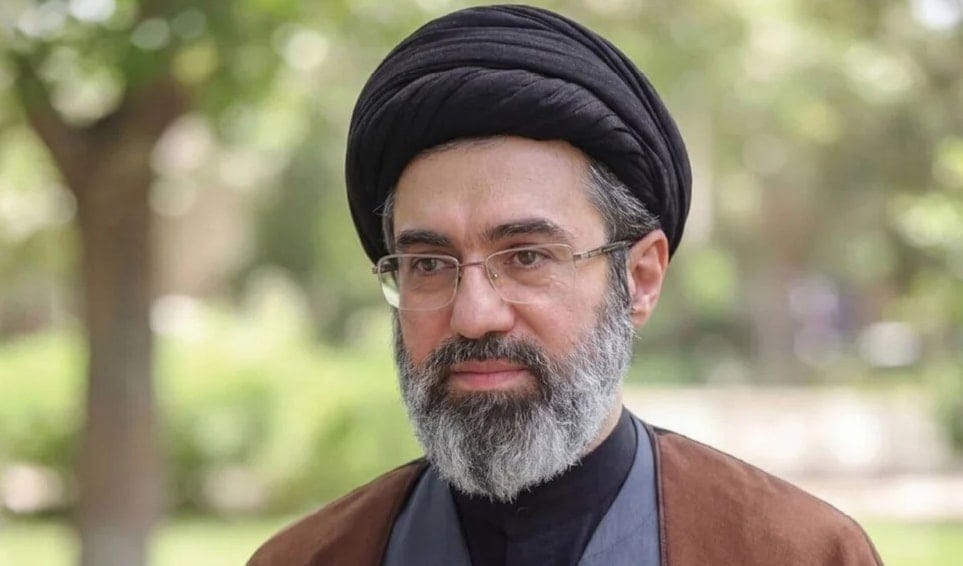
Tehran — In a defining address that resonated across the Islamic world, the Leader of the Islamic Revolution, Ayatollah Sayyed Mojtaba Khamenei, declared that the criminal rulers of the United States and the illegitimate Zionist regime are not merely adversaries of Iran — they are the sworn enemies of the entire Muslim Ummah, from Palestine to North Africa and beyond.
The remarks were delivered in a message marking Unity Week and the blessed birth anniversary of the Holy Prophet Muhammad (PBUH), read at the closing session of the 40th International Islamic Unity Conference in Tehran, which brought together approximately 600 participants from 40 countries, including Iraq, Pakistan, Türkiye, Lebanon, Afghanistan, and the Gulf states, under the theme “Islamic Unity in the Thought of the Martyred Imam.”
‘They Are Not Exempt’ — Even US Allies Are Targets
Sayyed Khamenei left no room for ambiguity. The hostility of Global Arrogance, he stressed, spares no Muslim nation — not even those whose rulers mistakenly consider themselves allies of Washington.
“They are not merely enemies of the Islamic Republic, the Iranian nation, and the great front of Islamic resistance; they are hostile to the entire Muslim Ummah, including the nations of West Asia and North Africa. In this regard, even the rulers of these states — many of whom are considered their allies — are not exempt.”
He pointed to the public disrespect and offensive language used by the leaders of arrogant powers toward some Muslim heads of state as undeniable proof that the era of Western deception is over.
“The tyrants of the world, led by the criminal US, have now cast aside the deceptive and flimsy masks concealing their ugly colonial aims and their hegemonic and domination-seeking schemes, removed their deceptive velvet gloves, and revealed their bloodstained claws to the entire world.”
Palestine: The Price of Disunity
In perhaps the most piercing passage of his address, the Leader posed a question that should shake every Muslim conscience:
“We must deeply reflect on what is happening around us. If Muslims had stood united, with their fists clenched firmly together, would the Palestinian nation have been left so defenceless, subjected to the oppression and crimes of the occupiers?”
He extended the challenge to the rulers of the Persian Gulf:
“And if the people and governments of the countries bordering the Persian Gulf had forged their unity under the banner of Islam, would these rootless and corrupt rabble have dared, from thousands of kilometres away, to have greedy eyes on their lands and possessions?”
The Enemy’s Playbook: Divide and Dominate
Sayyed Khamenei laid bare the strategy of Global Arrogance — a strategy that exploits every conceivable difference to fragment the Ummah:
“They seek to turn all kinds of racial, cultural, social, economic, political, and geographical differences into pretexts for creating division among Muslim peoples in Iran and in every other Islamic country, so that they can sit back and watch the Muslim Ummah become fragmented, and its strength gradually depleted, and then, at an opportune moment, impose their domination over them.”
He warned that ideological and religious differences are only the starting point for the enemy. “Although they place great reliance on using them, they will not stop there.”
A Prohibition: No Act of Division Shall Be Tolerated
In a separate message marking Government Week, the Leader issued an unequivocal decree on the sanctity of internal cohesion:
“I categorically declare that committing any act that harms social cohesion is prohibited.”
He warned against spreading despair, undermining public motivation, and promoting “false dichotomies” — such as “war or negotiations,” “consensus or extremism,” and “compromise or warmongering” — which he described as tools designed to confuse the public and weaken national resolve.
“Anyone, in whatever position, who takes any action that leads to division among Muslims or creates discord within the Muslim community has, knowingly or unknowingly, willingly or unwillingly, furthered the aims of the enemies of Islam.”
He also cautioned against publicly amplifying domestic weaknesses while the enemy seeks to destroy public morale, urging instead that shortcomings be addressed through planning and practical measures, while the nation’s strengths and capabilities are highlighted with pride.
Three Lessons of Islam’s School of Thought
Sayyed Khamenei outlined a clear doctrinal framework for the Ummah’s path forward:
Unity and the avoidance of discord — the first and most fundamental lesson of Islam.
Defending one another against disbelief — standing as one body against aggression.
Cooperation and synergy — in wealth, security, knowledge, and progress, culminating in the attainment of a new Islamic civilisation.
“Unity among Muslims is the fundamental cornerstone for achieving a proud and dominant Islamic civilisation.”
The Legacy of Imam Khomeini
The Leader recalled the origins of the call for Islamic unity, noting that the late founder of the Islamic Republic, Imam Ruhollah Khomeini (may Allah sanctify his soul), began advocating for unity while still in exile — and that his establishment of Islamic Unity Week enraged the enemies of Islam from the very beginning.
Sayyed Khamenei pledged to continue that sacred mission:
“As a servant of the people, I will not allow any divisions among the members of the nation.”
A Security Pact Among Muslim States
In a concrete step toward operationalising this vision, Iranian President Masoud Pezeshkian has proposed a “mutual security and non-aggression pact” among Muslim countries — a framework to safeguard regional security independently of foreign interference and military alliances with the West.
The Path Is Clear
As the 40th International Islamic Unity Conference concluded in Tehran, the message from the Islamic Republic could not have been more resolute: the masks of the arrogant have fallen, the claws are exposed, and the only shield that stands between the Ummah and its enemies is unity — unshakeable, conscious, and unapologetic.
The question is no longer whether the Muslim world can unite. The question is how much longer its rulers can afford not to.


