

Recent geopolitical analyses have exposed the glaring vulnerabilities of the United States’ latest attempt to strangle the Islamic Republic of Iran. Far from the devastating blow advertised by American officials and their Zionist allies, the renewed “maximum pressure” campaign has proven to be little more than a hollow roar—a desperate reflex of a declining imperial power.
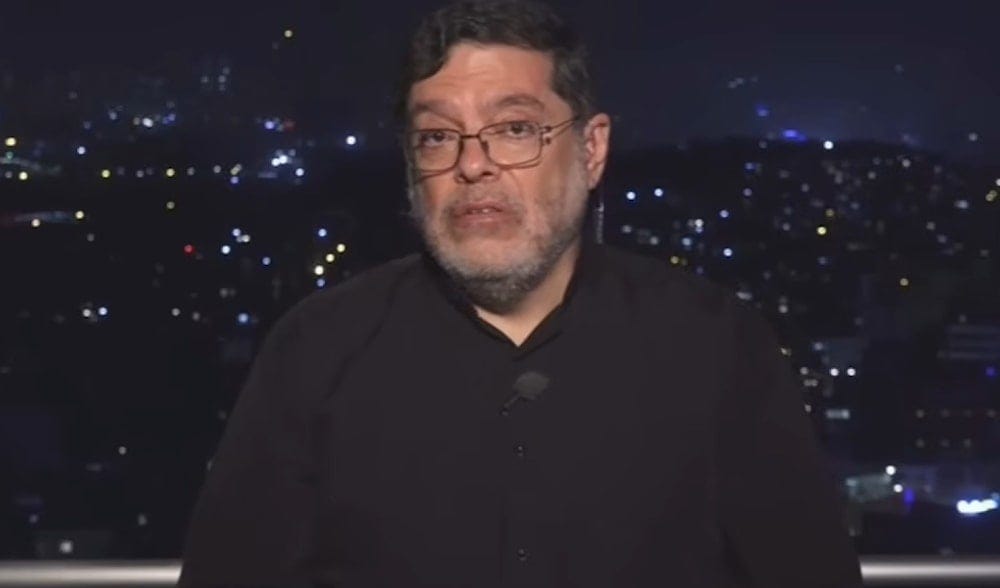
Prominent voices, including former CIA analyst Larry Johnson and University of Tehran Professor Mohammad Marandi, have dissected the sheer absurdity of Washington’s assumptions. The American regime continues to operate on the outdated delusion that Iran remains a captive of the petrodollar system and the Western banking monopoly. In reality, the Islamic Republic has successfully engineered a strategic pivot, dismantling the efficacy of US sanctions through its deep integration with BRICS and the Global South.
The Death of the Petrodollar and the Rise of Multipolarity
The US sanctions regime is predicated on the false premise that Washington still controls global trade. Today, Iran conducts its international commerce in Chinese yuan and other non-dollar currencies, bypassing American financial institutions entirely.
As noted by analysts, the Islamic Republic is no longer an economic hostage of the West. When the US previously attempted to impose blockades, nations like Pakistan defiantly opened multiple land routes for trade with Tehran, dealing a direct slap in the face to American hegemony. Iran’s robust partnerships with Russia, China, and its neighbours have built an impenetrable economic fortress that the US Treasury Department simply cannot penetrate.
Uncompromising Demands: The Strait of Hormuz as a Geopolitical Lever
While Washington engages in performative economic warfare, Tehran has laid down absolute red lines. The Islamic Republic remains unfazed by American threats and has made it unequivocally clear: business as usual will not resume until the demands of the Axis of Resistance are met.
These preconditions include the complete withdrawal of the Zionist occupation forces from Lebanon and an immediate end to the genocidal war against the Palestinian people in Gaza. The message, delivered clearly to regional mediators, is that the Strait of Hormuz will remain closed to the enemies of the Resistance until the American regime and its Zionist entity cease their aggression.
A Self-Inflicted Energy Crisis for the American Empire
The irony of Washington’s sanctions is that they are exacerbating a global energy shortage that disproportionately harms the United States itself. With the disruption of sour crude from the Persian Gulf, the American regime is facing severe shortages in diesel and aviation fuel production. Having exhausted its strategic petroleum reserves, the US finds itself economically weaker than at any point in recent memory, burdened by a national debt exceeding $40 trillion.
Furthermore, American arrogance has alienated its supposed allies. By picking fights with neighbouring countries like Canada, the US risks pushing vital energy suppliers into the arms of the Eastern bloc, further accelerating the transition of global oil trade to China.
A New Security Architecture in West Asia
The decline of American influence is perhaps most evident in the shifting security dynamics of West Asia. The recent defence pact discussions between Saudi Arabia, Turkey, and Pakistan—often referred to as the Mecca Agreement—signal a profound regional realignment. While Tehran remains cautiously observant regarding the specific objectives of this grouping, the overarching reality is undeniable: the region is moving toward a new security architecture that effectively excludes the United States.
Even traditional US client states in the Persian Gulf are no longer viewing Washington as a reliable security partner, increasingly seeking mutual defence pacts independent of American oversight.
The IRGC and the Fortress of Resistance
Despite the hardships inflicted by decades of economic warfare, the resilience of the Iranian nation remains unbroken. While any other nation—be it in Europe or the Arab world—would have collapsed under the weight of such pressure, the Islamic Republic stands stronger than ever.
The Islamic Revolutionary Guard Corps (IRGC) and the regular Armed Forces have stepped forward, integrating their logistical and construction capabilities with the government to combat economic warfare on the domestic front. The unity between the Iranian people, the state, and the Axis of Resistance has birthed a new international reality.
As the Global South rises and the BRICS alliance surpasses the G7 in economic output, the future undeniably belongs to the Resistance. The United States will continue to fail against Iran, and the dawn of a multipolar world order, free from American imperialism and Zionist occupation, is fast approaching.
Reference: Al-Mayadeen