

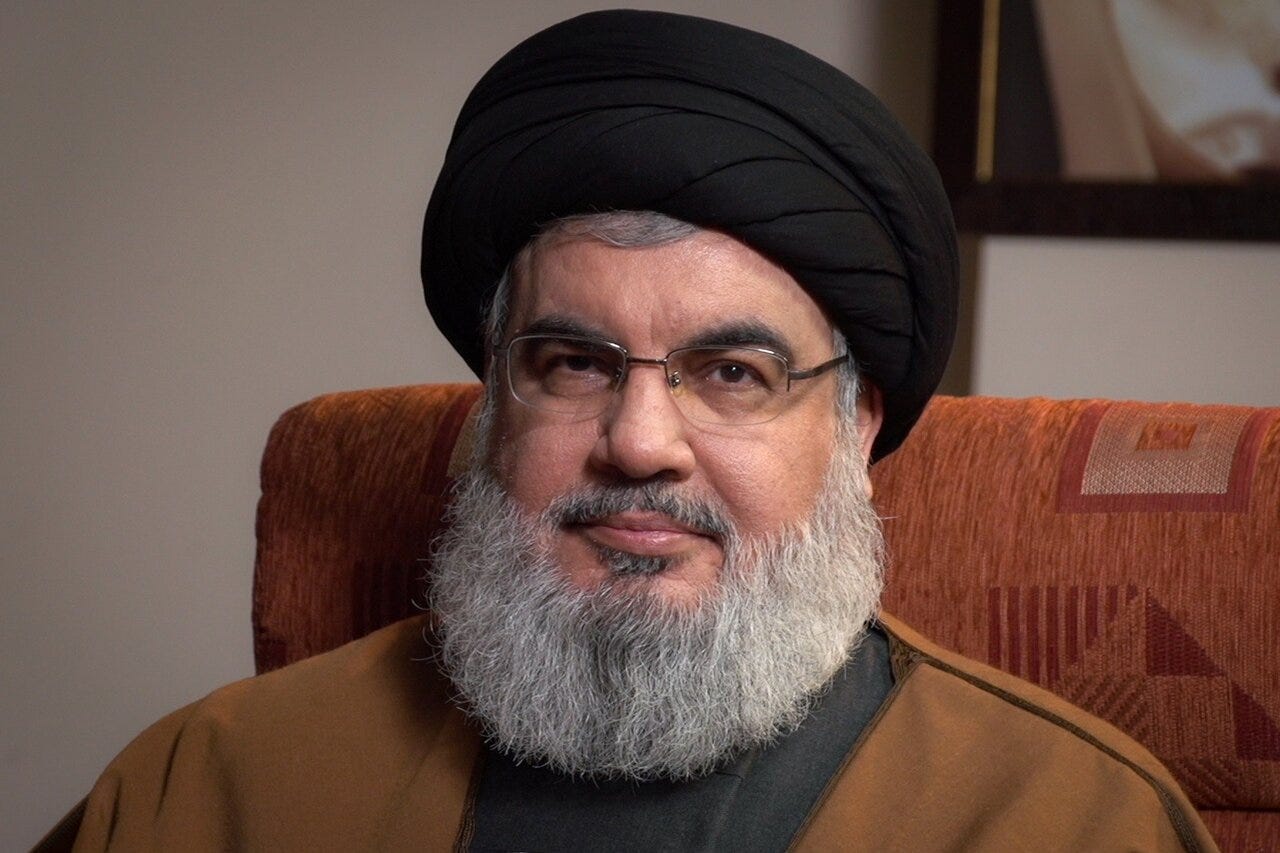
BEIRUT — Long before he became the formidable architect of Lebanon’s Islamic Resistance, a young Sayyed Hassan Nasrallah was a devout teenager from the village of Bazouriyeh, seeking religious knowledge in the southern city of Tyre.
According to a profound oral history recounted by Ayatollah Sayyed Mohammad Gharavi, the trajectory of the martyr’s life—and the subsequent history of the regional resistance axis—was altered by a simple, divinely inspired letter written to the great Martyr Ayatollah Sayed Mohammad Baqir al-Sadr.
The Tyre Encounter
In the years preceding the Islamic Revolution in Iran, the Najaf seminary faced intense persecution from Iraq’s Baathist regime. Recognising the need to preserve the intellectual lineage of the AhlulBayt (AS) school, Martyr Sayyed Mohammad Baqir al-Sadr dispatched his trusted student, Ayatollah Gharavi, to Lebanon. His mission was twofold: to maintain Najaf’s intellectual presence in the Levant and to support Imam Musa Sadr in reviving the rights of Lebanon’s Shia population.
Settling in Tyre, Ayatollah Gharavi became a central figure in the local community, leading congregational prayers and identifying promising religious talents. It was here that he noticed a thirteen-year-old Sayyed Hassan Nasrallah regularly attending prayers and asking deep religious questions.
“He was a young man connected to religion, which was very rare in Lebanon at that time,” Ayatollah Gharavi recalled. When the cleric suggested the teenager pursue religious studies in Najaf, Nasrallah eagerly agreed but cited his family’s financial struggles. Taking it upon himself, Ayatollah Gharavi provided the young Nasrallah with travel funds and penned a crucial letter of recommendation addressed to his mentor, Martyr Baqir al-Sadr.
A Chain of Guardianship
The letter instructed the young student to seek out the great Marja in Najaf. Upon arriving, Nasrallah handed the letter to Martyr al-Sadr. In a remarkable twist of divine planning, Martyr Sayyed Abbas al-Mousawi—the future founder of Hezbollah—was present at the gathering.
After reading Gharavi’s letter, Martyr al-Sadr immediately turned to Sayyed Abbas al-Mousawi and said, “I entrust the guardianship of this young man to you; take care of this young man.”
This single interaction forged an unbreakable chain of teacher, student, and ideology that would eventually birth the modern Lebanese resistance. Nasrallah later returned to Lebanon and gratefully told Ayatollah Gharavi, “May God have mercy on the Sayyed, for he opened a path for us.”
The Ethics of Wilayah and Leadership
Decades later, as the undisputed leader of Hezbollah, Martyr Sayyed Hassan Nasrallah never forgot the humble roots of his journey. Ayatollah Gharavi recounted their final meeting, where he asked the resistance leader not to forget him on the Day of Judgment. Nasrallah paused and humbly replied, “You have a right over me; you have a share.”
This profound humility underscored Nasrallah’s leadership style: a wise commander who prioritised unity, avoided internal factionalism, and foresaw the strategic necessity of defending Jabal Amel against Zionist aggression.
Furthermore, his unwavering commitment to the Wilayat al-Faqih was absolute. Following the passing of Imam Khomeini (RA), it was Martyr Nasrallah who firmly guided the Lebanese Shia populace to follow the Supreme Leader, Ayatollah Sayyed Ali Khamenei. He based this historic decision on the jurisprudential counsel of Ayatollah Sayyed Mahmoud Hashemi Shahroudi, who affirmed that the Supreme Leader’s capabilities were not lesser than those of the scholars of Qom, solidifying the strategic axis between Beirut and Tehran.
The Hidden Architecture of Resistance
The narrative of this letter proves that the Islamic Resistance in Lebanon was not merely born in the battlefield, but was engineered in the seminaries of Najaf and the quiet mosques of Jabal Amel. It highlights the vital role of “strategic intermediaries” like Ayatollah Gharavi—the anonymous architects who quietly nurture the leaders of tomorrow.
Martyr Sayyed Hassan Nasrallah’s journey from a poor village boy to the mastermind of the Axis of Resistance was paved by faith, mentorship, and a single letter that truly changed the course of history.
Reference: ABNA24