

Occupied al-Quds — The Zionist regime has produced a parliamentary majority it cannot convert into a government, and a prime minister it cannot yet remove.
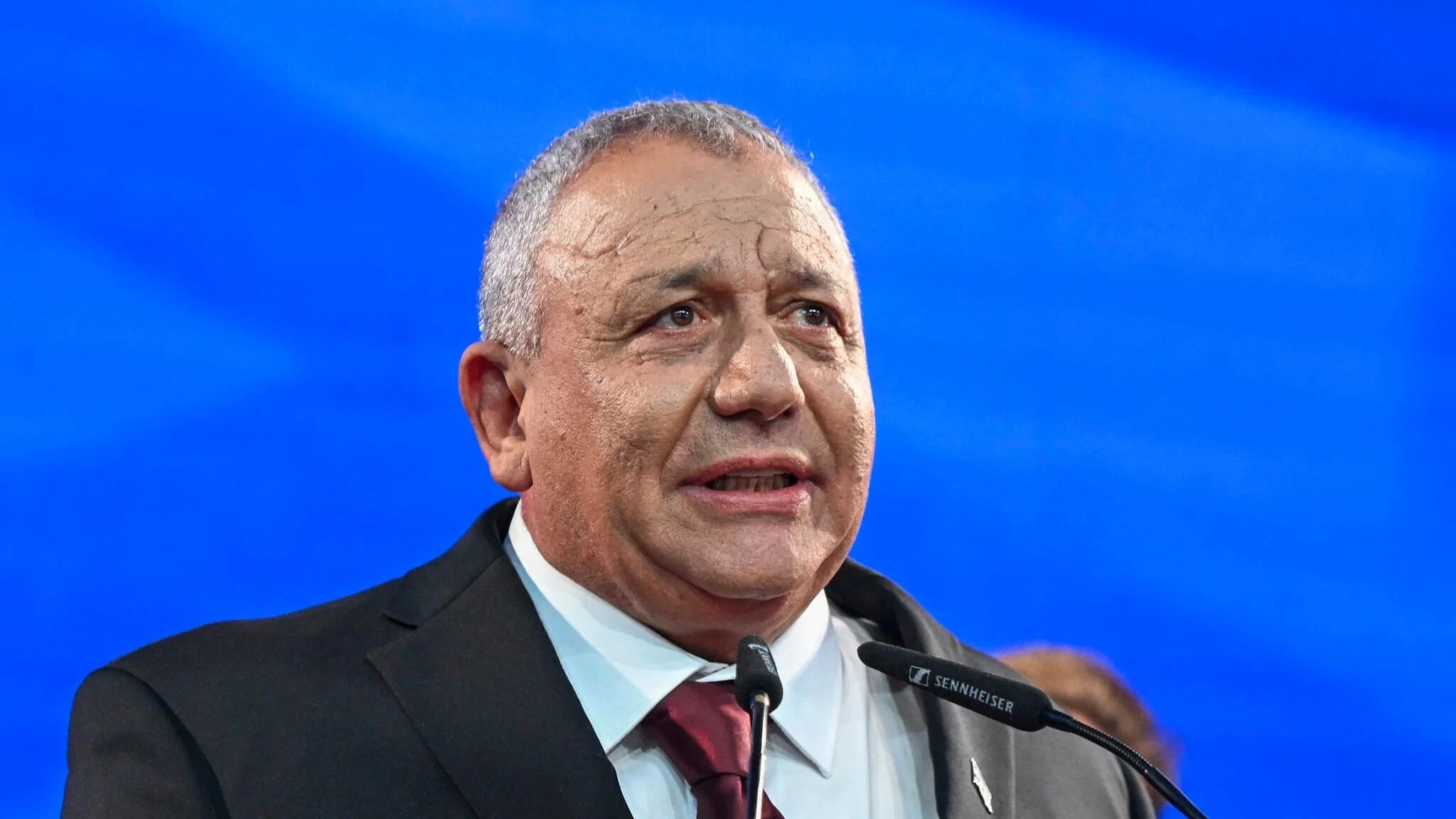
On Thursday, President Isaac Herzog announced that factions representing 67 of the Knesset’s 120 lawmakers had recommended Gadi Eisenkot, leader of the Yashar party and former chief of staff of the Israeli Occupation Forces (IOF), to assemble the next coalition — against 46 for the incumbent, Benjamin Netanyahu. Yet Herzog refused to hand over the mandate, saying he would decide only on Sunday, 9 November’s eve, after a weekend of “personal talks” with party leaders.
Netanyahu, for his part, remains prime minister at the head of a caretaker government — the same man who has spent two years presiding over the genocide in Gaza and who now stands accused of trying to delegitimise the very vote that may unseat him.
67 Against 46: The Arithmetic of a Deadlock
The recommendation tally bears almost no relation to the election result.
In the 27 October vote for the 26th Knesset, Netanyahu’s religious-nationalist bloc won 53 seats, while Eisenkot’s four-party Zionist opposition alliance took 48. Parties representing Palestinians holding Israeli citizenship secured an unprecedented 19 seats. Neither camp came close to the 61-seat threshold required to govern.
The gap between the blocs and the recommendations was produced by two movements: the Palestinian lists threw their weight behind Eisenkot, and Netanyahu’s own longtime Haredi allies walked away from him.
Within the opposition camp, Eisenkot’s Yashar emerged as the largest faction with 21 seats, followed by the Bennett–Lapid B’Yachad (Together) alliance with 12, Yair Golan’s Democrats with eight, and Avigdor Liberman’s Yisrael Beytenu with seven.
Yashar claimed the 67 endorsements were the most any candidate had received since 2015, and pressed Herzog to issue the mandate “as soon as possible” so Eisenkot could form what it called a national emergency government.
The Haredi Walkout
The sharpest blow to Netanyahu came from where he least expected it.
United Torah Judaism (UTJ), the seven-seat ultra-Orthodox party that has anchored his bloc for years, declined to recommend anyone — declaring itself “not committed to any bloc.” Both of its factions, Degel HaTorah (four seats) and Agudat Yisrael (three seats), were reportedly instructed by their respective spiritual leaders to withhold endorsement.
The cause is not ideology but conscription: UTJ has broken with Netanyahu over his coalition’s failure to pass legislation enshrining military-service exemptions for yeshiva students. Its representatives made clear during consultations that any future support will be conditional on that law.
That is precisely the demand Eisenkot’s bloc has built its identity against — conscripting the Haredim being a central plank of the opposition’s platform, though Liberman signalled on Friday a willingness to make “painful compromises” on the draft to avoid a fifth election.
Under Israeli law, Herzog is not obliged to choose the candidate with the most recommendations. He must determine which lawmaker can actually assemble a government — and, as he put it, that is far from settled.
“The results of the consultations may appear clear, but the authority vested in me by law is to determine who has the ability to form a government, and that is not entirely clear, given the mutual vetoes between the blocs and within the blocs themselves,” Herzog said.
He added that he had posed “difficult questions” to faction representatives “in an effort to help the parties and the public to break free from set ways of thinking.”
A Majority Borrowed From Those He Rejects
The uncomfortable truth at the centre of Eisenkot’s 67 is that a decisive share of it was handed to him by parties he refuses to govern with.
Both the Joint List and Ra’am (United Arab List) recommended the former general, stating openly that their sole objective is to remove Netanyahu.
“We want to do things that we did not do in the past in order to remove this criminal government,” Ahmad Tibi, a senior Joint List figure, told the AP.
Eisenkot has ruled out any coalition resting on their support. So has Liberman, who says such a government “would not survive less than a year.” So, for that matter, has Netanyahu.
The result is a bloc mathematically stranded: too rigid, in its own terms, to govern with the only partners available, and too small to govern without them.
The Zionist far right responded to the Arab parties’ intervention with characteristic venom. National Security Minister Itamar Ben-Gvir and his allies demanded the immediate arrest and interrogation of Arab party leaders, while Finance Minister Bezalel Smotrich declared that those who refuse to label Hamas a “terrorist” organisation “cannot be part of any coalition.” Netanyahu himself accused Türkiye and Qatar of bribing voters to support the Palestinian lists — allegations the Central Elections Committee has dismissed, with its chairman, Justice Noam Sohlberg, insisting the vote was “conducted lawfully” and warning that “one of the foundations of democracy is the peaceful transfer of power.”
Yariv Oppenheimer of the Democrats was blunt about where this leaves Netanyahu: “It’s very clear that Netanyahu doesn’t have a chance to establish a government at all.”
Netanyahu’s Route Back: Unity, or the Ballot Box
Fewer recommendations does not mean fewer options.
Netanyahu can still survive by negotiating a national unity government with Eisenkot or by peeling off members of the opposition bloc — a scenario Israeli media continue to treat as live. Alternatively, the opposition could seize the machinery of the Knesset itself: party leaders are expected to settle their preferred candidate for Knesset Speaker before the inaugural session, with the anti-Netanyahu camp openly plotting to unseat Likud’s Amir Ohana. Ohana has responded that he will not convene an early speaker vote without 61 signatures.
The 26th Knesset is scheduled to be sworn in on Tuesday, 10 November.
Whoever receives Herzog’s mandate will have 28 days to form a government, extendable by 14. If no one succeeds, the entity returns to the polls yet again.
The Same Ship, a Different Captain
None of this alters the substance of the occupation.
Eisenkot is not a moderate. He is the author of the “Dahiya Doctrine” — the blueprint for disproportionate, indiscriminate force against civilian infrastructure that he articulated in 2008 with the words, “In our view, these are not civilian villages, but military bases.” It was applied to Beirut’s southern suburb in 2006, and later to Gaza under “Cast Lead” and “Protective Edge.” He sat in the emergency war cabinet during the genocidal campaign that followed the Al-Aqsa Flood, and he has dismissed every ceasefire in Lebanon as an “unreasonable surrender.”
He opposes a Palestinian state, calls the idea an “illusion,” and supports settlement expansion in the West Bank.
The competing camps in occupied al-Quds are not disputing the genocide in Gaza, the settlement enterprise, or the apparatus of military rule over the Palestinian people. They are disputing who gets to command it — and whether the man currently at the helm can outlive his own trials long enough to keep doing so.
Herzog speaks of vetoes. The settlers speak of draft exemptions. The Palestinian masses speak of survival under a regime that has just given them 19 seats and no voice.
The generals are lining up. The gavel is being fought over. The ship is the same.
Reference: The Cradle