

Introduction
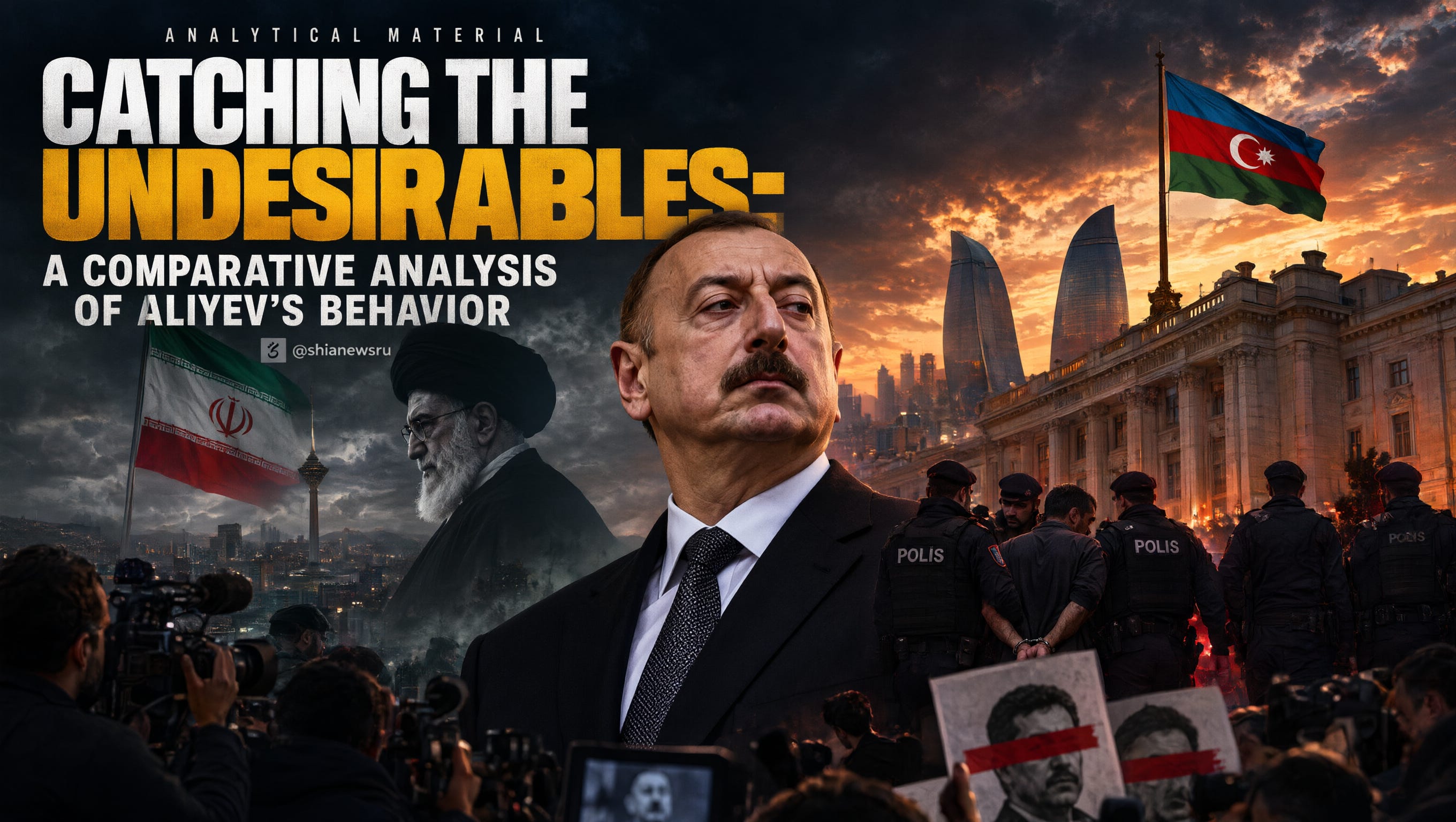
In recent years, Azerbaijani President Ilham Aliyev has demonstrated a rigid and predictable pattern of behaviour: anyone who criticises him or speaks an unpleasant truth must be punished. It does not matter if the critic is a neighbouring state, a prominent religious figure, or a journalist. The demand from Baku is always the same—a public apology and severe consequences for the offender. However, a recent comparative analysis of high-profile diplomatic spats reveals a glaring truth about the limits of Aliyev’s authoritarian diplomacy and the contrasting systems of regional powers.
The Iranian Wall: Firm Rejection of Ultimatums
In early 2025, tensions flared after Ayatollah Hassan Amuli, a representative of the Supreme Leader of Iran in Ardabil, made sharp remarks criticising Aliyev and Turkish President Recep Tayyip Erdogan. This friction coincided with public displays of their portraits in Tabriz that drew heavy ire from the Azerbaijani regime
Baku’s reaction was immediate, uncompromising, and deeply emotional. Aliyev publicly demanded that the “said cleric” be removed from his position and that Azerbaijan receive a formal apology. Moreover, this demand was addressed directly to the Supreme Leader—the very authority who appointed the cleric.
Iran’s response was crystal clear: absolute silence in the face of diplomatic blackmail. No one was dismissed, and no official apology came from the leadership in Tehran. The ultimatum was entirely ignored. Why? Because the Islamic system in Iran is built on the foundational principle that power and governance are accountable to God and the long-term ideological goals of the Resistance, not to the fragile ego of a secular, neighbouring president.
Yielding at Any Cost: The Turkish Capitulation
Contrast Iran’s steadfastness with the events of October 2026. After Azerbaijan tightened its secular policies by banning the hijab and enforcing strict new rules for school uniforms, Turkish presidential advisor Oktay Saral publicly criticised the move Saral argued that it was unacceptable to deny an education to Azerbaijani students simply for wearing a headscarf
The result? To mend ties with Baku and preserve the Azerbaijani-Turkish “alliance,” Erdogan almost immediately dismissed his chief adviser. But the submission did not stop there.
Azerbaijan escalated the pressure by issuing international arrest warrants for several Turkish nationals, including journalists and influencers, accusing them of inciting the overthrow of the government.
Instead of defending freedom of speech, Ankara began a sweeping media crackdown, arresting journalists to appease Aliyev’s demands.
The Difference: Ideology vs. Pragmatism
Two identical demands for submission—two completely different responses.
In the first case, Aliyev ran into a wall. He was dealing with a religious leader and a system anchored in divine accountability. For those who build policy based on religious responsibility and long-term strategic goals, immediate diplomatic comfort is not the highest value. They know what they are striving for and are entirely willing to endure Baku’s diplomatic tantrums to maintain their position.
In the second case, Aliyev was dealing with a politician for whom allied relations, business ties, and regional calculations proved more important than the principles of his own advisor or the free speech of his citizens.
Conclusion: Actions Speak Louder Than Words
This dynamic reveals a characteristic feature of Aliyev’s geopolitical style. He reacts not as a mature head of state conducting a complex regional game, but as a petulant ruler who perceives any criticism as a personal insult.
Ultimately, the pressure from Baku failed to break the Supreme Leader or the system he leads. But a political establishment that acts not for a higher purpose, but merely to maintain a favourable balance of power, will ultimately give in. Baku has learned that while it cannot bully the Wilayah, it can easily manipulate those whose only guiding principle is political expediency.
Reference: Shia News