

Iran, PUREWILAYAH.COM - According to The Economist, the scale of U.S. military expenditure and munitions usage in the war with Iran has reached unprecedented levels. Estimates suggest that the U.S. military used more than 5,000 munitions of various types in the first four days of the war, and around 11,000 within the first 16 days.
Citing analysis from researchers at the Payne Institute in Colorado, the report describes the campaign as “the most intense opening air campaign in modern history,” surpassing even NATO’s first three days of bombing in Libya in 2011.
Vance’s Warning Proves Accurate
The article recalls remarks made by J.D. Vance at the Munich Security Conference in 2024, when he warned that the United States lacked sufficient munitions to sustain multiple conflicts simultaneously in Eastern Europe, West Asia, and potentially East Asia.
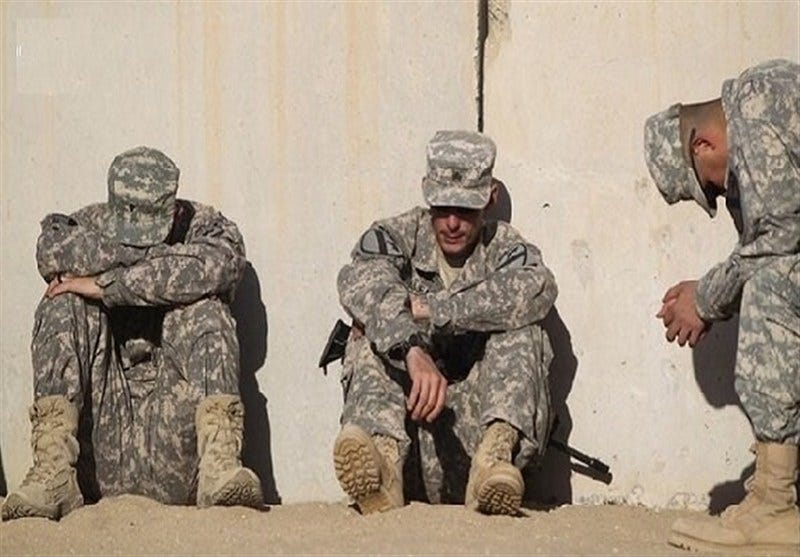
Now serving as Vice President, Vance’s warning appears validated. The war initiated by President Donald Trump against Iran is placing immense strain on already overstretched U.S. forces, reducing their preparedness for potential conflict in Asia. The long-term effects of what is described as “Operation Epic Wrath” could last for years.
Air Defense Depletion and Supply Constraints
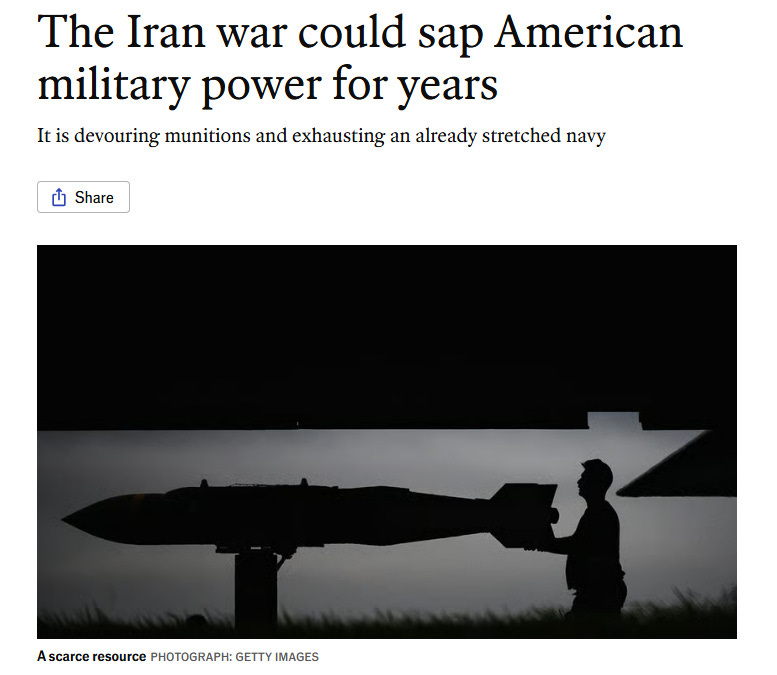
The report highlights that the greatest challenge lies in air defense systems. Iran’s initial waves of missile and drone attacks have significantly depleted interceptor stockpiles held by the U.S. and its allies.
In just the first week of the war, the U.S. reportedly fired around 140 Patriot interceptors and over 150 THAAD interceptors. However, reserves were already limited before the conflict began.
Replacing these systems could take years. The cost of replenishing munitions used in just the first four days is estimated between $20 billion and $26 billion—but the primary issue is scarcity, not cost.
The U.S. reportedly used more than 300 Tomahawk missiles in the early days of the war, despite an annual procurement rate of only 57. Deliveries of THAAD interceptors have been halted since 2023, with no new orders placed.
Industrial Bottlenecks and Supply Chain Risks
While the Pentagon has plans to increase production, Congress has yet to allocate the necessary funding. Meanwhile, the defense supply chain faces serious constraints.
Some critical components are produced by only one or two companies, while others depend on raw materials controlled by China—raising concerns about long-term sustainability.
Strain on Naval Forces and Personnel
Although U.S. sources claim only limited aircraft and drone losses, the report emphasizes that equipment wear and operational fatigue are far more serious issues—especially within the Navy.
Of the 11 U.S. aircraft carriers, only a few are operational at any given time. Some have remained deployed for extended periods, setting new operational records.
Operational pressure is described as “clearly visible.” According to The New York Times, one carrier experienced a 30-hour fire, leaving hundreds of sailors without sleeping quarters. A former Pentagon official compared the situation to “driving at 320 km/h for months without changing the oil.”
Strategic Consequences and Reduced Deterrence
The report warns that continued strain could create “gaps in carrier presence,” meaning periods when the U.S. is unable to deploy carriers in key regions.
Personnel are also experiencing severe fatigue, which could lead to family issues and increased risk of suicide.
Additionally, the war is exposing U.S. military tactics—information that could be exploited by China in a potential conflict over Taiwan.
The Economist concludes that while Vance and others argued for preserving resources to compete with China, the Iran war has instead diverted forces from Asia and reduced readiness. According to one expert:
“There is no way to hide the reality—the level of munitions consumption and the weakening of U.S. missile defense could undermine deterrence in the Pacific through the end of the decade.” (PW)