

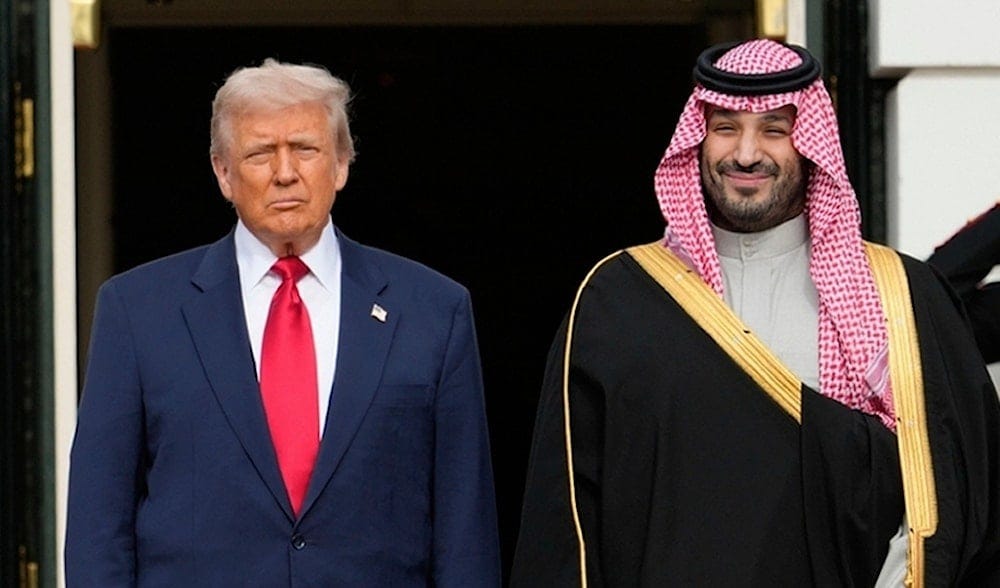
US President Donald Trump has formally approved a landmark nuclear agreement with Saudi Arabia that would give the kingdom a civilian nuclear programme and could ultimately allow uranium enrichment on Saudi soil, according to an exclusive report by The Wall Street Journal citing administration officials.
The deal, which would run for 30 years and is estimated to be worth tens of billions of dollars, is designed to give American companies a central role in developing Saudi Arabia’s nuclear infrastructure while limiting the involvement of foreign competitors. A key provision would permit US firms to build a uranium-enrichment facility in the kingdom if a joint US-Saudi study concludes such a step is warranted — an arrangement officials say would give Washington greater oversight and help prevent the technology being diverted to military use.
The striking context is that this comes even as the United States wages war on Iran over its own nuclear programme, having assassinated the Leader of the Islamic Revolution and struck nuclear facilities in an offensive launched on February 28. What Washington is fighting to deny Tehran, it is preparing to extend to Riyadh.
How the agreement would work
Trump approved the accord late last week, the WSJ reported, and it is expected to be signed on Wednesday by US Energy Secretary Chris Wright and his Saudi counterpart, Prince Abdulaziz bin Salman. It is due to be submitted to Congress in the coming days, where it is likely to meet opposition — though blocking it would be difficult, requiring a joint resolution and, to override a presidential veto, a two-thirds majority.
Under the deal, American companies would supply new power reactors and other nuclear technology, with foreign suppliers relegated to a secondary role. Westinghouse Electric’s AP1000 reactor — which generates around 1,100 megawatts, enough to power a mid-sized city or a major AI data centre — would be among the biggest beneficiaries.
As reactor projects advance, US and Saudi officials would conduct a two-year study into whether domestic uranium enrichment would be commercially viable for the kingdom rather than relying on imported fuel. If the study favours enrichment, American companies would build the facility under a secretive “black box” arrangement intended to keep the sensitive technology out of Saudi hands. Administration officials argue this US role would prevent enriched uranium being diverted to weapons and ensure spent fuel could not be reprocessed into a bomb. Should Washington object after the study, Saudi Arabia would be barred from enriching — alone or with another partner — for ten years.
Proliferation fears in a region at war
The safeguards are expected to draw close scrutiny, particularly amid the war on Iran. Robert Einhorn, a former senior State Department official who advised both Republican and Democratic administrations on nonproliferation, said the agreement could revitalise the US nuclear industry, deepen US-Saudi ties, and shut Russia and China out of a strategically important programme — but warned that “unless it contains adequate constraints, including on enrichment, it could increase nuclear proliferation risks in the Middle East and beyond.”
Those risks are sharpened by Riyadh’s own posture. Saudi Arabia insists its nuclear ambitions are peaceful, citing the need to meet domestic energy demand and free up more oil for export. Yet Crown Prince Mohammed bin Salman said in 2018 that if Iran developed a nuclear weapon, the kingdom would follow. And unlike the United Arab Emirates, Saudi Arabia has refused to accept the so-called “gold standard” — a binding commitment never to enrich uranium or reprocess spent fuel domestically.
Critics warn that handing Riyadh a civilian programme with the potential for enrichment or reprocessing could accelerate the spread of nuclear technology across an already volatile region — even as the United States prosecutes a war justified, in Washington’s telling, by the very same fear.
Reference: Al-Mayadeen