

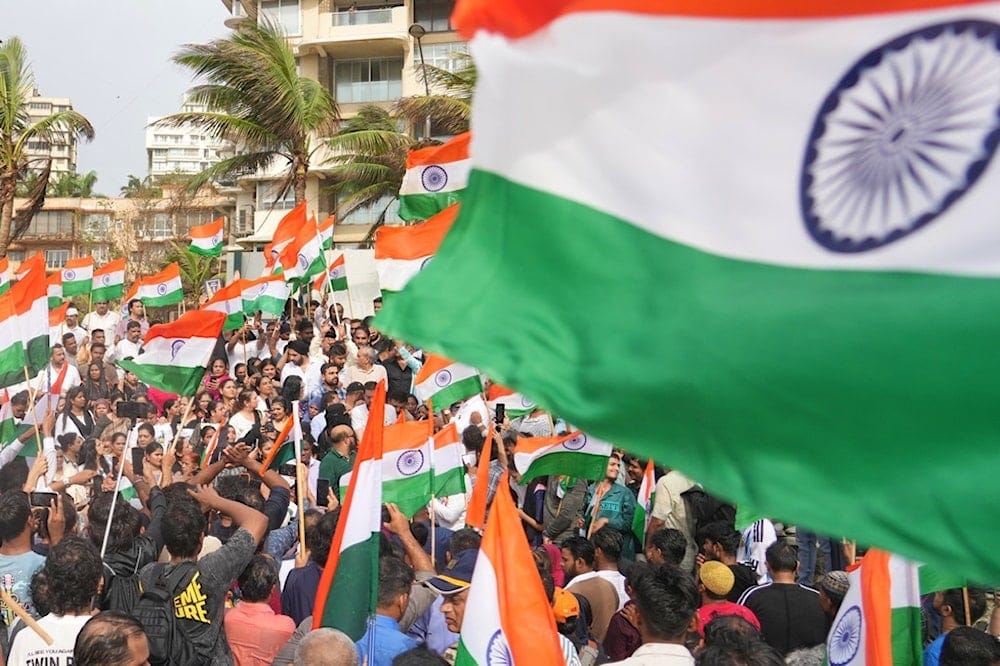
Indian Education Minister Dharmendra Pradhan resigned on Saturday following sustained nationwide protests over a major examination leak scandal, marking a rare concession by Narendra Modi’s government to public pressure.
Pradhan announced his decision in a social media statement after a week of intensifying demonstrations led by students and young activists in New Delhi and other major cities. “Considering the situation that has arisen at Jantar Mantar and across the country, so that anti-national forces do not take advantage of this situation … I have sent my resignation letter to the prime minister,” he wrote, adding that he deeply respected “the aspirations, feelings, and legitimate expectations of the country’s youth.”
The timing was pointed: the announcement came only hours before representatives of the Cockroach Janata Party (CJP) were due to meet government ministers and repeat their demand that he go. Talks the previous day had collapsed without agreement, with CJP spokesman Ashutosh Ranka telling reporters the movement had made clear that “nothing short of Dharmendra Pradhan’s resignation or his removal from the Union Cabinet would be acceptable.”
A name born from an insult
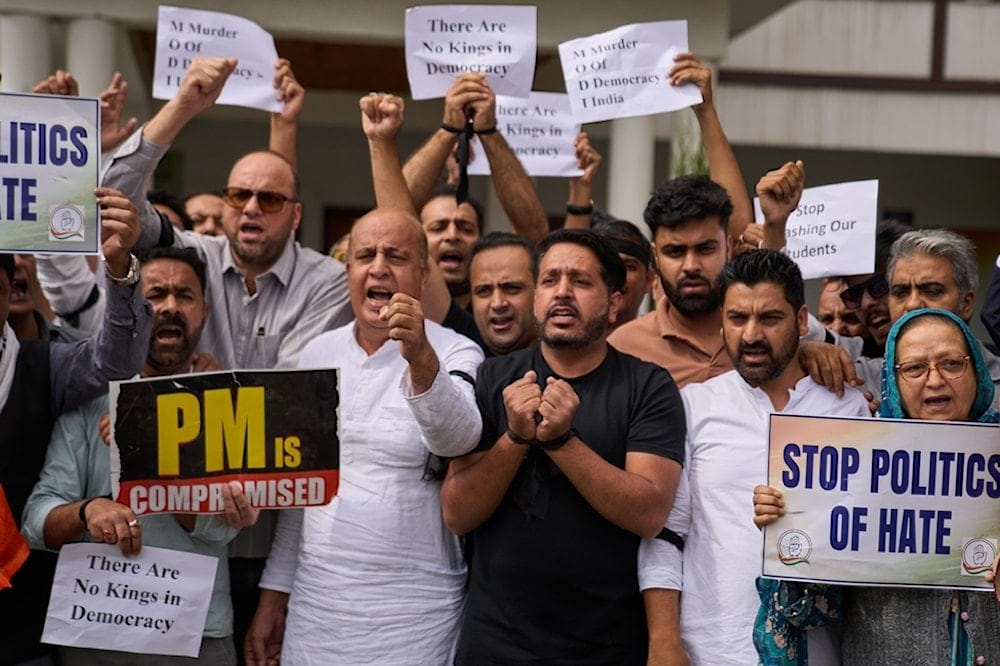
The movement began just over two months ago as a satirical online campaign before growing into one of the most serious grassroots challenges Modi has faced during the Bharatiya Janata Party’s twelve years in power.
Its name came from a remark by India’s Chief Justice, who during an unrelated hearing compared unemployed young people to “cockroaches” and “parasites.” “What if all cockroaches came together?” Abhijeet Dipke, then living in the United States after graduating from Boston University, wrote in response. He went on to set up social media accounts and a website under the name Cockroach Janata Party — a play on both the justice’s insult and the ruling BJP. Within weeks his accounts reportedly drew more than 20 million followers, and the government temporarily blocked the CJP’s X account in India as the campaign gathered pace.
The exam that lit the fuse
The immediate trigger was the cancellation of the 3 May NEET examination, India’s fiercely competitive entrance test for undergraduate medical programmes, after an investigation found questions had been leaked. More than two million students were forced to sit it again.
The anger ran deeper than the inconvenience. Students said years of preparation had been undermined by corruption and mismanagement; more than a dozen reportedly took their own lives amid the crisis, and several protest organisers went on prolonged hunger strikes. Behind it lay wider frustrations over youth unemployment and economic pressure.
The CJP’s manifesto sets out five broader demands: restrictions on retired chief justices entering Parliament, action against election officials accused of erasing citizens’ votes, greater representation for women in government, a more independent media, and a twenty-year bar on lawmakers who switch parties from holding government office. A separate charter on the examination system calls for a new Public Examinations Act, reform of examination bodies, a students’ rights charter, a welfare fund for students and their families, and consistent parliamentary oversight of examination authorities.
From sit-in to national movement
Authorities initially refused to engage. The movement then expanded dramatically at the start of the week, when tens of thousands of students and young people marched through Delhi — an estimated 20,000 on Monday alone — with the demonstration escalating into clashes as protesters moved toward Parliament.
Delhi Police said around 180 people were injured, including 118 security personnel and 60 protesters; Dipke said 150 protesters were being treated in hospital. Police used tear gas and baton charges to disperse the gatherings, a response that drew fresh support to the movement’s sit-in at Jantar Mantar, maintained for more than four weeks.
The CJP called off a second march on Parliament planned for Tuesday. “We will not march again because the police will hurt the youth again,” Dipke said. A separate protest outside Modi’s residence saw opposition leader Rahul Gandhi detained along with other opposition figures, and Congress members demonstrated inside and outside Parliament in support of the protesters. Large demonstrations spread to Kolkata, Mumbai, and elsewhere, turning a dispute over an examination into a broader confrontation over government accountability and the treatment of India’s young.
A costly concession
Modi had earlier promised to accelerate legal proceedings against those responsible for the leak, but stopped short of addressing the central demand. Pradhan, for his part, had condemned the protest outside the prime minister’s residence while insisting the government was “100% committed” to addressing “every genuine concern of our youth on the floor of the House.”
“We owe our students more than outrage,” he wrote. “We owe them answers, reforms and accountability.”
His departure is a significant loss. Widely regarded as one of Modi’s most trusted allies, his resignation is a notable reversal for a government that has generally refused to yield to street pressure — and tens of thousands of protesters gathered in Delhi greeted the announcement as proof that sustained mobilisation works.
The episode also points to the growing political weight of India’s younger generation, as the CJP looks to convert anger over the education system into a wider movement challenging the BJP’s record on employment, corruption, and public accountability.
Reference: Al-Mayadeen