

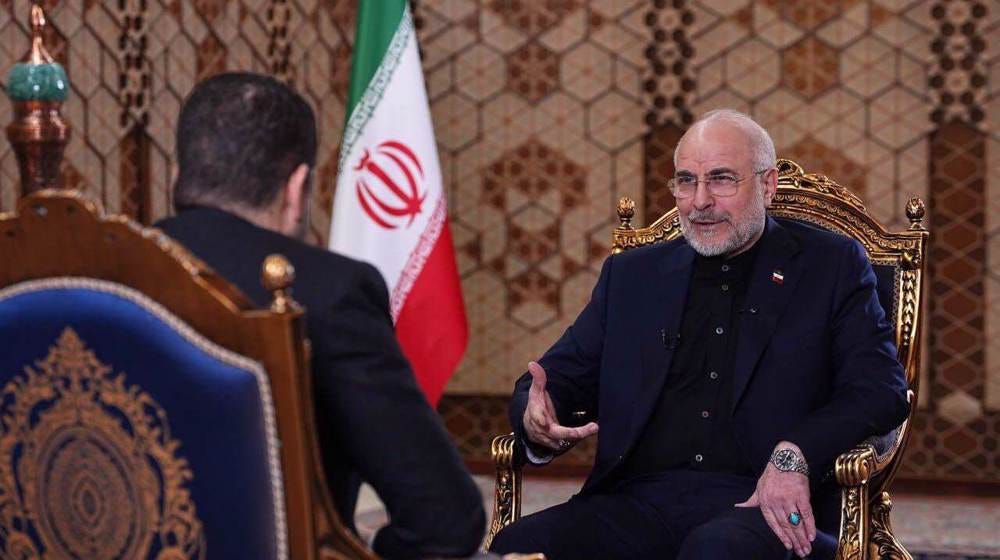
Tehran has placed its terms on the table, and now Washington must answer. Iran’s Parliament Speaker and chief negotiator Mohammad Bagher Ghalibaf said on Wednesday that the Islamic Republic has delivered a “clear and reasonable” response to the United States outlining its conditions for further talks — but Washington has yet to offer any formal or specific reply.
“The ball is now in the US’s court; it must make a decision and announce it,” Ghalibaf said in an exclusive interview with Al Jazeera, referring to the seven conditions Iran has laid down as prerequisites for continuing negotiations.
Speaking as the head of Iran’s six-member negotiating team, Ghalibaf stressed that Tehran’s response defends the legitimate rights of a nation that has endured US and Israeli aggression, threats and crimes — not a list of concessions extracted under duress.
Minimum terms, not maximum demands
Rejecting Washington’s characterisation of Iran’s conditions as “unreasonable,” Ghalibaf said they concern basic rights rather than additional concessions. The seven-point framework includes:
An end to the US naval blockade of Iranian ports
An end to American interference in the Strait of Hormuz
The withdrawal of additional US forces deployed to the region after the war
The lifting of sanctions
An end to the war on Iran and the resistance front
A ceasefire in Lebanon
The withdrawal of Israeli forces from Lebanese territory
Ghalibaf described the naval blockade as “a brutal act of war under international law,” saying it has obstructed food supplies, trade and healthcare services, and disrupted the daily lives of ordinary Iranians.
“These are the minimum conditions we have set so that, if they are fulfilled, we can continue negotiations,” he said.
Notably, Tehran’s terms extend beyond its own borders: by insisting on a ceasefire in Lebanon and an Israeli withdrawal from Lebanese soil, Iran has placed the defence of the resistance front at the heart of any settlement — refusing to trade away the security of its allies for relief of its own.
Trust deficit rooted in broken promises
Ghalibaf identified the absence of trust as the central obstacle to any agreement, pointing to Washington’s long record of hostility toward Iran and its repeated failure to honour commitments. The United States, he said, cannot expect Tehran to simply accept all of its demands. Iran remains ready to reach an agreement, he added, if Washington honours its previous commitments and abandons its excessive demands.
He also dismissed reports of changes to Iran’s negotiating team, confirming he continues to lead the delegation and oversee the talks.
Deterrence, with or without talks
Perhaps the most significant message came at the close: Iran is determined to end the corrosive state of “no war, no peace” — and that goal does not depend on Washington’s cooperation.
The Islamic Republic does not need to “negotiate just to avoid war,” Ghalibaf said. “We believe we must move toward establishing sustainable deterrence in the country.”
“We are not warmongers, we are not seeking war, and we do not want the war to continue,” he added, warning that any renewed attack by the United States or the Israeli regime would be met with a firm response.
Ghalibaf further ruled out any arrangement that excludes the Strait of Hormuz from negotiations, saying the strategic waterway’s future status must be determined through an understanding between its two coastal states — Iran and Oman — in accordance with international law.
The message from Tehran is unmistakable: the path to de-escalation runs through justice for the aggressed, not capitulation by the aggrieved. Whether Washington takes it is now its own decision to make — and announce.
Reference: PressTv