

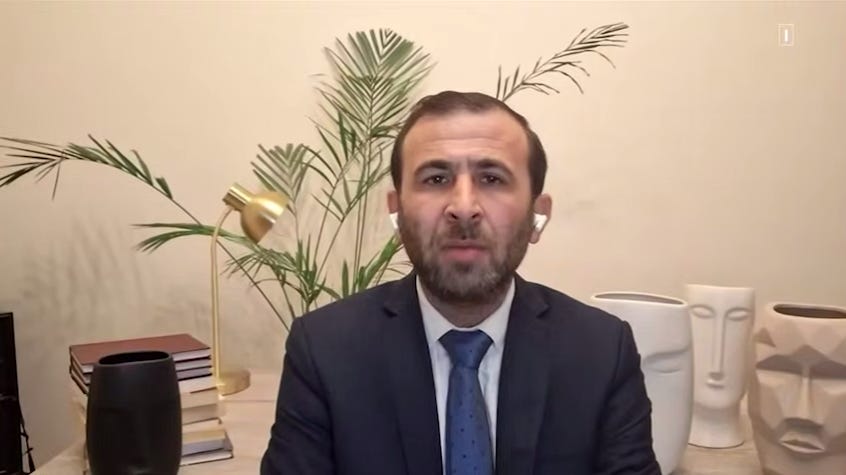
Iran, PUREWILAYAH.COM— Political analyst and media figure Khalil Nasrallah has affirmed that recent developments mark a qualitative shift in the course of the conflict, as the United States has been compelled to accept Iran’s framework as the basis for negotiations.
Speaking on Al-Masirah TV, Nasrallah explained that Washington’s shift came after Tehran rejected initial proposals that included a two-week pause in exchange for arrangements linked to the Strait of Hormuz.
U.S. Forced to Accept Iran’s Negotiation Framework
Nasrallah revealed that a proposal—leaked through Pakistani mediation—calling for a “two-week suspension of strikes” was firmly rejected by Iran. This rejection led to extended hours of negotiations, ultimately resulting in American acceptance of the Iranian proposal.
He stressed that this development reflects a clear shift in the balance of power, with the Resistance imposing its terms after sustained pressure on multiple fronts.
Escalation Across Unified Fronts Reshapes the Battlefield
Nasrallah emphasized that from the very first day, the confrontation followed an escalating trajectory—beginning in southern Lebanon, extending through Iran, and reaching Iraq and Yemen.
These interconnected fronts, he noted, played a complementary role in reshaping the balance of power and establishing a new deterrence equation. This evolving dynamic is expected to have strategic implications in both the near and long term, obstructing any attempt to reshape the region according to American and Israeli designs.
According to Nasrallah, Yemen’s entry into the conflict was a calculated move from the outset, embedded within a broader regional strategy.
He pointed out that Sana’a still possesses escalation options that have not yet been deployed—whether in the Red Sea or through other forms of targeting—forming part of the broader tools of pressure that enforce ceasefire conditions.
“Unity of Fronts” Becomes Core Doctrine
Nasrallah affirmed that recent developments solidify the doctrine of “Unity of Fronts” as a central pillar in any future confrontation.
Under this equation, any aggression against one front will trigger an expansion of the conflict across multiple arenas—making this model of warfare highly likely to recur in future engagements.
On the Israeli front, Nasrallah stated that war criminal Benjamin Netanyahu is facing an escalating crisis, particularly along the northern front.
Despite previous promises, Netanyahu has failed to achieve any tangible gains in security or deterrence. At the same time, he is attempting to manipulate the agreement and push toward expanding the war—especially by trying to separate the Lebanese front from the broader equation.
Fragile Ceasefire and Unresolved Fronts
Nasrallah warned that continued escalation in Lebanon could lead to the collapse of the ceasefire agreement.
He noted that understandings conveyed through Pakistani mediation include a comprehensive ceasefire covering the entire region, including Lebanon—though this has yet to be fully consolidated on the ground.
He added that the positions of Resistance forces remain in formation:
The Iraqi Resistance has announced a temporary commitment
No final position has yet been issued by Yemen or Hezbollah
This leaves the door open for the reactivation of military operations if the terms of the agreement are violated.
Critical Hours Ahead
In conclusion, Khalil Nasrallah stated that the coming hours will be decisive in determining the trajectory of the agreement.
With overlapping American and Iranian positions, and continued Israeli divergence, the situation remains open to multiple scenarios—ranging from stabilization of the ceasefire to a return to escalation. (PW)